Jade Buddha Temple
In the bustling Jing'an District of Shanghai, tucked between high-rises and busy streets, stands the Jade Buddha Temple. The temple dates back to 1882, when a monk named Huigen carried five jade Buddha statues from Burma across mountain passes. War destroyed the original site during the 1911 revolution, but the statues survived. A new temple rose in 1918 at its current location on Anyuan Road. Today, the jade buddha temple remains one of Shanghai's most active Buddhist sites, drawing both worshippers and curious travelers.
Quick Facts about Jade Buddha Temple
| 🏯 Chinese Name | 玉佛禅寺 (Yùfó Chán Sì) |
| 📜 Founded | 1882 (rebuilt in 1918) |
| 📍 Location | No. 170 Anyuan Road, Jing’an District, Shanghai |
| 🎟️ Ticket Price | ¥20 RMB (extra ¥10 for Jade Buddha Hall) |
| 🕒 Opening Hours | 8:00 AM – 4:30 PM daily |
| 🌅 Best Time to Visit | Weekday mornings, 8:00–10:00 AM |
| 👕 Dress Code | Modest clothing; cover shoulders and knees |
| 🚇 Metro Access | Line 7 Changshou Road / Line 13 Jiangning Road |
| ⏱️ Average Visit Duration | 1–1.5 hours |
Two Jade Buddhas and a Monk's Extraordinary Journey
-
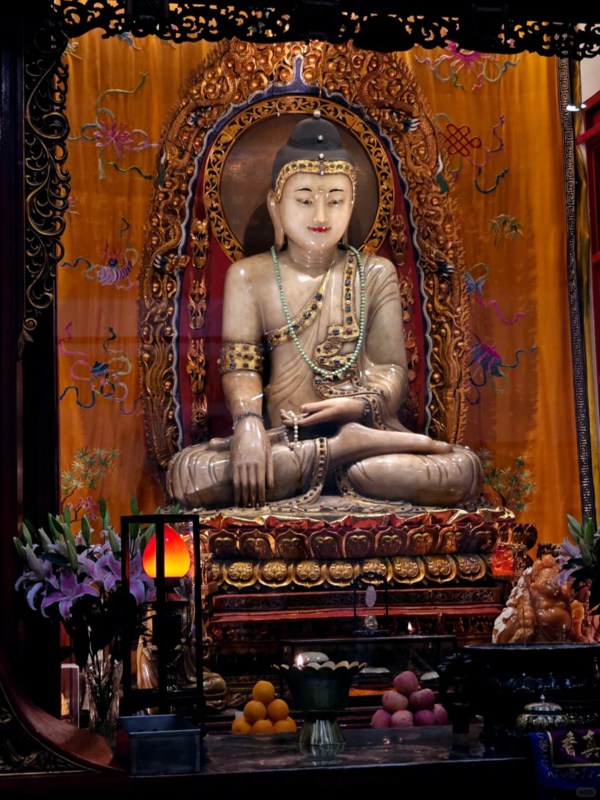

- Seated Buddha
-
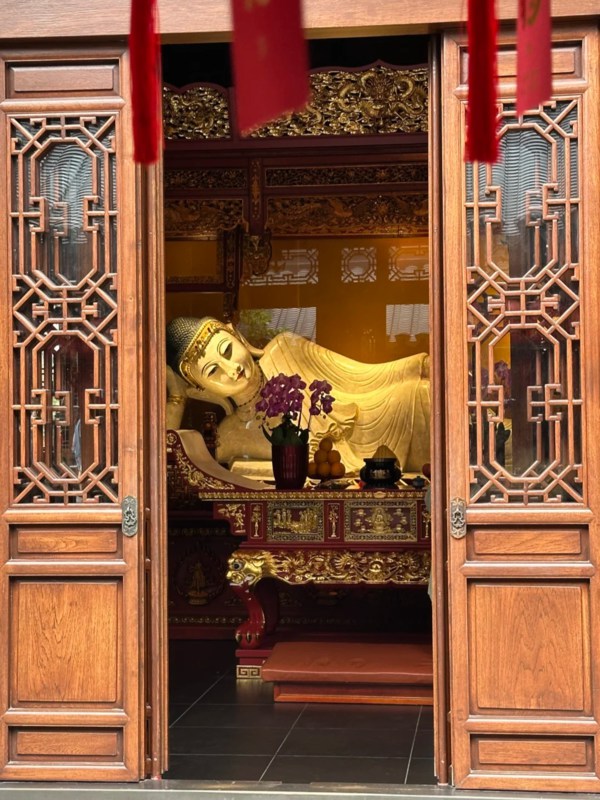
- Reclining Buddha
-
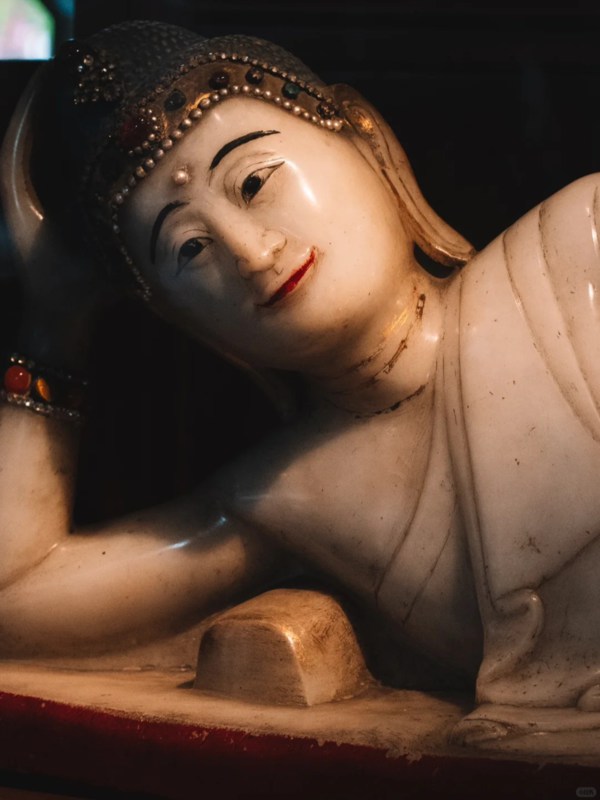
- Close Shot of Reclining Buddha
The story behind these statues sounds almost made up. In 1882, a monk named Huigen set off from Mount Putuo to Burma. He wanted to study Buddhist scriptures. Somewhere along the way, he encountered five jade Buddha statues carved from Burmese white jade. He decided to bring them home.
The journey took years. Huigen journeyed across Tibet, over ice-cold mountain ranges, with hundreds-of-kilogram statues. Two of these five original ones are now in this temple at Shanghai. The other three passed on to other temples on his path. I wonder sometimes--a man alone, no motor-cars, no air-planes, only faith and most likely a good deal of assistance of strangers.
The Seated Buddha — Jade Buddha Temple's Most Treasured Icon
The second floor of the Jade Buddha Hall is inhabited by the Seated Buddha. It is 1.95 meters in height and it weighs nearly a ton. The jade is smooth and almost glowing of a milky white. The robe and headdress have precious stones, that is, agates, emeralds. The entire statue appears to melt down when the sunlight is passing through the tiny windows.
You are going to need an additional CNY 10 ticket to get to this hall. Some visitors skip it. I'd say don't. The staircase is small and the room is small hence restricting the number of people who can ascend at a given time. No photography in it--guards are vigilant. However, standing there, where the sandalwood incidence is floating up below, it is different to other parts of the jade buddha temple. Quieter. More private.
The Reclining Buddha and Its Symbolic Peace
The Reclining Buddha is a smaller statue that can be found down the staircase. It is approximately 96 centimeters long and was made of the same Burmese jade. This is the one that portrays the Buddha entering nirvana; the half-closed eyes and lying down on his side.
There are those visitors that anticipate a replica such as the giant reclining Buddha of Bangkok. This isn't that. It's intimate, not monumental. Some of the tourists pass by without observing it. Their loss, probably. The sitting Buddha of jade buddha temple does not require attention. Simple as that, it waits there so quiet and dead till somebody takes the time to see.
Inside the Jade Buddha Temple — Hall by Hall
-
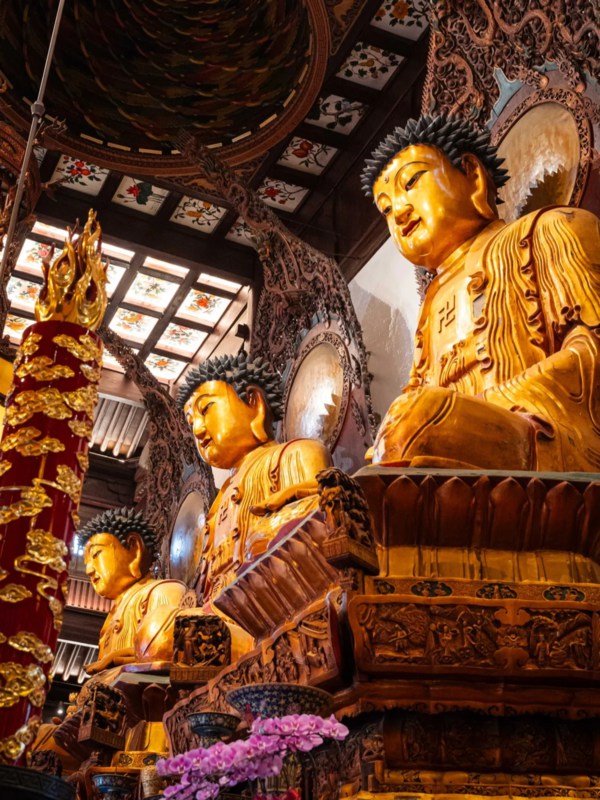
- Hall of Heavenly Kings
-
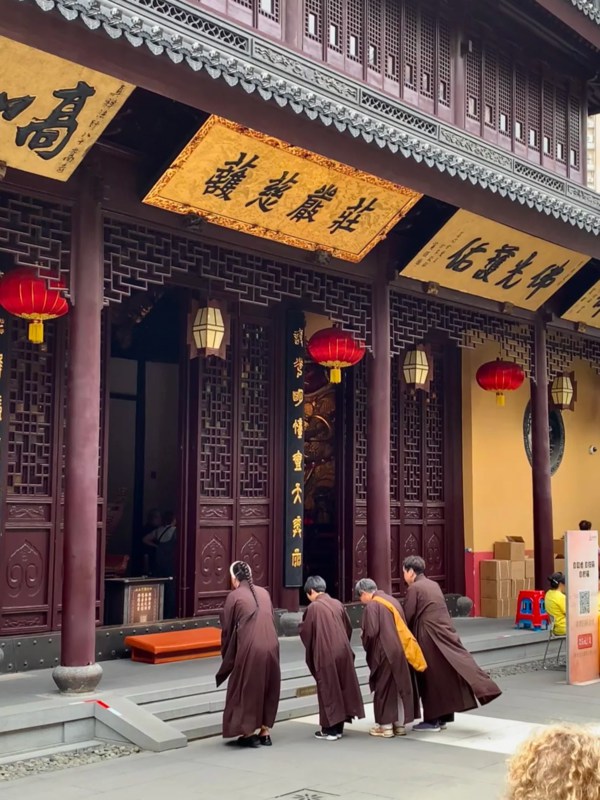
- Monks in the Temple
-
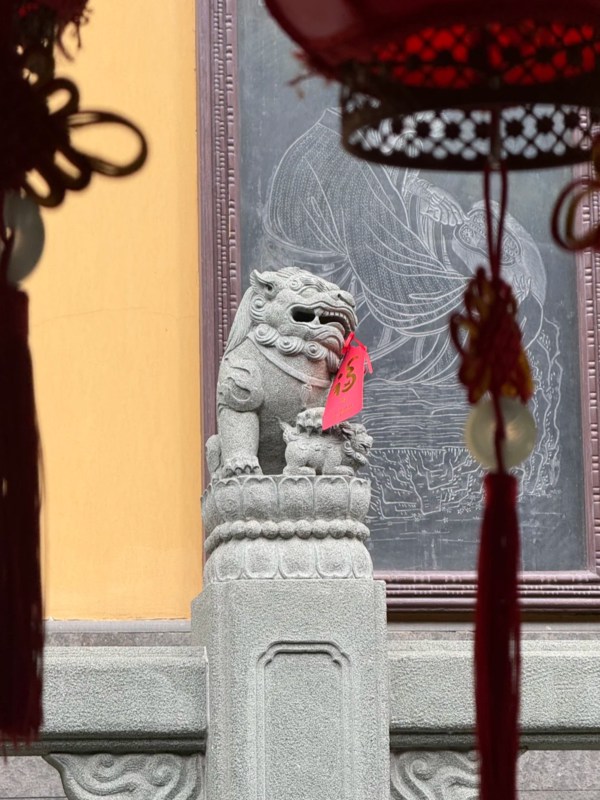
- Figure in Stone
The temple follows a traditional layout. Three courtyards line up along a south-north axis, with halls and pavilions arranged symmetrically on both sides. The architectural style borrows from Song Dynasty designs—curved eaves, red pillars, yellow walls. It's compact compared to temples in places like Xi'an or Hangzhou. You can walk through the whole jade buddha temple in about forty minutes if you don't linger.
But lingering is sort of the point.
Hall of Heavenly Kings — Where Four Giants Guard the Gate
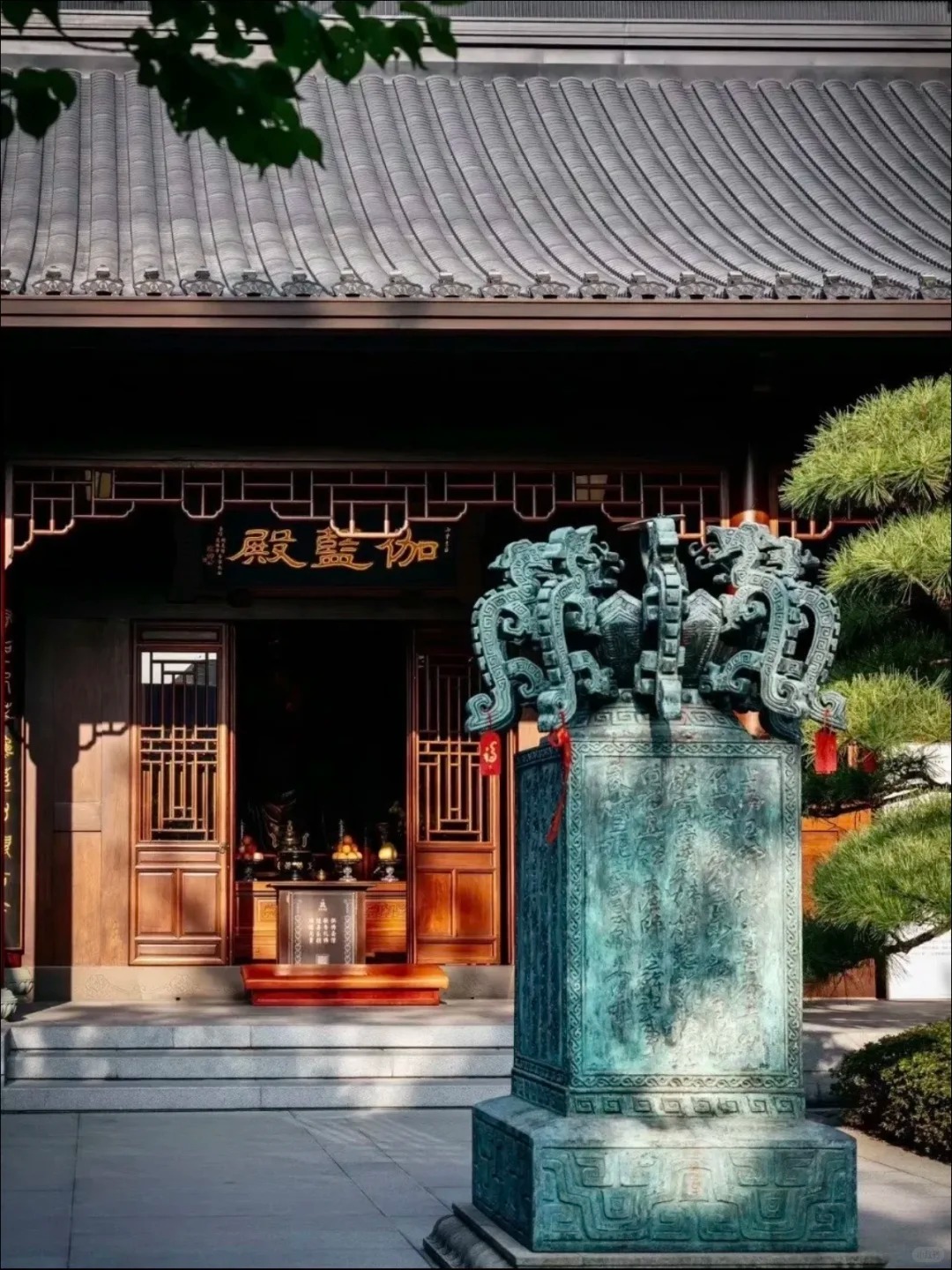
It is the initial structure you pass when you get to the ticket gate. There are four huge statues on the walls of the Heavenly Kings, who hold in their hands various items: a sword, a lute, an umbrella, a snake. They are expected to offer defense of the temple against evil spirits. Central to it is Maitreya, the Buddha of the Big belly who is the laughing Buddha. In the background, facing the other way, is Weituo, the protector of the Buddhist doctrine.
The light here is not bad in taking photographs. Most of the time it is best in the morning before the arrival of tour groups. I had a good view of the Heavenly Kings at approximately 8.30 AM on a Tuesday.
Grand Hall of the Great Hero — The Spiritual Heart
This is the main worship hall. The center is occupied by three golden Buddha statues including the past, present, and the future. The side walls have eighteen arhat statues with a unique expression. Some look fierce. Others seem half-asleep.
The morning chanting by monks is at about 5:00 AM and the evening prayers are at 4:00 PM. Once I was able to catch the end of an afternoon session. A dozen monks sat in row after row, and their voices were swelling up and down in harmony. A small group of local worshippers were kneeling on cushions in the vicinity with bowed heads. Nobody looked at me. It was like intruding into the intimate scene of a person, not unpleasant, but very silent.
Jade Buddha Hall — The Extra Ticket That's Worth Every Yuan
A few visitors are aware of the additional CNY 10 fee and fail to visit this hall. I almost did. Yet it is the Seated Buddha in the upstairs that justifies the existence of this temple. Not having it is like having to ask someone to make hotpot without the broth.
The stair is very narrow and somewhat steep. The flow is regulated by staff, so there is a possibility of waiting several minutes when it is busy. When you are indoors, keep it down and leave your phone in your pocket, there are no pictures to be taken. The room is not big, can seat only fifteen people. The air is filled with sandalwood smoke. The jade appears to receive all the light passing through the windows. Ten yuan? Worth it.
Incense, Chanting, and the Rhythms of Temple Life
-
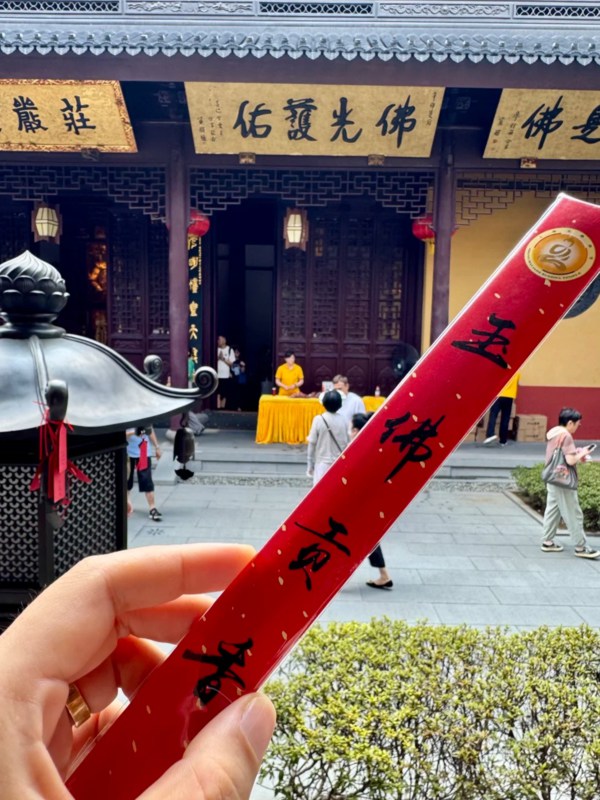
- Incense-burning Culture
-
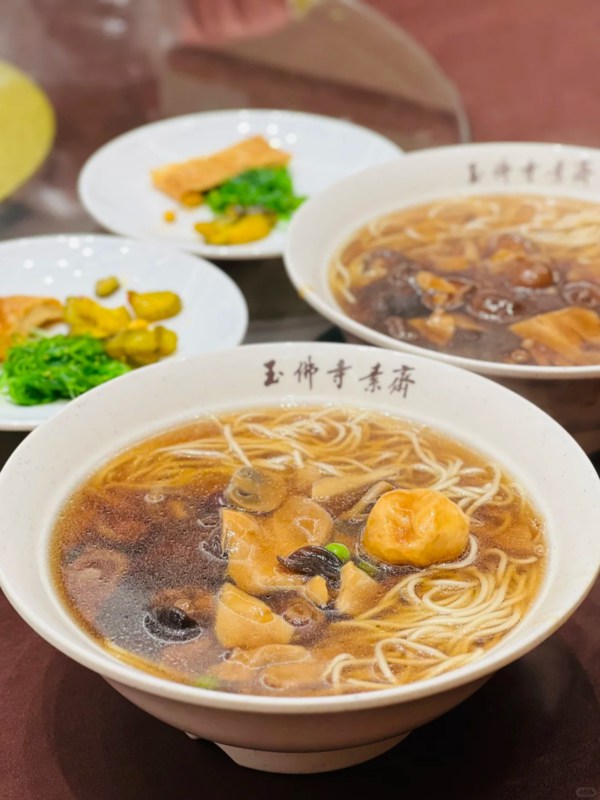
- The Temple Vegetarian Restaurant
This isn't a museum. There are, in fact, about 70 monks here. They rise very early in the morning, recite sutras and eat vegetarian food and retire to bed early. The morning bell rings at 4:30 AM. Approximately at 5.00 PM, evening drum. Never do most tourists hear either--they come in at noon. However, in case you come early, you can see monks in saffron robes coming across the courtyard on their way to the main hall to perform morning prayers.
Incense is everywhere. Smoke flows through the pathways, winds around the columns, falls into your garments. The smell will linger on hours. Burning incense is a form of communicating with the Buddha to worshippers. To the visitors, it is something of the atmosphere.
Jade buddha temple changes in the process of Chinese New Year. On the night of New Year's Eve, thousands of people queue up to provide the first incense of the year, which is referred to as tou xiang (头香). It is believed that the one who lights the incense first gets more blessings. It begins in the afternoon people waiting in line to have a midnight ritual. I've never done it. The crowd sounds intense.
A Visitor's Guide to Offering Incense
It is possible to purchase incense within the temple premises. The simplest package is CNY 10- 20. There should be three sticks, one to the Buddha, one to the Dharma, one to the Sangha (the community of monks). Light them, take in both hands, bow thrice, and place in the big incense burner.
Something to keep in mind: do not put out the flame with your mouth. Wave it or natural death. Blowing is not a respectable act. I once witnessed a guard correcting a tourist in a polite manner. It did not appear to embarrass her, she simply did not know.
The Temple Vegetarian Restaurant — A Hidden Gem
This Shanghai temple has a small vegetarian noodle store, which is located at the east exit. The menu is basic; noodles, dumplings, several cold treats. The price ranges at CNY 15-30 per bowl. Nothing fancy. However, the mushroom noodles turned out to be more savory and light than expected.
It gets busy around noon. Eat before 11.30 or after 1.30 and you can have a seat without a wait. It is not a place to eat, but rather a pleasant stop on the way back to the city.
Jade Buddha Temple, Jing'an Temple, and Longhua — Three Buddhist Sites Compared
-
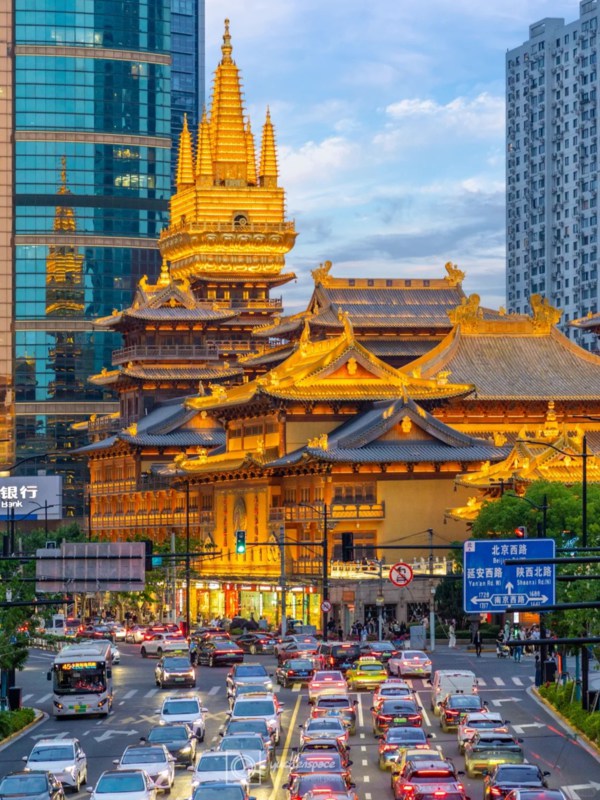
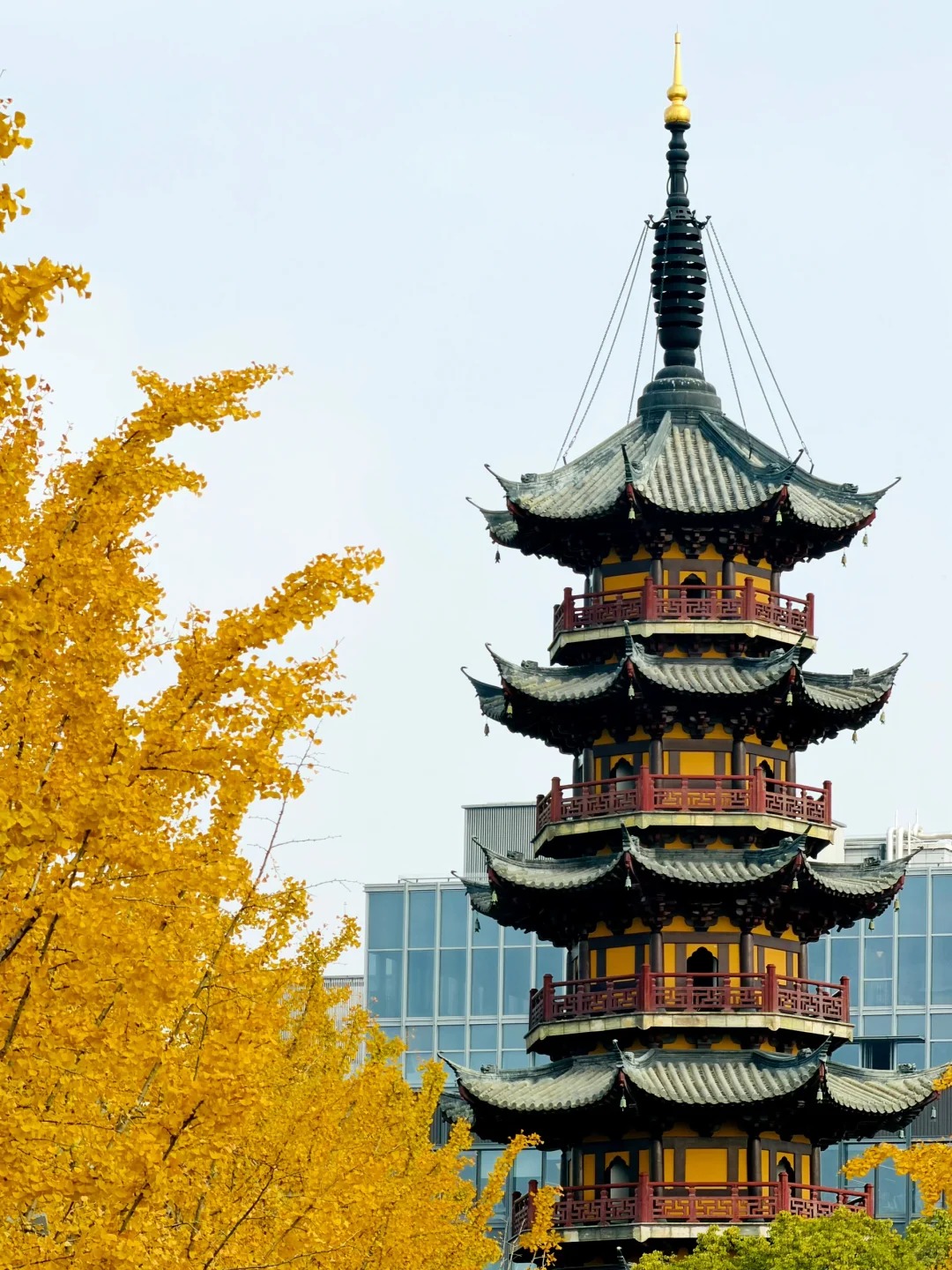
- Jing an Temple
-
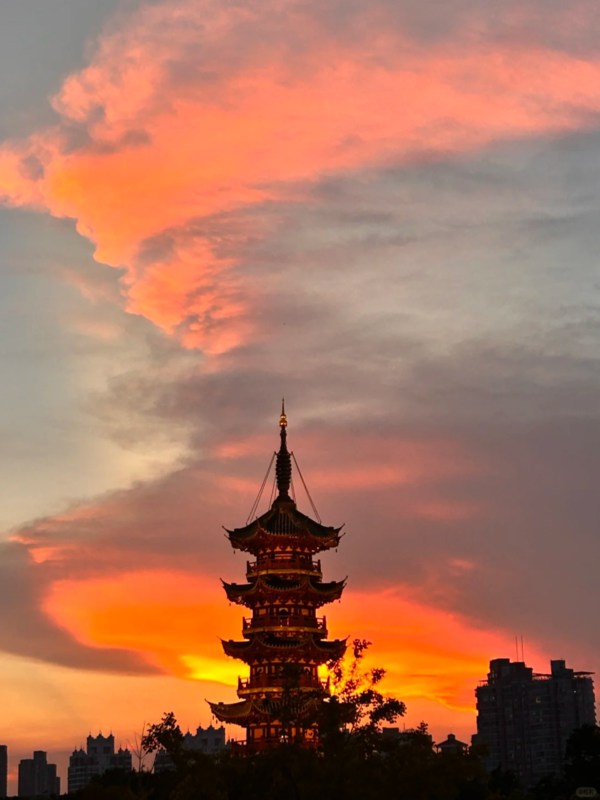
- Dusk Time of Longhua Temple
This question comes up a lot. The two temples are located in the heart of Shanghai. Both attract tourists. However, they are totally different.
Around 247 AD is the age of Jingan Temple; it was established and rebuilt several times. It is more glamorous and has gigantic golden Buddha hall and contemporary renovations. The surrounding environment is unadulterated Shanghai luxury: malls, cafes, foreign brands. There is a tendency of the crowds to be heavier particularly during weekends. Tickets cost CNY 50.
The small temple of jade buddha is less noisy and costs less CNY 30. Not golden architecture but the Burmese jade statues is the major attraction. It is more of a working monastery than a landmark. This one wins, in case you prefer spiritual feel to visual effects.
| Aspect | Jade Buddha Temple | Jing’an Temple | Longhua Temple |
| Founded | 1882 | 247 AD | 242 AD |
| Highlight | Burmese jade statues | Golden Buddha hall | Pagoda and peach blossoms |
| Crowds | Moderate | Heavy | Light to moderate |
| Ticket | ¥20 | ¥50 | ¥10 |
| Vibe | Intimate, traditional | Grand, modern | Spacious, local |
If you only have time for one, here's my take: Jing'an for architecture and photos, Jade Buddha for a calmer experience. Longhua Temple, farther south, is the largest and oldest—but it's out of the way for most visitors.
Got a full day? You can connect Jade Buddha Temple and Jing'an Temple by metro in about 20 minutes. Line 7 runs between Changshou Road and Jing'an Temple station. Not a bad morning loop.
Getting There, Tickets, and Practical Tips for Jade Buddha Temple
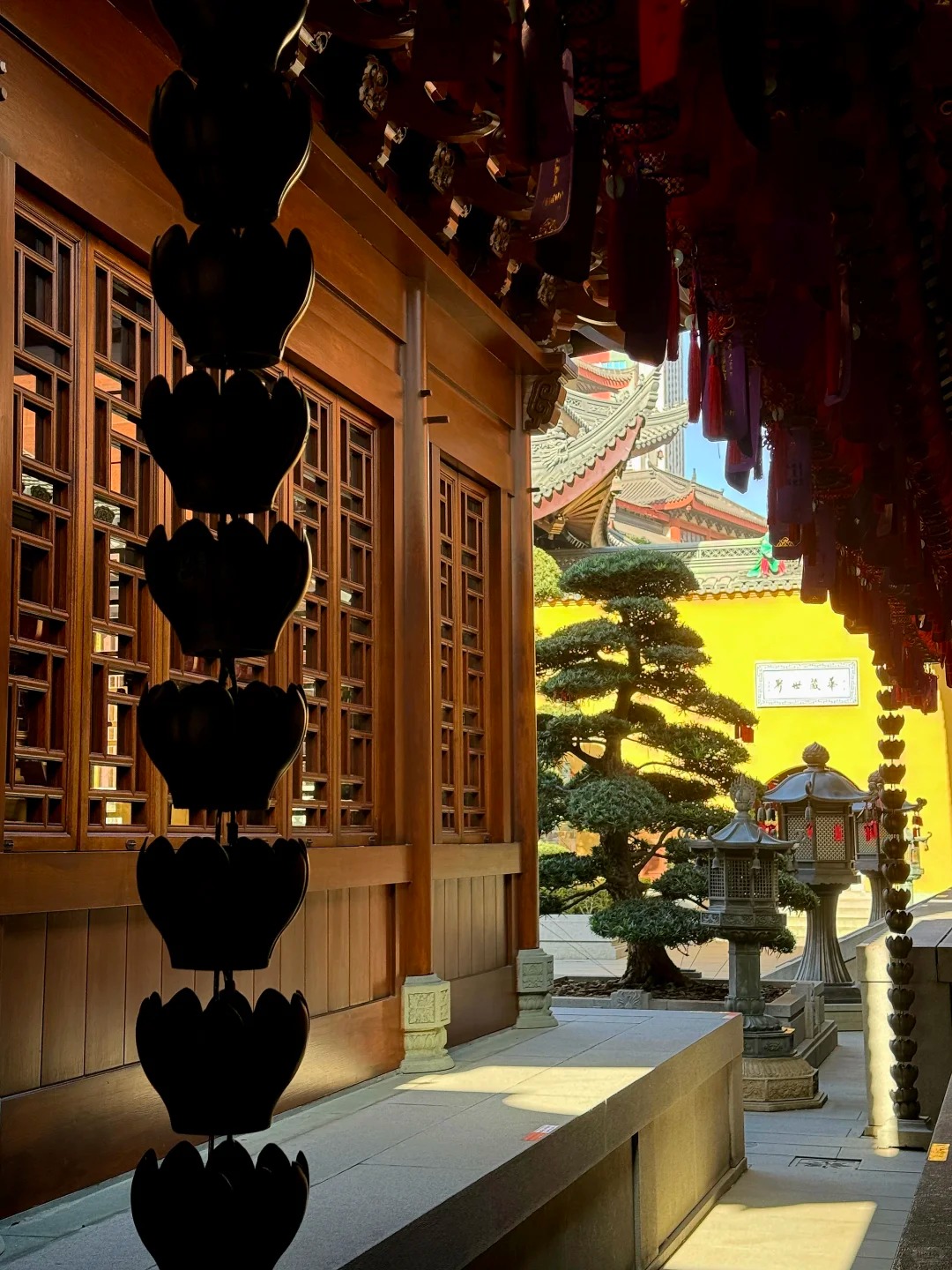
Inside of the Temple
Jing'an District has a beautiful temple located on the banks of Suzhou Creek. It can easily be reached via public transportation or taxi; however, traffic congestion along Anyuan Road during peak period may hinder movement within this area.
Tickets are sold for CNY 20 at the entrance of the temple without any pre-booking requirement, so simply come to the temple on the date of your visit and pay for admission with either cash or WeChat/Alipay. To visit the upstairs area where the Seated Buddha is located, an additional ticket costing CNY 10 must be purchased from a different counter inside the temple. For efficiency, it is recommended that both tickets be purchased at the same time.
Be cautious of individuals standing by the temple entrance who may approach you with "guide services." They may also sell overpriced incense sticks. It would be best to decline these offers; the temple is small enough that you can easily explore it on your own, and incense sticks are available for purchase inside the temple at more reasonable prices.
Jade Buddha Temple Opening Hours and Best Visiting Times
The temple is open from 8 AM until 4 PM daily with the last entry no later than 4 PM every day except on Holidays. Although it is accessible to visitors every day of the week (including Saturdays and Sundays), Saturday and Sundays may have increased foot traffic. During the Weekday mornings there are typically very few visitors so this would be the ideal time to visit.
Example from my visit on Thursday around 8:30 AM when there were entire halls I had to myself until around 11 am when the tour groups arrived. If you visit during the weekend, I suggest arriving early in the morning or late in the afternoon. Try to avoid visiting during 'Chinese New Year' or any Public Holiday unless you enjoy waiting in long lines.
How to Reach the Jade Buddha Temple by Metro and Bus
Metro is the easiest option. Take Line 7 to Changshou Road Station (长寿路站), Exit 5. Walk north about 10 minutes. Or take Line 13 to Jiangning Road Station (江宁路站), Exit 2, then walk west for around 8 minutes.
Bus routes 19, 206, 316, and 738 all stop nearby. Look for the "Yufo Si" (玉佛寺) stop.
Taxi from the Bund costs roughly CNY 30–40, depending on traffic. From Jing'an Temple, it's about CNY 15–20. Just show the driver "玉佛禅寺" on your phone—saves confusion.
FAQ about Jade Buddha Temple
Q: Is the Jade Buddha Temple worth visiting?
I'd say yes, especially if you want a break from Shanghai's nonstop energy. The jade buddha temple offers something different—two rare Burmese jade statues, quiet courtyards, and actual monks going about their day. You don't need more than 1–2 hours. Pair it with Jing'an Temple for a morning of Buddhist architecture. It's not a blockbuster attraction, but it's genuine.
Q: Is the Jade Buddha Temple free?
No, there's an entrance fee. Basic admission is CNY 20, which covers most of the temple grounds. If you want to see the famous Seated Buddha upstairs, that's an extra CNY 10. Compared to other Shanghai attractions—like the Shanghai Tower observation deck at CNY 180—jade buddha temple is pretty affordable. Budget around CNY 30–50 total if you include incense or a snack.
Q: What is the dress code for the Jade Buddha Temple?
Modest clothing is expected. Cover your shoulders and knees. Sleeveless tops and very short shorts might draw a comment from staff, though they probably won't turn you away. I've seen tourists in casual summer clothes get in without issues, but it's respectful to dress appropriately. Think of it like visiting a church in Europe—nothing too revealing.
Q: What are the Jade Buddha Temple opening hours?
The temple opens at 8:00 AM and closes at 4:30 PM daily. Last entry is usually around 4:00 PM. These hours stay consistent year-round, though during Chinese New Year the schedule shifts for the "first incense" ceremony—doors may open at midnight on New Year's Eve. If you're visiting during major holidays, check ahead or arrive early.
Q: Why is the Jade Buddha Temple important?
It's one of Shanghai's few active Buddhist monasteries with real historical artifacts. The two jade statues—brought from Burma in 1882—survived war and revolution. Around 70 monks still live and practice here. For a city known for skyscrapers and commerce, jade buddha temple represents something older and slower. It's also a designated cultural heritage site, protected by local government.
Q: How do you say Jade Buddha Temple in Chinese?
The Chinese name is 玉佛禅寺, pronounced roughly like "Yù-fó Chán-sì." If you're grabbing a taxi, just show the driver the characters on your phone—most don't speak much English. You can also say "Yufo Si" (玉佛寺) for short. That's what locals usually call it. Saves time and avoids the awkward back-and-forth with pronunciation.
Q: Can I take photos inside the Jade Buddha Temple?
Yes and no. Outdoor areas—courtyards, gardens, building exteriors—are fair game. Inside the main halls, it gets stricter. The Jade Buddha Hall prohibits photography entirely. Other halls allow photos but no flash. Signs are posted, and staff do watch. My advice: enjoy the moment, take a few shots outside, and keep your phone away during the spiritual parts.
Q: How long should I spend at the Jade Buddha Temple?
Plan for about 1 to 1.5 hours. That's enough to see all the halls, watch some incense rituals, and soak in the atmosphere. If you want to eat at the vegetarian noodle shop or sit quietly in the courtyard, add another 30–45 minutes. I wouldn't rush it—jade buddha temple rewards slow visitors more than quick ones.
Q: Is the Jade Buddha Temple crowded?
Depends when you go. Weekday mornings are calm—sometimes just a handful of visitors. Weekends get busier, especially around midday. National holidays and Chinese New Year? Packed. The "first incense" tradition on New Year's Eve draws thousands. If crowds bother you, visit Tuesday through Thursday, ideally before 10:00 AM. You'll have more space to breathe.
Q: What is near the Jade Buddha Temple?
A few things within easy reach. M50 Art District is about 15 minutes by taxi—worth it if you like galleries and street art. Jing'an Temple is a short metro ride away on Line 7. Suzhou Creek runs nearby, good for a walk. For food, there's a cluster of local restaurants on Jiangning Road. Nothing fancy, but solid noodles and dumplings for under CNY 30.