Hongcun Village China
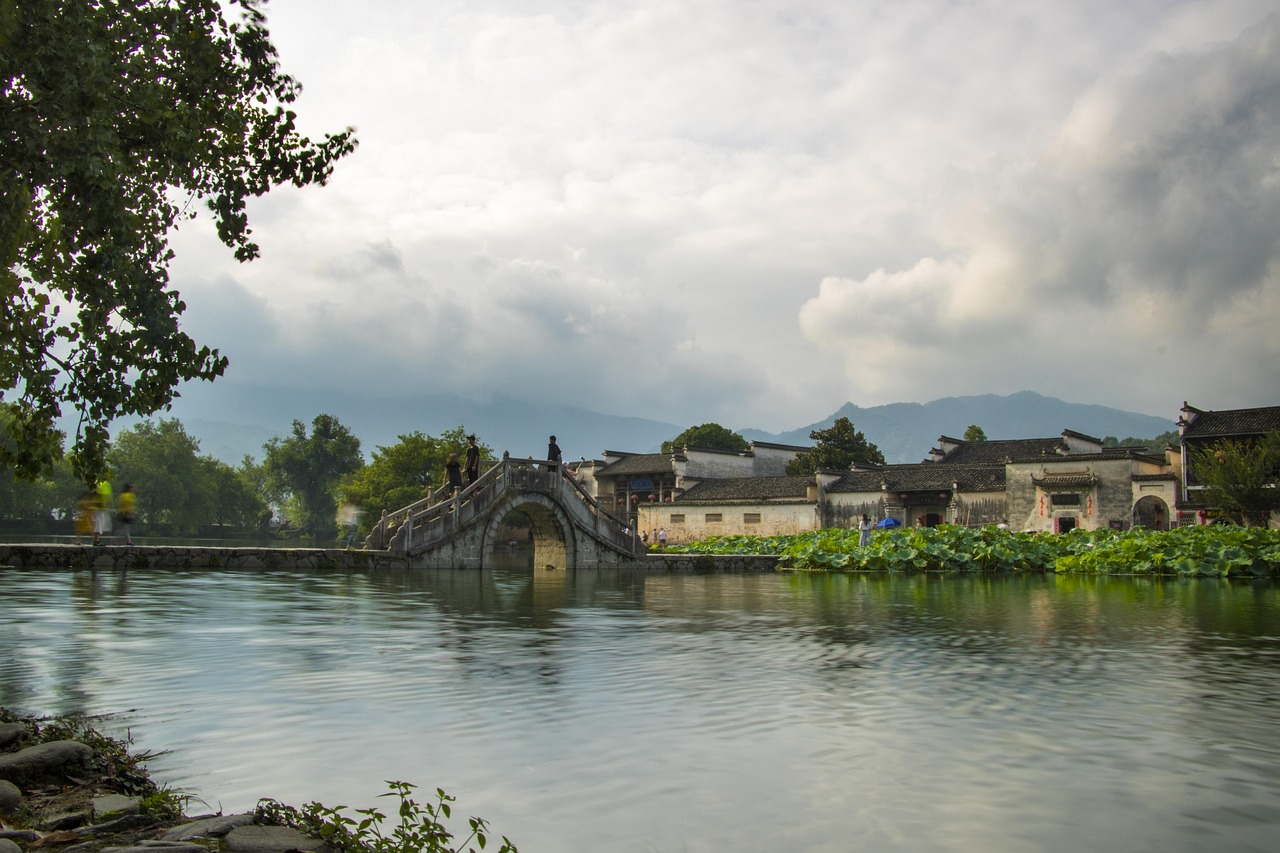
Hongcun village China sits at the foot of Mount Huangshan in southern Anhui Province. The village dates back to the Southern Song Dynasty, around 1131 AD. UNESCO listed it as a World Heritage Site in 2000, alongside nearby Xidi village. The place became more famous after the film Crouching Tiger, Hidden Dragon shot several scenes here.
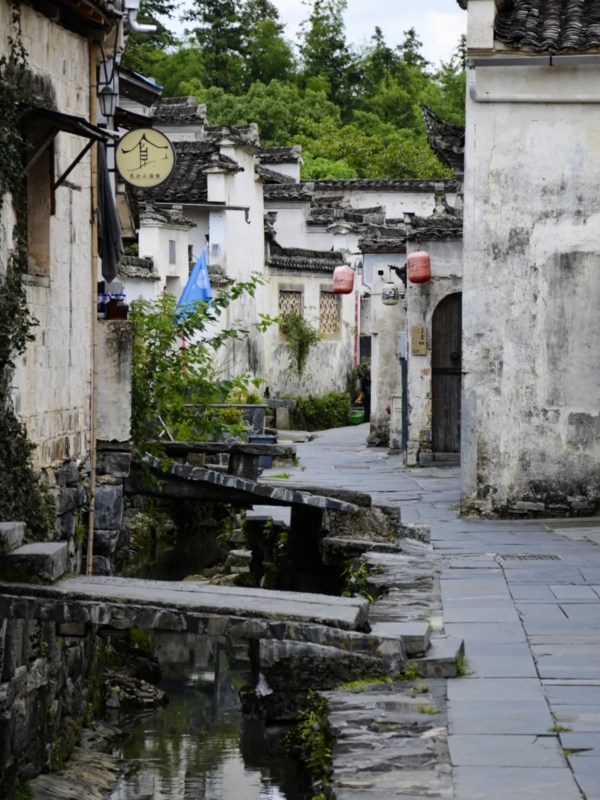
The village layout follows a water buffalo design. Canals run through every household like intestines, two ponds work as stomachs, and four bridges act as legs. About 140 Ming and Qing Dynasty buildings remain standing. Most photos focus on Moon Pond and South Lake, but the real charm shows up in the morning when locals wash vegetables in the ancient water channels.
Quick Facts About Hongcun Village
| 🀄 Chinese Name | 宏村 (Hóngcūn) |
| 📍 Location | Yixian County, Anhui Province, China — Hongcun village Anhui |
| 🌏 Known As | One of the best-preserved Hongcun village China Huizhou villages |
| 🎟️ Entrance Fee | ¥104 (standard ticket) |
| ⏰ Opening Hours | 8:00 AM – 5:30 PM (may vary by season) |
| 🏛️ UNESCO Status | World Heritage Site since 2000 |
| 🍁 Best Season | March–May & September–November |
| ⏱️ Time Needed | 2–4 hours (half day ideal) |
UNESCO Recognition and a Water System That Still Works
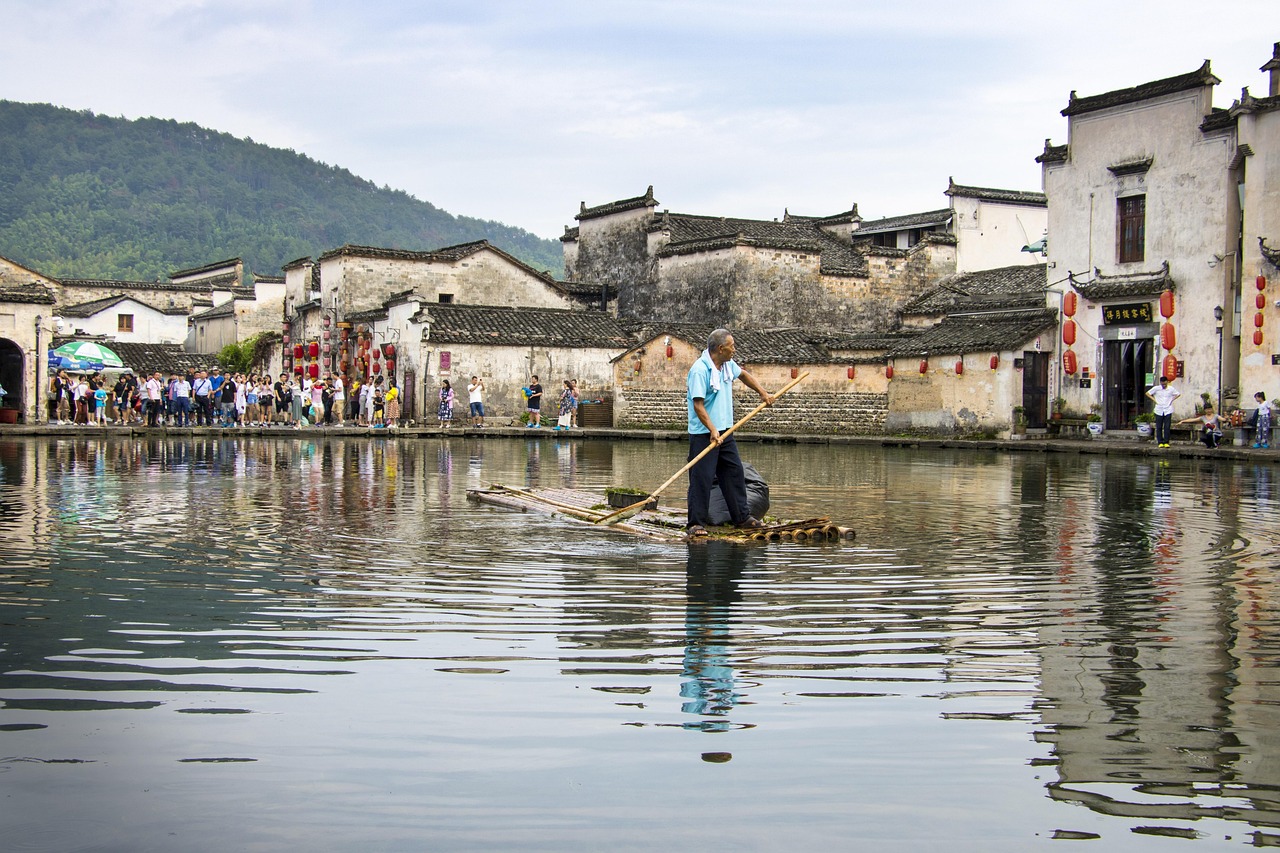
Villager of Hongcun
The UNESCO Label Isn't Just for Show
In 2000, Hongcun was made a UNESCO World Heritage site. It is not a tourist badge. It implies that the Chinese government is forced to preserve high standards of protection. No new tangible constructions within the village centre. There are no contemporary storefronts with disrupted visual harmony. Even the electric wires are disguised or concealed as bamboo poles.
Hongcun ancient village has 4.5 out of 5 stars in more than 800 reviews on TripAdvisor. The major complaints revolve around the crowds and not the village itself especially during peak season. The completeness is what makes it stand out of other Chinese ancient villages. Such places as Wuzhen or Zhouzhuang had been rebuilt too much. Hongcun retained the primitive structures. Ming and Qing constructions are approximately 140 buildings that have not undergone massive construction.
The protection rules work. There will be none of that plastic signs or neon lights. The owners of the shops are obliged to employ wooden plaques with characters carved with a hand. It is not as commercialized as other places of this sort though there are still stalls with souvenirs that line the highways. But they are at least selling tea and ink pictures, not inflatable toys.
A Water System Designed Like a Buffalo – And It Actually Works
The Song Dynasty engineers who constructed Hongcun village in 1131 did a water network that is in the form of a buffalo. The stomachs are represented by two ponds, the intestines are the canals and the legs are represented by four bridges. This wasn't just symbolic. This system was designed to supply three functions, which included fire prevention, irrigation and drinking water.
One morning of 6:30 AM I observed this. Moon PondBy the canal, an old woman cowered and bok choy in the running water. The flowing washed away leaves and dirt further on. Farther up, there was another family filling buckets to cook. The water continues to flow in all the household courtyards, as clean water to be used in its daily use.
The canals in most of the water towns in China are stagnant and by afternoon stinky. Hongcun village created flow through channels which replenish regularly due to springs of the mountains. The engineering is also still operating even without pumps and filters after 900 years. Outside the front door of people there are carp, which swim in crystal-clear water. That's the difference.
What to Actually Do in Hongcun Village China
-

- Moon Pond
-
- South Lake
-
- Chengzhi Hall
Moon Pond – The Instagram Spot That Lives Up to the Hype
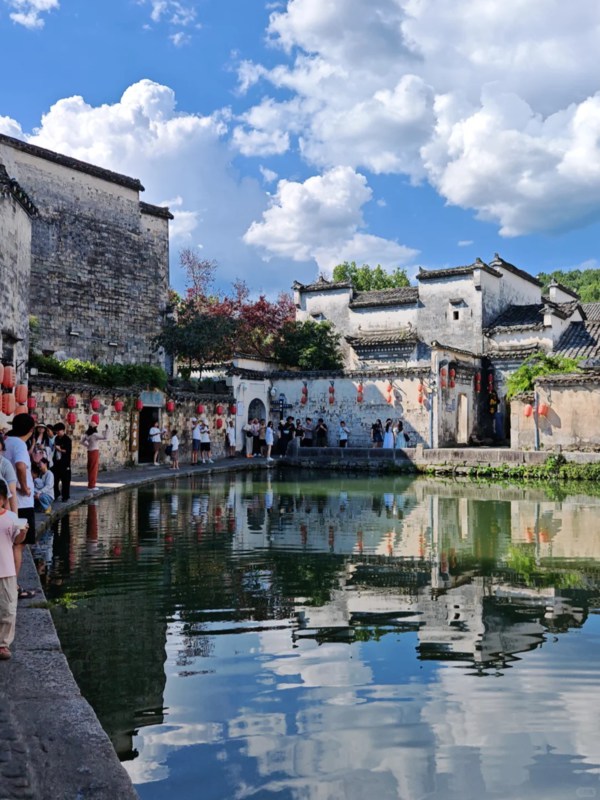
The village central is Moon Pond (Yuezhao). It is a crescent with a diameter of approximately 20 meters, and the houses around are of Huizhou style, made with white walls. All photography manuals instruct you to come between 6.30 and 7.30 AM. They're right. The daylight sun is on the eastern side and illuminating the white walls and maintaining the water still. At around 9 AM, the tour groups come in and the magic dies.
One morning, towards the end of October, I arrived there at about 6:45. A group of three art students of Hangzhou had already their easels placed in action, and were painting the reflection. One of the girls has informed me that they have been coming each morning of the week. She indicated that there is a natural frame given by the curved edge of the pond. Smart observation. Everything is doubled, reflection on the rooflines, doorways (even the steps into the water).
Avoid the days of the weekends, in order to escape the crowds. There are perhaps 30 people in the mornings of the weekdays compared to 200 in the morning of the Saturdays. Also, walk in a counter clockwise direction around the pond. The majority of the visitors exit immediately after the entrance, leaving the right side unoccupied by an hour or so.
South Lake's Reflections – Timing is Everything
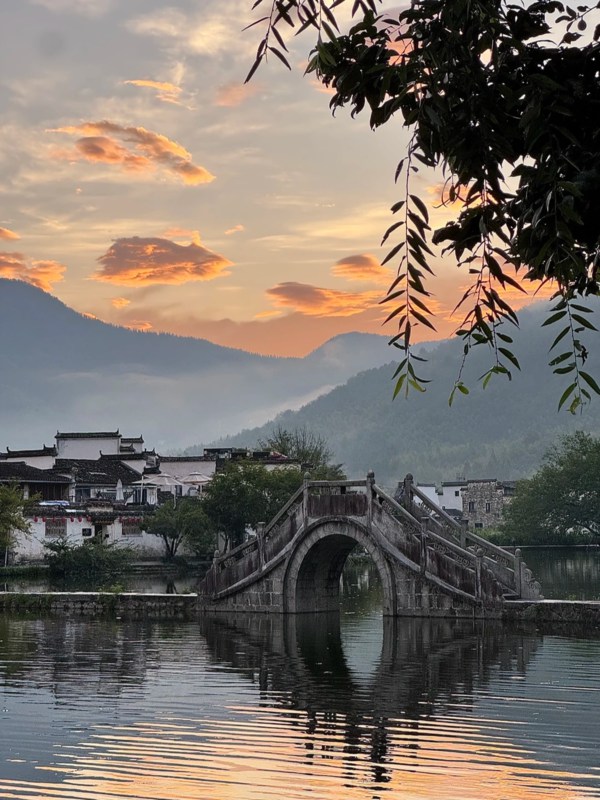
South Lake is on the entrance of the village. It is a good deal bigger than Moon Pond and it is perhaps 100 meters long. Afternoon light is better in this. During the period of 4 to 6 PM, the sun goes low enough to diminish the glare yet remains bright enough to light the Painted Bridge (Huaqiao) that traverses the lake.
The best angle would be on the eastern bank at the side of the ticket office. The entire span of the bridge and the ancestral hall behind it is seen from there. In case of wind, when the wind is blowing, as it tends to do at about 5 PM, the water ripples form this strange double-image effect. The buildings appear to glitch and destroy in the reflection, and reorganize as the surface levels again.
A small shop near the house sends out the smelling of jasmine tea. The xiangqi is played with wooden boards by old men. It is not as noisy as at Moon Pond, likely because most of the tour groups spend three hours visiting Hongcun village China and do not bother with the lake at all.
Chengzhi Hall – Beyond the Tour Group Rush
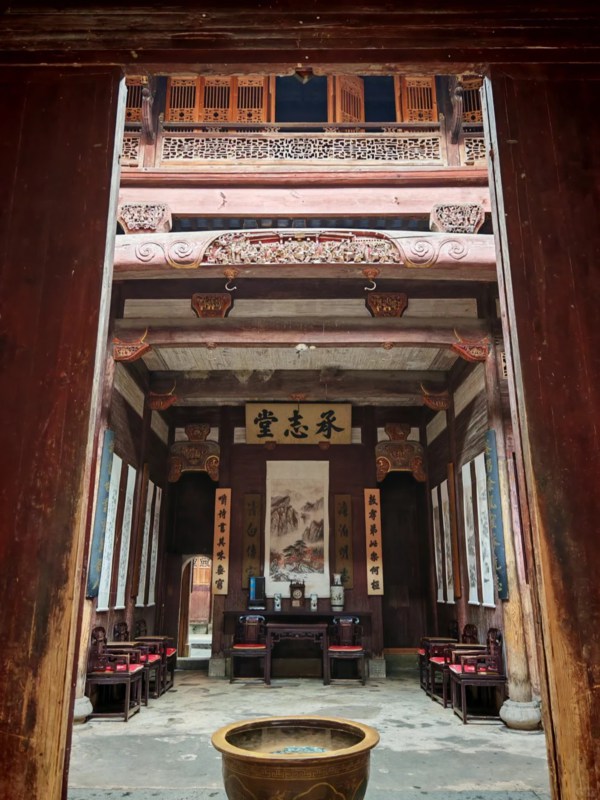
Chengzhi Hall was rightfully called Folk Forbidden City. This mansion is a 2,000 square meters seven-building, nine-court, and approximately 60-room mansion belonging to this merchant. It was constructed by a salt trader called Wang Dinggui under Qing Dynasty. The affluence is depicted in each cut beam.
The main attraction is the wood carving called "A Hundred Boys Celebrating Lantern Festival." It covers an entire wall panel in the main hall. Tour guides point it out, then move on. But if you count carefully, there are actually 100 individual children carved into the scene. Each one has different facial expressions and poses. Finding all of them takes at least 15 minutes.
This is what will give skip his direction: The side hall on the left has brick carvings which are a rival to the wood panels. Plum flowers, crows, geometric. The art is lunatic,--all the bricks cut out separately, and then joined up like a puzzle. No one will stop there since it is not on the normal path. It is your opportunity to see something without 40 people in line behind you.
Where to Stay and What to Eat in Hongcun Village China
-
- Hongcun Pig’s Inn
-
- Anhui cuisine
Guesthouse Options – Inside vs Outside the Village
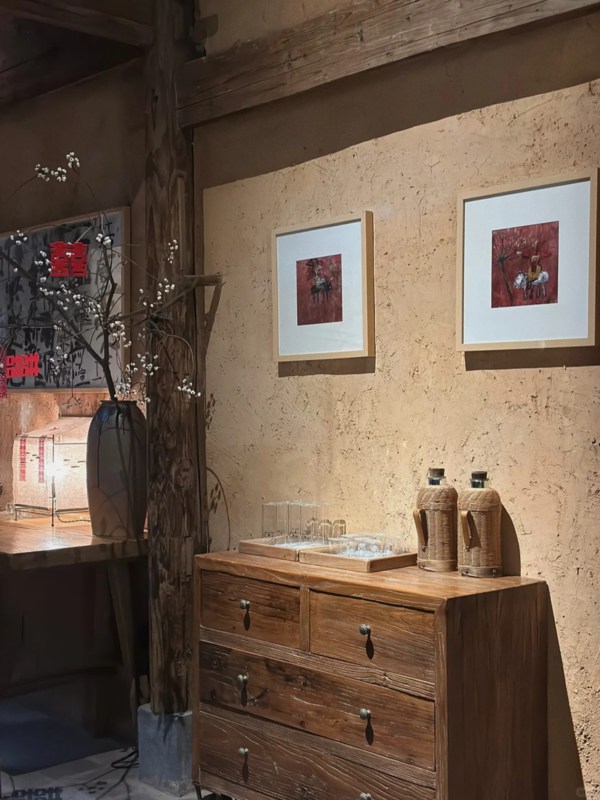
It is more expensive to remain in Hongcun and be able to enter earlier, before the ticket gates are opened at 7:30 AM. Majority of guesthouses are transformed Ming or Qing Dynasty houses. Look forward to creaking wooden floors, thin walls, bath rooms which are additions as an afterthought. The prices vary between 150 to 400 per night according to the season and the condition of the room.
Noticeable point: most of the village guesthouses do not accept foreign passports. They do not have the necessary police registration system. Enquire before making a booking at any place that they have the capability to accommodate international visitors. This is better taken care of in larger hotels that are not located within the village. One of the reliable restaurants that accept foreigners and get frequent mentions in Ctrip is Hongcun Pig’s Inn (宏村猪栏酒家). It is located directly outside the south gate and it is some 200 meters away by the entrance.
Yi County town has standard hotels outside the village that have better facilities between 200 and 300. The trade off is that you lose the atmosphere, and get hot showers that do. The 15 minutes long trip to the village of Hongcun is irritating when one wants to get some sunset and sunrise shots, though.
Local Food Worth Trying (and What to Skip)
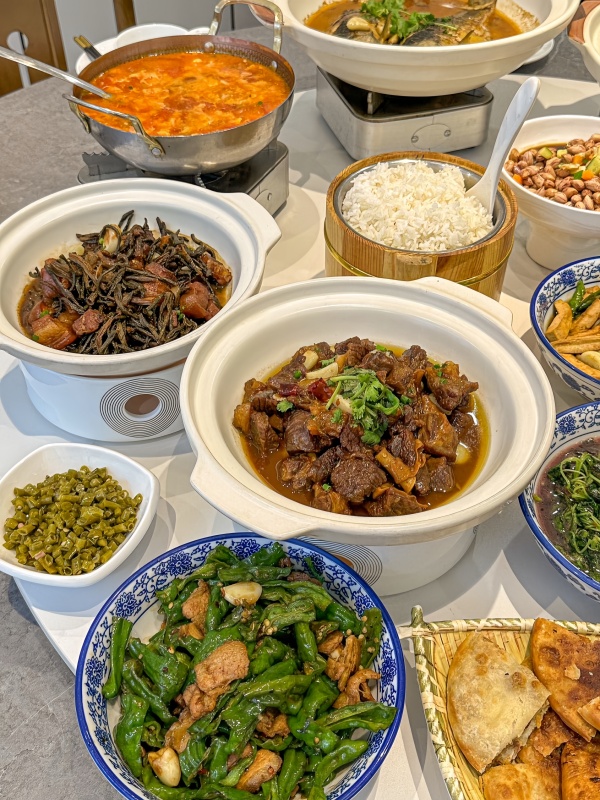
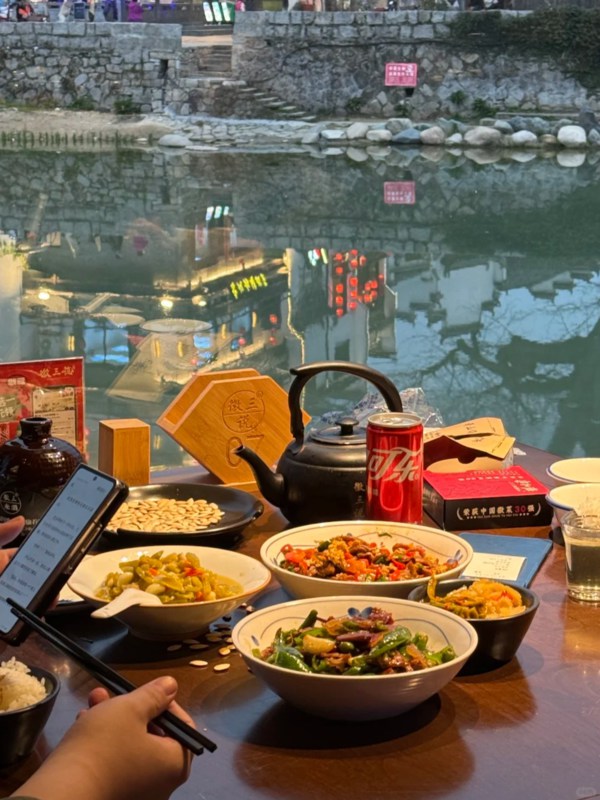
This is dominated by Anhui cuisine (Hui cai). Stinky tofu (臭豆腐) is sold in all places, and it stinks of feet, but is nutty and fermented. Mao tofu (毛豆腐) refers to tofu that has been smeared with the white fuzzy mould which is then pan fried. Sounds disgusting. Very tasty when mixed with chili sauce. If these local flavors intrigue you, dive deeper into our comprehensive Anhui cuisine travel guide covering regional dishes across the province.
Bamboo shoots are added to virtually all dishes in spring. They are new, crispy, far superior to the canned one. A village restaurant meal costs about 80-50 each. The quality varies wildly. There are restaurants around Moon Pond that are charged to tourists. A 10-minute stroll to the back alleys and the prices decline by 30 percent.
You can pass on the huangshan braised pigeon unless you are a great fan of gamey meat. It costs too much at 68-88 on a small bird. Stick to easier foods such as the stir-fried greens and bamboo shoot soup.
When to Visit Hongcun Village China: A Seasonal Reality Check
-
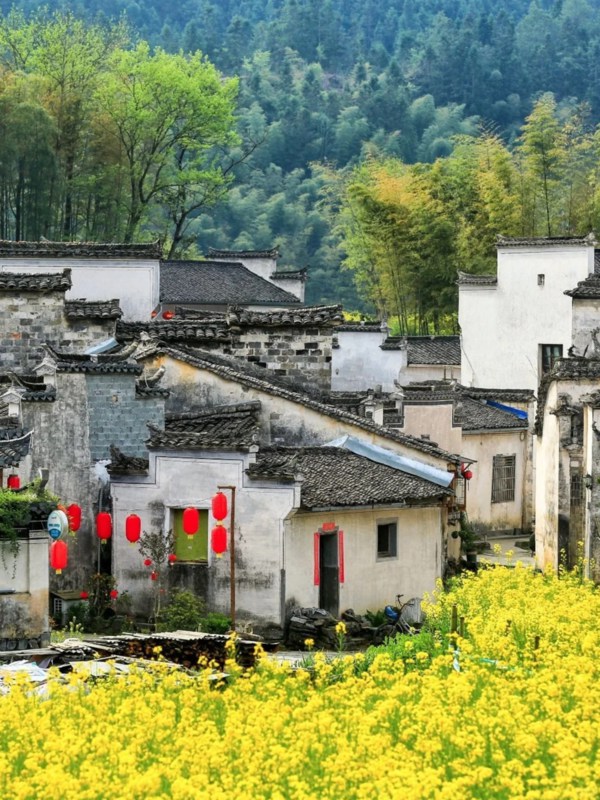
- Spring of Hongcun
-
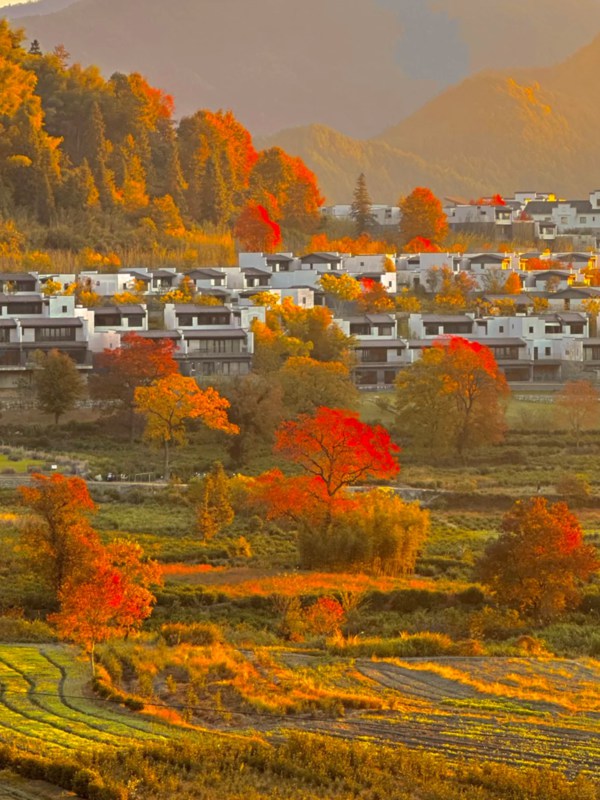
- Autumn of Hongcun
-
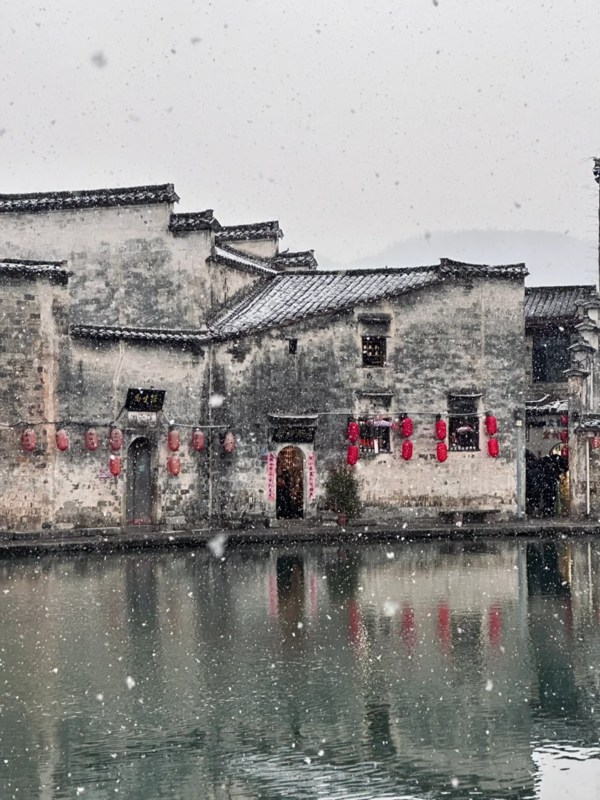
- Winter of Hongcun
Spring (March-April) – Rapeseed Blooms but Crowds Too
It is late in March and early April in China around Hongcun village rapeseed fields. The white walls and black tiles are a perfect contrast to the yellow flowers. Every photographer shows up. During a spring weekend on a Saturday expect 5,000+ visitors on 30 hectares. By 8 AM, Moon Pond turns into a human traffic.
The number of people on weekdays reduced by approximately 60 percent. I was there on a Tuesday near the end of March. It was sunrise and there were approximately 40 people at Moon Pond, as compared to the 200 plus people I spotted that weekend. The sooner you can be up at five-thirty and at the village at half-past six, the better chance you have of getting an hour of reasonable shooting before tour-buses start plying the streets. This is the golden glow effect of the lights striking the rapeseed fields at the back at about 6:15. Worth the early alarm.
Autumn (Late October-November) – Peak Season for a Reason
The best time is subjectively late October to mid November. The climate is pleasant and the temperature during the day is 15-20°C. More to the point, Tachuan village is located only 2 kilometers. Early November is the best season to look at the autumn foliage there, with the red maples, the yellow ginkgo-trees, the orange persimmons. Both villages can be used in a single day trip.
The fog in Hongcun ancient village in autumn penetrates into the village approximately 4-5 times each week in the morning. The fog rests on South Lake to 8 or 9 AM, and it gives it that Chinese ink-wash painting appearance. It is not assured but the reasons are in your favor. One caution: during this season the prices of guesthouses are doubled. The room priced ¥120 in summer will increase to ¥250-300 in autumn. Make reservation or be out of village.
Winter & Summer – The Underrated Choices
Snow hits Hongcun maybe 3-4 times per winter. When it does, the village empties out. I saw photos from a December snowfall—white roofs, frozen canals, zero tourists. Guesthouse owners drop prices to ¥80-100 per night just to fill rooms. You trade comfort for solitude. Temperatures drop to around 0°C, and most houses lack heating. If Hongcun's winter charm catches your attention, discover Beijicun Mohe Village for China's most extreme Arctic winter experience where temperatures plunge below -40°C.
Summer gets hot and sticky, reaching 32-35°C by July. But lotus flowers bloom around Moon Pond during June and July. The pink blossoms soften the scene. Fewer people visit because of the heat. I'd pick late autumn over anything else, but if you want empty streets and don't mind weather extremes, off-season delivers.
Hongcun and Xidi: Should You Visit Both?
-
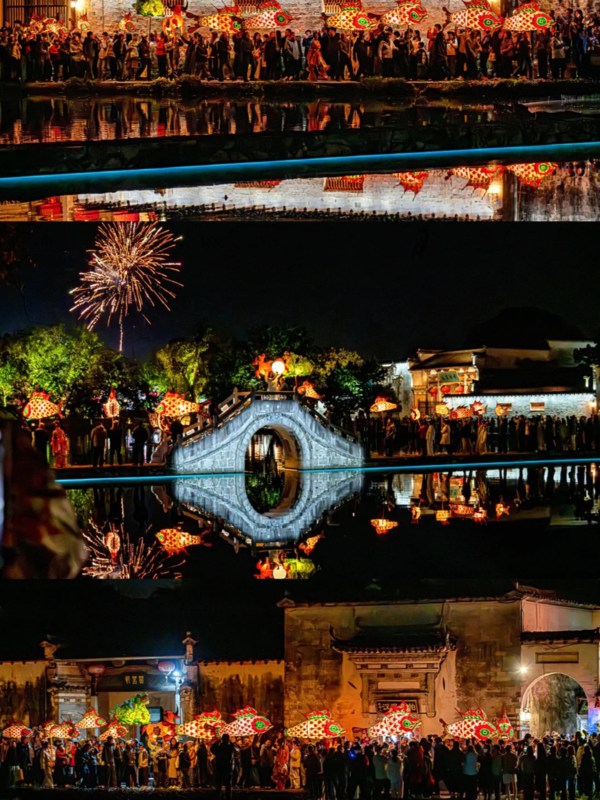
- Night Scene of Hongcun
-
- Xidi Village
The Real Differences (Not What Guidebooks Say)
The village of Hongcun is oriented towards water. The canal, the ponds, the reflections, that is the chief attraction. Photographers love it. Xidi village China has a focus on clan architecture and memorial archways. It is more diversified in the styles of the buildings, larger ancestral halls, and stone-cut gateways known as paifang.
The evaluation according to TripAdvisor has been divided: Hongcun describes 4.5 out of 5 stars, Xidi describes 4.3. This is a little difference but it tells you something. Hongcun conveys a single impression of visuality. Xidi is larger and has to walk further to observe everything.
Choose one, in case you have little time. Hongcun is better place to work on photographing and quick visits. Xidi is the book that can be recommended to those who are concerned with the history of Chinese clans and their traditional architecture. You can spend the entire day at the two. The difference between them is merely 8 kilometers.
Practical Tips for Visiting Both in One Day
Start with Hongcun in the morning. The light hits better before noon. Spend 3-4 hours there, then catch a bus to Xidi around 1 PM. Buses run every 40 minutes from Hongcun's parking lot, taking about 20 minutes. The fare is ¥5-6 per person. Check Ctrip for exact schedules, but the last bus back usually leaves Xidi around 5:30 PM.
Expect to walk 15,000+ steps total between both villages. Xidi covers more ground than Hongcun. Wear comfortable shoes. The stone paths get slippery after rain. Budget at least 7-8 hours including travel time. It's doable but exhausting. Your feet will hurt by evening.
FAQ About Hongcun Village China
Q: Is Hongcun worth visiting if I only have one day in Huangshan area?
Depends on what you want. If you're hiking Huangshan Mountain, that needs a full day minimum. Adding Hongcun means staying an extra day in the area. I'd say it's worth it if you like traditional architecture and photography. But if mountains are your priority, skip Hongcun and focus on the peaks. The village isn't going anywhere. You can always come back. Most people try cramming both into one trip and end up exhausted, enjoying neither properly.
Q: Where exactly is Hongcun Village in China?
Hongcun sits in Yi County (黟县), which is part of Huangshan City in southern Anhui Province. It's about 60 kilometers northwest from Huangshan City center, roughly 1.5 hours by bus. From Huangshan Scenic Area (the actual mountain), it's farther—around 80-90 kilometers. Don't confuse Huangshan City with Huangshan Mountain. They're different locations. The village coordinates are approximately 30°11'N, 117°38'E if you're using GPS.
Q: What does "Hongcun" mean in Chinese (宏村)?
The characters 宏村 (Hóngcūn) translate roughly to "grand village" or "magnificent village." Originally it was written differently but changed during the Qing Dynasty to avoid using the emperor's name. The name reflects the village's ambition when founders built it in 1131. UNESCO recognized it in 2000 partly because the layout and architecture stayed intact for nearly 900 years. The "grand" part refers more to the design vision than physical size.
Q: Can I visit Hongcun village without a tour guide?
Yes, easily. The village covers only 30 hectares. You can walk everywhere in 3-4 hours without getting lost. Baidu Maps works better than Google Maps here. English signs exist at major spots like Moon Pond and South Lake, but most plaques are Chinese-only. Tour guides explain the history and architecture details you'd miss otherwise. They cost around ¥200-300 for a group. Worth it if you care about cultural context. Otherwise, just wander.
Q: How much time should I spend in Hongcun ancient village?
Three hours covers the main spots if you're rushing—Moon Pond, South Lake, Chengzhi Hall. A full day lets you explore side alleys, watch daily life, eat lunch at a local restaurant. Photography enthusiasts should budget two days for sunrise, sunset, and different weather conditions. I spent about 5 hours there and felt like I saw most things. Stay overnight if you want early morning access before crowds arrive at 9 AM.
Q: Is Hongcun accessible for elderly or wheelchair users?
Not really. The entire village uses original stone pathways from the Ming and Qing dynasties. They're uneven, narrow, and slippery when wet. Stairs appear everywhere between courtyards. No ramps exist. Wheelchairs won't work here. Elderly visitors who can walk slowly will manage fine, but it requires decent mobility. There are benches scattered around for rest breaks. If accessibility is critical, Hongcun might not be the right destination. Consider flatter ancient towns like Wuzhen instead.
Q: What's the best time of day to photograph Hongcun village?
Early morning between 6:30 and 8:00 AM gives soft light and empty streets. The sun hits Moon Pond from the east, creating that perfect reflection shot. Late afternoon from 4:30 to 6:30 PM works too, especially at South Lake. The golden hour light makes white walls glow. Avoid midday—harsh shadows, too contrasty. Position yourself on the east side of Moon Pond at sunrise, west side at sunset. Painted Bridge at South Lake photographs best from the eastern bank.
Q: Are there English-speaking guides in Hongcun village China?
Official guides at the ticket office speak limited English, mostly basic phrases. They charge around ¥200-300 for a tour. Your hotel might arrange better English-speaking guides for ¥400-500. Platforms like GetYourGuide or Viator offer pre-booked tours with English guides, usually combined with Xidi village and Huangshan Mountain trips. Quality varies. Read recent reviews before booking. Honestly, most visitors walk around without guides and use translation apps for plaques.