International patients can receive exceptional medical services from highly skilled Hong Kong surgeons, who offer these services at an reduced cost of 60-70 % less than what would be charged in Western Countries without sacrificing any quality. In addition, JCI accredited facilities in Hong Kong utilize leading-edge technology such as SMILE PRO and Femtosecond laser systems and have the support of an English speaking team of specialists. Hence, most procedures can be completed within a three to five day medical tourism schedule.
This comprehensive guide covers everything you need to know before choosing Hong Kong laser eye surgery. First, discover which procedure options suit your specific vision needs. Next, understand transparent costs and candidacy requirements clearly. Subsequently, explore real patient experiences from Singapore, Australia, and Japan. Finally, gain practical medical tourism tips for budgeting and planning effectively.
Vision Needs Assessment: Which Laser Eye Surgery Options Are Right for You?
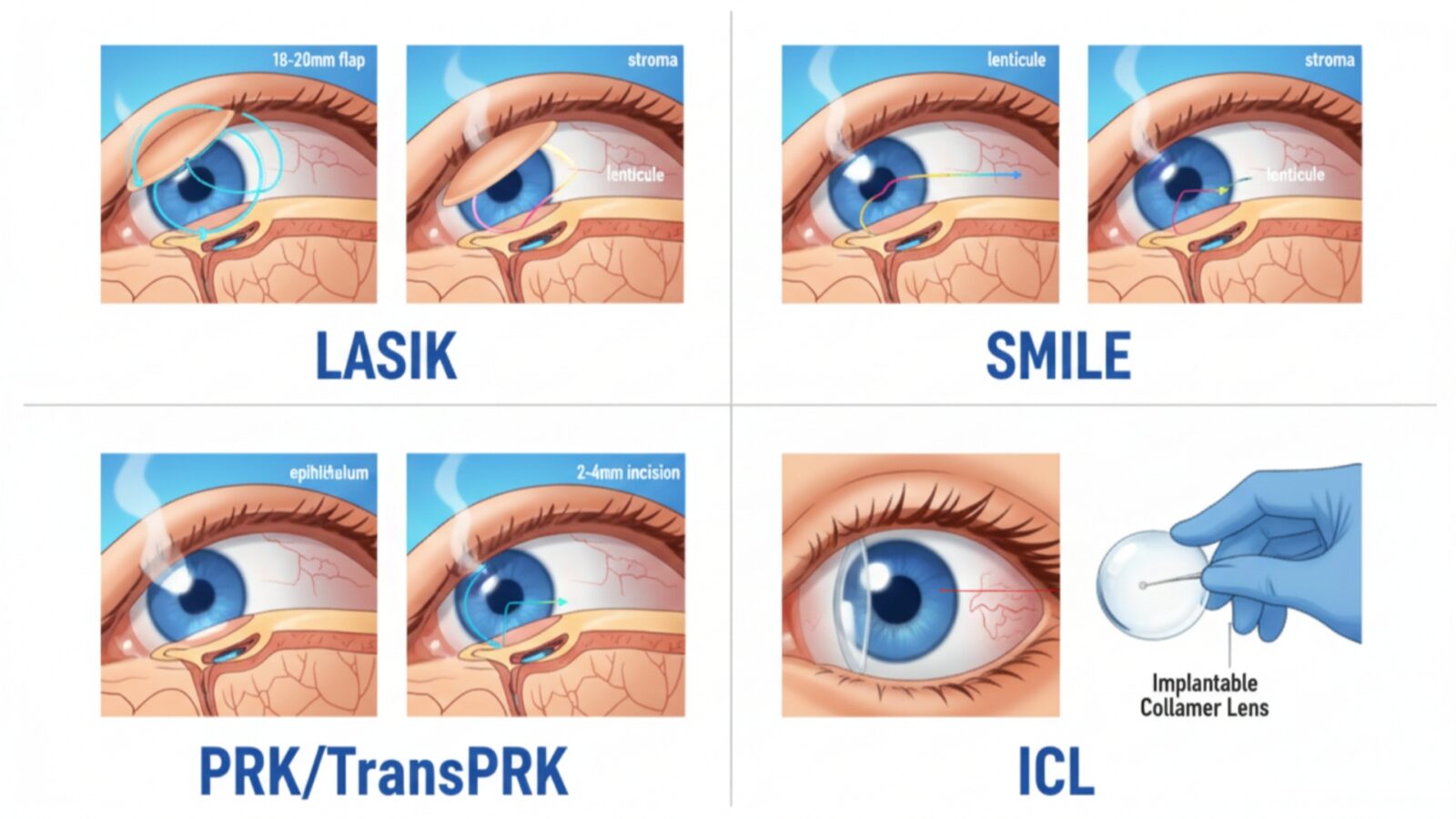
4 Mainstream Surgery Types
Hong Kong laser eye surgery clinics offer multiple advanced procedures. Consequently, understanding differences helps you choose correctly. Furthermore, each technique suits different patient profiles.
LASIK - The Gold Standard Procedure
Using a laser to reshape a person's cornea is what LASIK is; this procedure was first approved by the FDA in 1998. The procedure involves creating a thin flap by the surgeon. After this step is completed, the surgeon uses Laser Ablation to change the shape of the cornea under the flap by removing problematic tissue. After this step is finished, the thin flap repositions itself in the normal position.
LASIK can treat Myopia (Nearsightedness) from -15.00D and Hyperopia (Farsightedness) up to +6.00D. The correction for Astigmatism is -6.00D or less. Most patients will have both eyes treated in less than 20 minutes, resulting in a vision of 20/20 or better after 24 hours following the procedure.
SMILE - Minimally Invasive Technology
Small Incision Lenticule Extraction revolutionized surgery in 2016. Specifically, the VisuMax laser creates a lens-shaped disc. Subsequently, surgeons remove it through 2-4mm incision. Therefore, no flap means faster healing.
SMILE corrects myopia up to -10.00D and astigmatism up to -5.00D. However, it cannot address hyperopia currently. Nevertheless, each eye takes 5 minutes. Additionally, dry eye occurs less frequently. Consequently, active patients prefer this approach.
PRK - Surface Ablation for Thin Corneas
PRK represents the original laser eye surgery method. Unlike LASIK, surgeons apply laser to surface directly. Subsequently, bandage lenses protect during healing. Although recovery takes longer, results match LASIK.
PRK suits very thin corneas unsuitable for LASIK. Moreover, treatment ranges mirror LASIK capabilities. However, recovery requires 3-5 days. Nevertheless, long-term stability proves excellent.
ICL - Implantable Lens Solution
ICL offers reversible correction for extreme cases. Specifically, surgeons implant lenses between iris and natural lens. Therefore, corneal tissue remains preserved.
ICL corrects myopia from -3.00 to -18.00D and hyperopia to +10.00D. Additionally, thin cornea patients qualify. Furthermore, implants remain reversible. As a result, dry eye rarely occurs.
Comparing All Procedures Side-by-Side
| Feature | LASIK | SMILE | PRK | ICL |
|---|---|---|---|---|
| Procedure Type | Laser reshaping | Laser lenticule extraction | Surface laser | Lens implant |
| Myopia Range | Up to -15.00D | Up to -10.00D | Up to -12.00D | -3.00 to -18.00D |
| Hyperopia Range | Up to +6.00D | Not suitable | Up to +4.00D | Up to +10.00D |
| Astigmatism Range | Up to -6.00D | Up to -5.00D | Up to -6.00D | Up to -6.00D |
| Procedure Time | 15-20 minutes | 5-10 minutes | 10-15 minutes | 20-30 minutes |
| Recovery Time | 1-2 days | 1-2 days | 3-5 days | 1 week |
| Flap Created | Yes | No | No | No |
| Dry Eye Risk | Moderate | Low | Low | Very low |
| Best For | General patients | Active lifestyle | Thin corneas | High prescriptions |
| Reversible | No | No | No | Yes |
| Price Range (HKD) | $19,800-$22,000 | $20,000-$29,800 | $18,000-$25,000 | $45,000-$65,000 |
Choose based on your prescription strength, corneal thickness, and lifestyle requirements. Professional consultation determines your ideal procedure. Most Hong Kong clinics offer multiple options under one roof.
Eligibility Check: Are You a Suitable Candidate for Laser Eye Surgery?
Hong Kong laser eye surgery requires meeting specific criteria. Consequently, comprehensive evaluation ensures safety.
Basic Requirements Every Candidate Must Meet
Minimum age requirements ensure vision stability before permanent correction. Patients must be at least 18 years old, ideally 21 or older. Prescription stability for 12+ months demonstrates your vision stopped changing.
Essential Criteria:
- At least 18 years old (21+ preferred for stability)
- Stable prescription for minimum 1 year
- Generally healthy eyes without active disease
- No current eye infections or inflammation
- Realistic expectations about potential outcomes
General health significantly impacts surgical success and healing. Pregnancy or nursing causes temporary vision fluctuations. Uncontrolled autoimmune conditions may compromise healing processes. Adequate corneal thickness supports the chosen procedure technique safely.
Eye-Specific Conditions Affecting Eligibility
Some eye conditions may necessitate specific considerations and/or alternative surgical procedures. Dry eyes may worsen, albeit temporarily, following LASIK surgery. Enlarged pupils may increase post-operative night vision problems. Thin corneas are typically disqualified for LASIK but could qualify for PRK or ICL. Irregular astigmatism requires sophisticated wavefront-guided treatment design.
Pre-existing diseases demand thorough evaluation before proceeding with Hong Kong laser eye surgery. Glaucoma patients need intraocular pressure monitoring throughout recovery. Cataracts should receive treatment before considering refractive surgery. Retinal conditions require specialist clearance from a retinal surgeon. Previous eye surgeries necessitate detailed surgical history review.
Complete Cost Breakdown: What You'll Actually Pay in Hong Kong
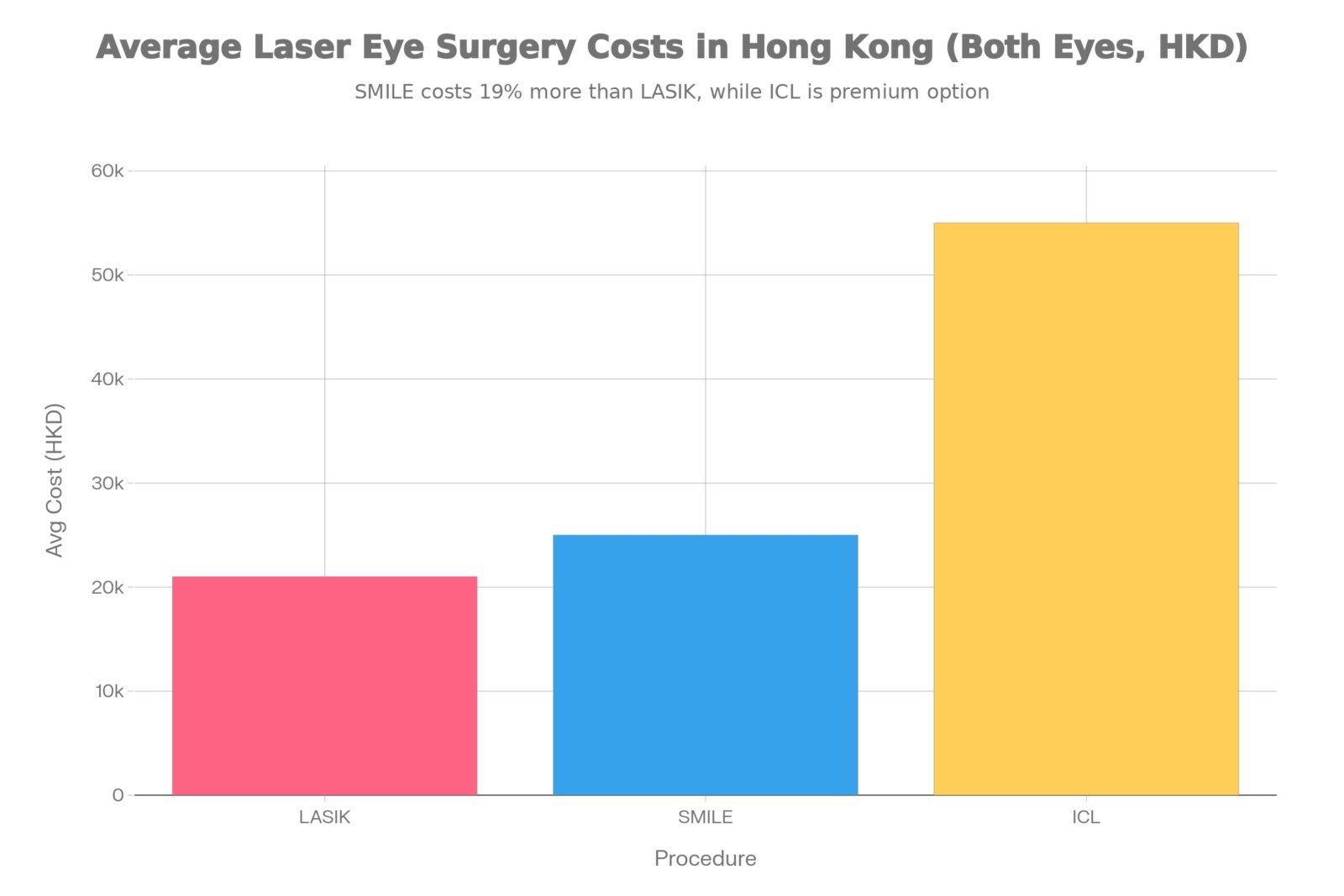
Average Cost of Laser Eye Surgery in Hong Kong (Both Eyes, HKD)
Hong Kong laser eye surgery offers exceptional value. Moreover, transparent pricing helps accurate budgeting. Therefore, understanding costs prevents surprises.
Surgery Fees by Procedure Type (2025 Prices)
Procedure pricing reflects technology complexity and surgical expertise required. LASIK and SMILE maintain similar price ranges across most clinics. PRK costs slightly less due to simpler equipment requirements. ICL pricing reaches significantly higher due to imported lens costs.
| Procedure | Price Range (Both Eyes) | Average Cost | What's Typically Included |
|---|---|---|---|
| LASIK | HK$19,800 - $22,000 | HK$21,000 | Pre-op exam, surgery, 5 follow-ups, medications |
| SMILE | HK$20,000 - $29,800 | HK$25,000 | Pre-op exam, surgery, 5 follow-ups, medications |
| PRK | HK$18,000 - $25,000 | HK$21,500 | Pre-op exam, surgery, bandage lens, 5 follow-ups |
| ICL | HK$45,000 - $65,000 | HK$55,000 | Pre-op tests, imported lenses, surgery, follow-ups |
Several factors influence pricing. For instance, surgeon experience commands premiums. Additionally, latest technology costs more. However, Hong Kong remains 50-70% cheaper than US.
Clinic-by-Clinic Price Comparison
Private Hospitals:
| Hospital | Pre-Op Exam | LASIK (Both Eyes) | SMILE (Both Eyes) | Post-Op Visits | Enhancement Policy |
|---|---|---|---|---|---|
| St. Teresa's Hospital | HK$800 | HK$19,800 | Not offered | 5 included | 1 year free |
| St. Paul's Hospital | HK$800 | HK$21,000 | Not offered | 5 included | 1 year free |
| HKSH Guy Hugh Chan Centre | HK$990 | HK$22,000 | HK$22,000 | 5 included | 1 year free |
Private Clinics & Eye Centers:
| Clinic | Pre-Op Exam | LASIK (Both Eyes) | SMILE (Both Eyes) | Post-Op Visits | Enhancement Policy |
|---|---|---|---|---|---|
| CMER SMILE Laser Center | HK$100 | HK$22,000 | HK$29,000 | 5 + 1yr refraction | 2 years free |
| Clarity SMILE LASIK Centre | HK$500 | HK$19,800 | HK$27,800 | 5 included | 1 year free |
| Hong Kong Laser Eye Centre | HK$100 | HK$21,000 | HK$29,800 | 5 included | 1 year free |
| Hong Kong Nobel Eye Centre | Included | HK$20,000 | HK$20,000 | 4 included | Contact clinic |
Prices last updated January 2025. Always verify current pricing directly with clinics. Additional charges may apply for wavefront customization or complex cases. All amounts are in Hong Kong dollars for both eyes.
Complete Treatment Cost at Guy Hugh Chan Centre (LASIK)
Hong Kong Sanatorium & Hospital's Guy Hugh Chan Centre represents Hong Kong's most prestigious facility. The transparent pricing model eliminates hidden fees and surprises. This example shows standard bilateral LASIK procedure costs comprehensively.
BASE PACKAGE: HK$22,000
- Pre-operative comprehensive evaluation: HK$990
- Bilateral LASIK surgery (both eyes): HK$22,000
- Post-operative medications and eye drops: Included
- Five scheduled follow-up visits: Included
- Day 1, Week 1, Month 1, Month 3, Month 6
OPTIONAL ADDITIONS:
- Wavefront-guided customization technology: +HK$3,000-5,000
- Enhancement procedure if needed within 1 year: Free
- Additional consultations beyond standard schedule: HK$800 each
INTERNATIONAL PATIENT SERVICES:
- English consultation and communication: Included
- Airport limousine transfer service: HK$500
- Medical tourism coordination assistance: Available
TOTAL ESTIMATED INVESTENT: HK$22,000 to HK$27,000 all-inclusive
Higher estimates include optional wavefront customization for complex prescriptions. International patients add HK$500 for convenient airport transportation. Payment methods accepted include major credit cards, bank transfer, WeChat Pay, Alipay, and cash. Insurance reimbursement possibilities depend on individual policy coverage terms. Hong Kong residents qualify for interest-free installment plans spanning 6-12 months.
Clinic Selection Guide: How to Choose the Right Clinic in Hong Kong
Selecting the right facility determines outcomes. Therefore, evaluate these critical factors carefully.
Doctor Qualifications:
- Essential qualifications include six-year MBBS medical degree. Additionally, specialty ophthalmology training requires six more years. Verify registration through Hong Kong Medical Council website.
- Surgeons should have completed 1,000+ procedures minimum. Moreover, ask about complication and enhancement rates directly. Fellows of HK Academy of Medicine hold highest credentials.
Equipment Technology:
- Technology determines surgical precision and safety margins. LASIK requires femtosecond and excimer laser platforms. Current generation lasers should be within five years old.
- Wavefront technology enables customized treatment planning. This addresses complex aberrations precisely. Furthermore, regular calibration ensures consistent ablation.
Post-Operative Support:
- Standard care includes minimum five follow-up visits. Typical schedule: Day 1, Week 1, Month 1, Month 3, Month 6. Twenty-four-hour emergency contact lines provide peace of mind.
- Video consultation options enable convenient remote follow-ups. Local ophthalmologist referrals provide backup care. All medications should be included in quoted package.
International Patient Services:
- English-speaking staff throughout journey eliminates confusion. Assistance with compressed scheduling fits surgery in 2-3 days. Medical tourism packages bundle services at discounted rates.
- Travel insurance claims assistance maximizes reimbursement possibilities.
Transparent Pricing:
- Legitimate providers offer detailed written itemized quotes. Costs clearly separate included services from optional upgrades. Always request written quotes before committing.
- Beware "promotional prices" requiring immediate payment decisions.
Clinic Roundup: The Best-Rated Laser Eye Surgery Clinics in Hong Kong
-

- CMER SMILE Laser Center
-
- EuroEyes
Hong Kong offers numerous excellent facilities. Consequently, these three earn outstanding reviews. Moreover, each suits different profiles.
Hong Kong Laser Eye Centre - Best Value
Clinic Overview: Established 2000 | 3 locations (Tsim Sha Tsui, Central, Tseung Kwan O) | 5 specialists | VisuMax 800 & WaveLight EX500
The clinic’s core advantage lies in its expertise in minimally invasive SMILE surgery, led by Dr. Xu Yanhong—an officially certified SMILE surgeon by German Zeiss. This certification, only granted after rigorous assessments of surgical proficiency, case volume, and patient outcomes, makes Dr. Xu a top choice for international patients seeking SMILE procedures.
With three convenient locations, the Tsim Sha Tsui branch (near major hotels) offers exclusive same-day exam-surgery packages for medical tourists. Its key strengths include customized LASIK and SMILE treatments using VisuMax 800 laser, with Dr. Xu specializing in correcting high myopia (-8.00D+) and astigmatism, and boasting over 5,000 successful cases. The team prioritizes transparent pre-op education, multilingual guidance, and personalized post-op care to ensure a smooth journey for global patients.
Key Features:
- Pricing: LASIK HK$18,000 | SMILE HK$26,000
- Languages: English, Mandarin, Cantonese, Japanese
- Services: Airport transfer, WhatsApp +852 2628 1111
- Best For: Mid-budget patients, Asian tourists
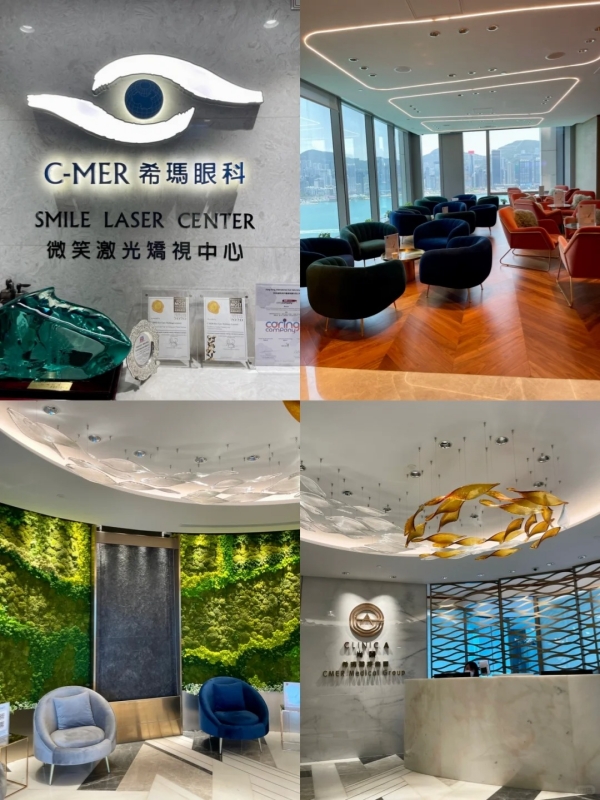
CMER SMILE Laser Center - SMILE Specialist Benchmark
Clinic Overview: Established 2010 | 2 locations (Tsim Sha Tsui, Central) | SMILE-exclusive center | Zeiss certified | 20,000+ SMILE cases
Led by Dr. Dennis Lam, a Fellow of the Hong Kong Academy of Medicine, it’s a pioneer in SMILE surgery. Dr. Lam, with 15,000+ SMILE procedures, holds Zeiss VisuMax Master Certification, specializing in high myopia (-10.00D+) and astigmatism correction. Boasting a 0.08% complication rate, it’s a Zeiss official SMILE training center. Located in Tsim Sha Tsui and Central, it offers same-day exam-surgery for tourists, backed by dedicated multilingual patient coordinators.
Key Features:
- Pricing: LASIK HK$22,000 | SMILE HK$29,000
- Expertise: SMILE, customized LASIK, astigmatism correction
- Technology: Zeiss VisuMax 800, AI pre-op assessment
- Best For: SMILE-focused patients, international tourists
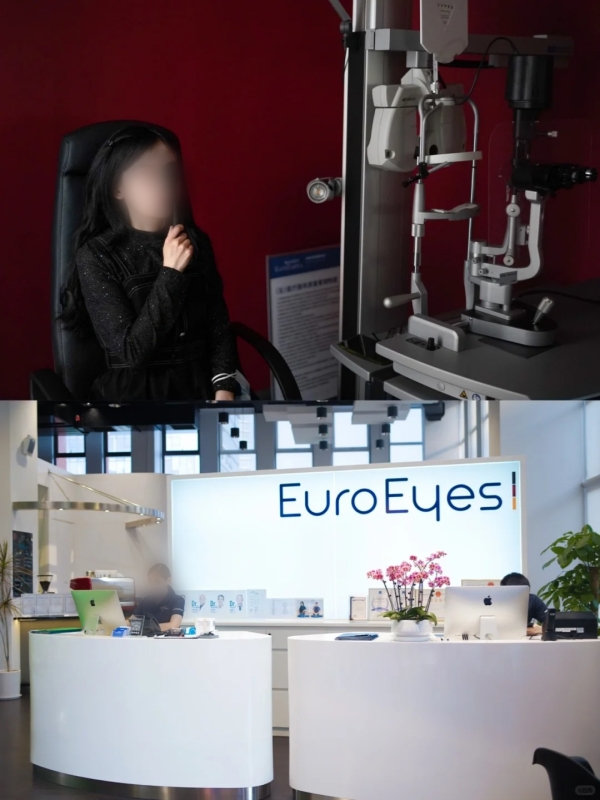
Euroeyes Hong Kong - European Standards
Clinic Overview: 20+ years European heritage | German chain | Central location | EU protocols | German language service
Euroeyes brings over 20 years of European medical excellence to Hong Kong. Led by Dr. Markus Müller, a German board-certified ophthalmologist with 15+ years of refractive surgery experience, Euroeyes specializes in SMILE and PRK. Dr. Müller, certified by the German Society of Ophthalmology, excels in complex cases like thin corneas, boasting 8,000+ successful procedures. Its Central clinic exclusively uses German Zeiss VisuMax lasers, aligning with EU medical protocols. Tailored for Europeans, it offers German-English bilingual consultations and post-op follow-ups synced with European clinics.
Key Features:
- Pricing: Premium tier (inquiry required)
- Technology: German Zeiss VisuMax exclusively
- Approach: Extended consultations, education emphasis
- Best For: European tourists, German speakers
Treatment Journey Walkthrough: From Initial Consultation to Full Recovery
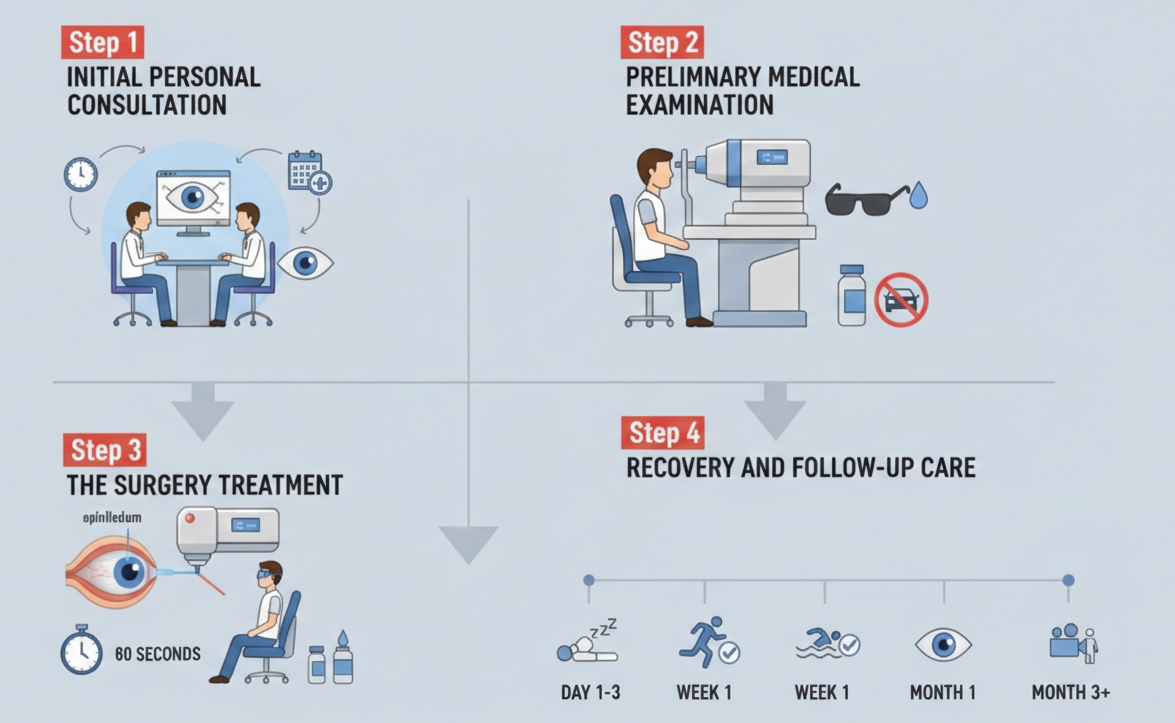
From Initial Consultation to Full Recovery
Your journey follows structured stages. Therefore, understanding each reduces anxiety.
Step 1 - Initial Personal Consultation
Your first meeting with the surgeon lasts 30-45 minutes. First, discussion covers your specific vision goals. Next, medical history review identifies potential contraindications. Subsequently, preliminary candidacy assessment determines if you can proceed safely.
Clinics provide comprehensive information about available procedure options. Moreover, realistic outcome expectations get established based on your prescription. Additionally, detailed cost breakdowns present transparent pricing. Furthermore, legitimate clinics encourage research and welcome second opinions.
International patients often complete this stage via video call. Therefore, preliminary screening ensures your trip to Hong Kong proves worthwhile.
Step 2 - Preliminary Medical Examination
Comprehensive evaluation requires 1.5-2 hours to complete thoroughly. Consequently, pupil dilation causes blurry vision for 4-6 hours afterward. Therefore, arrange transportation home since you cannot drive safely. Subsequently, multiple diagnostic tests confirm candidacy.
Your surgeon reviews all findings during a detailed consultation. Then, recommendations include optimal procedure(s) for your specific eyes. Finally, written summaries document your candidacy status.
Step 3 - The Surgery Treatment
Surgery day preparation starts with avoiding all eye makeup. Additionally, arrange reliable transportation home after the procedure. Furthermore, eat a light meal beforehand to maintain energy. Finally, arrive 30 minutes early for final checks.
The LASIK procedure experience proves remarkably comfortable for patients. First, topical anesthetic drops eliminate pain without requiring injections. Then, a gentle speculum holds your eye open throughout treatment. Subsequently, you remain awake but feel no pain. Finally, the laser phase lasts approximately 60 seconds per eye.
Immediate post-operative effects include hazy or blurry vision. However, protective eye shields prevent accidental rubbing. Subsequently, rest in the recovery area for 15-30 minutes. Finally, staff provide medications and detailed instructions.
Step 4 - Recovery and Follow-Up Care
First 24 hours prove critical for proper healing initiation. Therefore, keep eyes closed as much as possible. Moreover, use prescribed drops on the exact schedule provided. Additionally, wear protective shields while sleeping. Furthermore, expect mild irritation as completely normal.
Recovery Timeline Table:
| Timeframe | Visual Progress | Activity Restrictions |
|---|---|---|
| Day 1-3 | Most improvement occurs | No water contact, frequent rest |
| Week 1 | Vision stabilizing | No swimming, light exercise OK |
| Month 1 | Near-final vision | Swimming cleared, dry eyes may persist |
| Month 3 | Fully stabilized | All activities cleared |
| Month 6 | Long-term stability | No restrictions |
International patient considerations require special planning. First, schedule local examination before returning home. Then, video follow-ups handle 1-week and 1-month appointments. Finally, ensure adequate medication supplies cover recovery period.
Essential Pre-Surgery Tips: What You Need to Know Before Laser Eye Surgery
International patients face unique considerations. Therefore, understand risks and plan coverage.
Understanding Temporary Side Effects
All surgical procedures carry some expected temporary effects despite excellent safety profiles. Hong Kong laser eye surgery maintains outstanding success rates exceeding 95%. Most side effects resolve completely within 3-6 months of surgery. Understanding normal recovery helps manage expectations and reduces anxiety.
Common Temporary Side Effects:
| Side Effect | LASIK Incidence | SMILE Incidence | Duration | Management Strategy |
|---|---|---|---|---|
| Dry eyes | 40-60% moderate | 20-30% mild | 1-6 months | Artificial tears, punctal plugs if severe |
| Glare/halos around lights | 30-40% | 20-25% | 3-6 months | Usually resolves, limit night driving initially |
| Light sensitivity | 50-60% | 40-50% | 1-4 weeks | Sunglasses outdoors required |
| Foreign body sensation | 40-50% | 20-30% | 1-2 weeks | Frequent lubricating drops provide relief |
| Blurred or fluctuating vision | 70-80% | 60-70% | 2-7 days | Expected, improves daily as healing progresses |
Risk minimization reduces complications. First, choose experienced surgeons. Additionally, follow instructions strictly. Furthermore, attend all follow-ups. Moreover, use medications as directed.
Understanding Rare Complications
Serious complications occur rarely. Moreover, most manage effectively if detected early. Therefore, transparency helps informed decisions.
Rare Complications Table:
| Complication | LASIK Incidence | SMILE Incidence | Treatment Approach |
|---|---|---|---|
| Infection | <0.1% | <0.05% | Antibiotics, careful monitoring by specialist |
| Undercorrection (residual prescription) | 5-10% | 5-8% | Enhancement procedure offered within warranty |
| Overcorrection (too much correction) | 2-5% | 2-4% | Enhancement or glasses for minor amounts |
| Flap complications (dislocation, folds) | 1-2% | N/A (no flap) | Medical management, repositioning if needed |
| Serious vision loss or blindness | <0.01% | <0.01% | Extremely rare occurrence, emergency care |
Prevention remains best strategy. First, thorough screening identifies risks. Additionally, surgeon experience impacts rates. Furthermore, modern technology reduces aberrations.
Insurance Coverage and Payment
Hong Kong local insurance rarely covers elective surgery. Moreover, international policies vary significantly. Therefore, basic plans exclude LASIK/SMILE. Worth investigating before surgery include following. First, high-end plans offer HK$6,500 annual benefits. Additionally, travel insurance may cover complications. Furthermore, student insurance occasionally includes coverage.
Payment methods vary but most accept major options. For instance, credit cards earn rewards. Additionally, bank transfers require advance payment. Moreover, WeChat Pay and Alipay serve users. Furthermore, installment plans exist for residents.
FAQs: Your Questions Answered
Q: Can I still wear contact lenses after surgery?
Yes, physically possible after surgery. However, most no longer need them. Additionally, some choose decorative contacts later. Nevertheless, wait 3 months before trying. Moreover, swimming with contacts still risks infection. Therefore, consult surgeon first.
Q: Will I still need reading glasses after surgery?
Patients over 40 typically need reading glasses. Specifically, presbyopia affects everyone regardless. Moreover, surgery corrects distance not aging. However, monovision offers alternative. Nevertheless, under 40 rarely need readers. Finally, presbyopia starts around 42-45.
Q: How long does the effect last?
Surgery permanently reshapes cornea. Consequently, most maintain excellent vision lifelong. However, aging continues affecting eyes. Nevertheless, changes remain rare after 30. Moreover, presbyopia develops after 40. Additionally, cataracts may form later. Overall, majority enjoy lifelong correction.
Q: What if my vision regresses?
Regression occurs in 5-10% patients. However, minor regression often doesn't impact activities. Moreover, significant regression qualifies for enhancement. Additionally, enhancements typically free within 1-2 years. Furthermore, regression more common with high prescriptions. Similarly, younger patients experience higher rates. Finally, most happens within first year.
Q: Do I need a medical visa?
Most visitors don't require visas. Specifically, 170+ countries receive visa-free access. However, duration depends on nationality. Therefore, check Immigration Department website. Moreover, medical tourism qualifies under tourist classification. Additionally, no special medical visa exists. Finally, bring appointment confirmation letters.
Q: How long should I stay?
Minimum 3-day stay recommended. First, Day 1 includes arrival and exam. Then, Day 2 features surgery and recovery. Subsequently, Day 3 covers follow-up and departure. However, ideal 4-5 days allows buffer. Moreover, LASIK/SMILE patients fly 24 hours post-surgery. Nevertheless, PRK needs 5-7 days.
Q: Is Hong Kong cheaper than US?
Yes, significantly cheaper. Specifically, US averages $8,000-10,000 total. However, Hong Kong charges $2,500-3,800 USD both eyes. Therefore, represents 60-70% savings. Moreover, quality equals or exceeds Western facilities. Consequently, medical tourists save $3,000-5,000 USD. Furthermore, qualifications match international standards.
Q: What's the difference between LASIK and SMILE?
Main difference involves flap creation. Specifically, LASIK creates flap then reshapes. However, SMILE creates lenticule through tiny incision. Therefore, SMILE has less dry eye. Moreover, suits active patients. Nevertheless, LASIK has faster recovery. Additionally, LASIK treats hyperopia. Overall, outcomes comparable.
Q: Can both eyes operate same day?
Yes, bilateral surgery is standard practice. Moreover, offers convenience and symmetrical healing. Additionally, takes 20-30 minutes both eyes. However, sequential treats one at a time. Nevertheless, sequential doubles recovery time. Therefore, most prefer same-day. Finally, surgeons ensure safety protocols.
Q: Can I fly immediately after?
Flying 24 hours after LASIK/SMILE generally safe. However, Day 1 follow-up confirms healing first. Moreover, use drops frequently as cabin air dry. Additionally, wear protective sunglasses throughout. Nevertheless, some prefer 48 hours wait. Furthermore, PRK needs 5-7 days. Finally, long-haul requires extra precautions.