Ciqikou
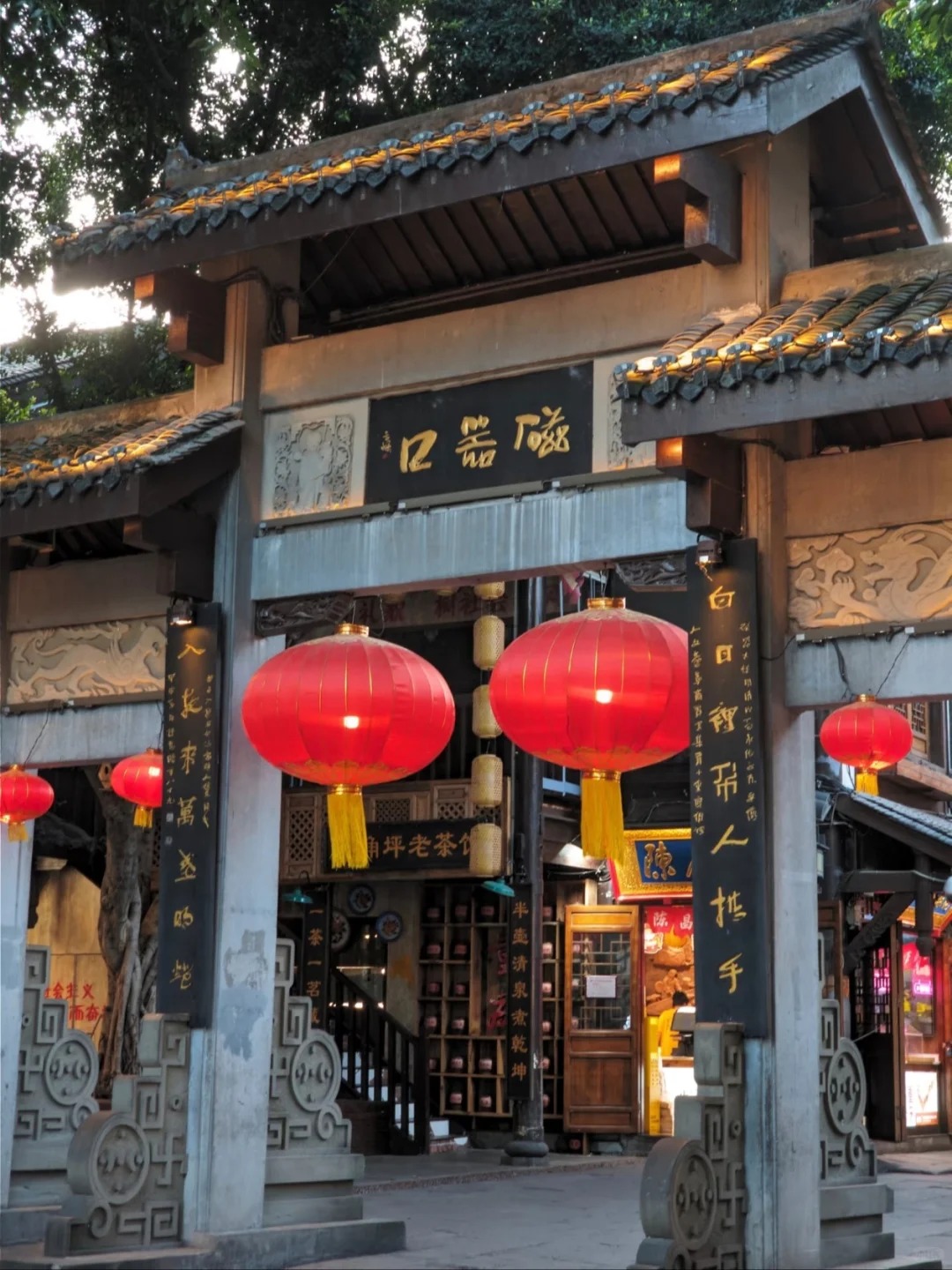
Located west of the Jialing River in Chongqing, China, Ciqikou (磁器口) was once one of the busiest ports in China for Porcelain trading (Ciqikou translates to Porcelain Port). With its many cobblestones, wooden structures and endless food vendors selling all types of delicious foods. The smell of fried mahua and chili pepper (Sichuan) wafts through the air before you reach the gate.
Some areas seem tile-like or modern, but many are genuinely ancient in appearance. If you visit Ciqikou, you may find that some will be really old and some may be more refined and polished (though it seems) they are equally impressive with both the degree of refinement and the overall quality of the food available.
Quick Facts: Ciqikou Ancient Town
| 🏯 Chinese Name | 磁器口古镇 (Cíqìkǒu Gǔzhèn) |
| 🔊 Pronunciation | “Tsuh-chee-koh” |
| 📍 Location | Shapingba District, Chongqing |
| 🕰️ History | Founded 998–1003 AD (Song Dynasty) |
| 💰 Entrance Fee | Free (Baolun Temple: ¥5) |
| ⏰ Opening Hours | 24/7; shops 9AM–10PM |
| ⌛ Time Needed | 2–4 hours |
| 🌤️ Best Time to Visit | Weekday mornings, Spring/Autumn |
| 🚇 Metro Station | Ciqikou Station (Line 1, Exit 1) |
What is Ciqikou Famous For
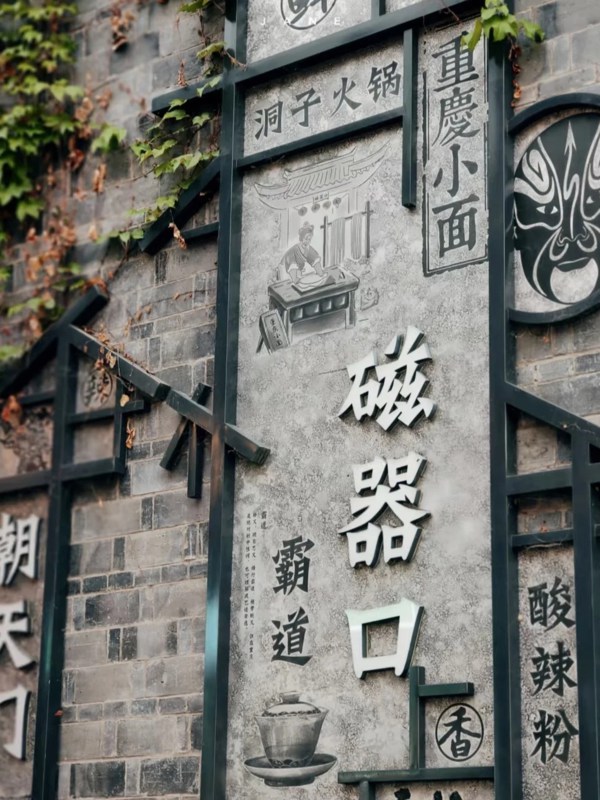
Chongqing Ciqikou
Hidden Charm Beyond the Main Street
A lot of guidebooks will never tell you this, but the version of Ciqikou you see on the main road is heavily commercialised. You can find the same snacks, souvenirs and kiosks every 20m approx. One travel website put it best, "85% of tourists who go to Ciqikou do nothing but go along with the big crowds and visit the 'fake' Ciqikou".
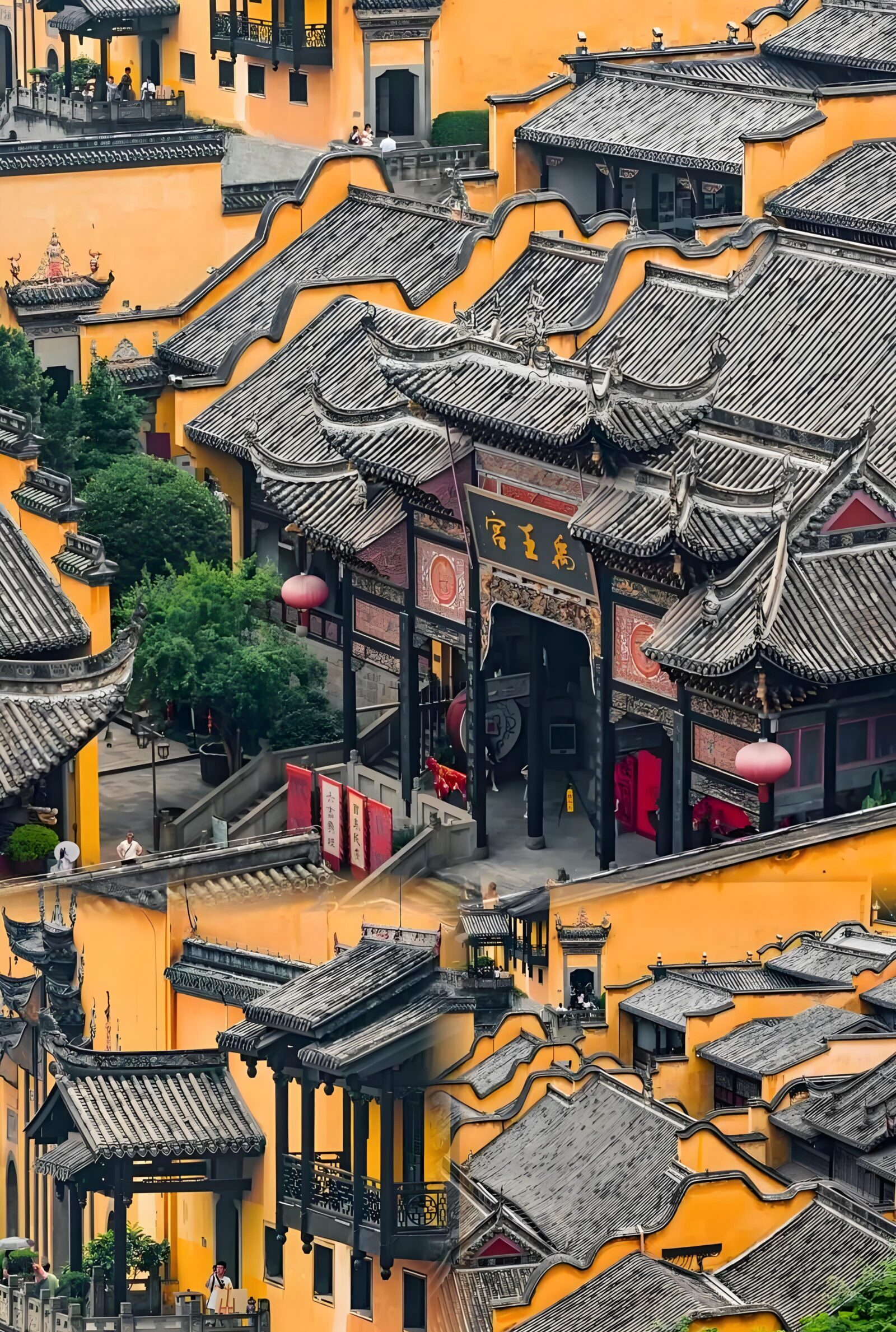
If you want to know about the other version of Ciqikou, just explore a little. When you go into the smaller side streets and walk up the hill to get to Baolun Temple, you will be greeted with the peace of the smaller alleys and streets. You will also find many crumbling and decaying courtyard houses, a network of narrow stairways that do not appear to lead anywhere, and even the locals hanging out their laundry from wooden beams. This is the Ciqikou experience worth searching for, and worth the effort to get there. The secret is knowing when to veer off the commercialised path.
"Little Chongqing" — A Window into the Old City
Locals have a saying: 没去过磁器口,就没来过重庆. Roughly — if you skip Ciqikou, you haven't really seen Chongqing. Sounds like a tourism slogan, I know. But it makes more sense once you understand the layout.
Ciqikou mirrors old Chongqing almost perfectly. Three hills, two streams, one river. Steep steps carved into rock. Wooden stilted houses stacked along slopes. In the 1940s, this was a major commercial hub — over 300 cargo ships docked here daily. The porcelain trade that gave Ciqikou its name is gone now. But the bones of that old river port remain. Walking these streets is probably the closest you'll get to seeing what Chongqing looked like before the skyscrapers took over.
Ciqikou History — From Emperor's Hideout to Porcelain Port
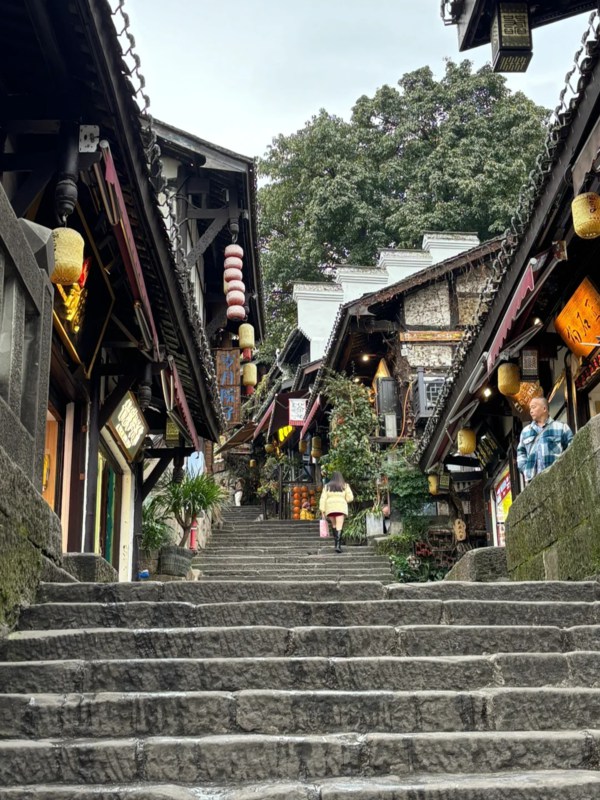
Stairs of Ciqikou
The history of Ciqikou reads more like a novel than a textbook. The town was first established around 998-1003 AD during the Song Dynasty, originally called Baiyachang (白崖场) after the white cliffs along the riverbank. It remained unremarkable for centuries — until local legend says Emperor Jianwen, who supposedly died in a palace fire during the Ming Dynasty, actually escaped disguised as a monk and hid at Baolun Temple. True or not, the story stuck. Locals renamed the town Longyin (龙隐), meaning "Dragon in Hiding," since the dragon symbolizes the emperor in Chinese culture. If stories like this interest you, our guide to Chongqing's historical sites uncovers more hidden layers of the city's past.
The name Ciqikou only appeared during the Qing Dynasty, when porcelain traders from Fujian transformed the town into a ceramics hub with over 70 shops and kilns running day and night. By the 1940s, more than 300 cargo ships docked here daily, carrying silk, salt, and tea alongside porcelain. It was during this boom that locals began calling it "Little Chongqing." The irony today? One TripAdvisor reviewer walked the entire main street without finding a single porcelain shop. The trade that gave Ciqikou its name has vanished completely — replaced by tourism and fried snacks.
Things to Do in Ciqikou — A Walking Route That Skips the Crowds
-
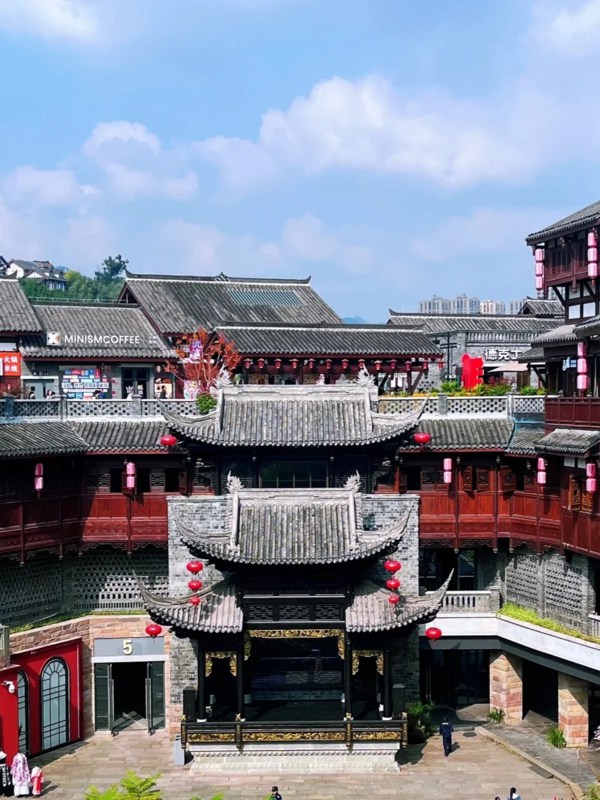

- Diaojiaolou Square
-
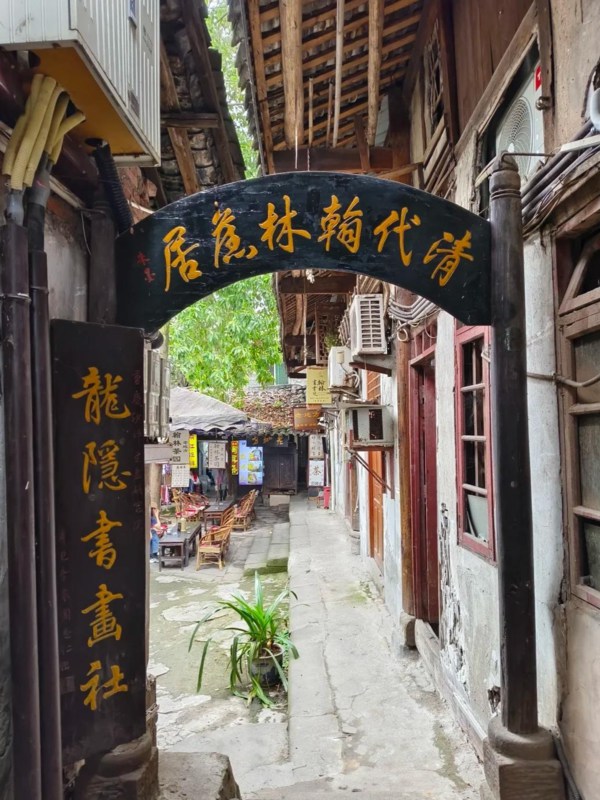
- Hanlin Academy
-
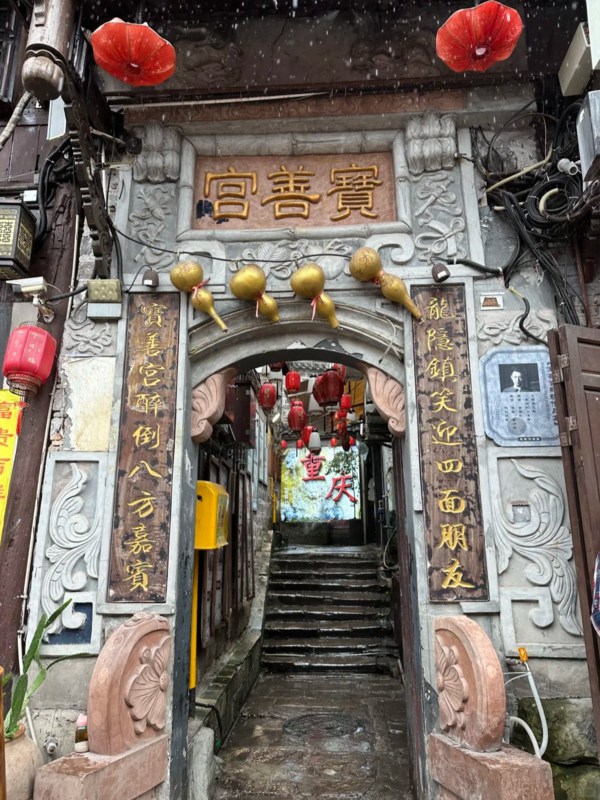
- Baoshan Palace
Most visitors to Ciqikou make the same mistake. They enter through the main gate, follow the biggest crowd down Ciqikou Zhengjie (the main street), eat some mahua, take a few photos, and leave exhausted. One TripAdvisor reviewer described giving up after an hour and just "sat on a restaurant balcony watching the crowd inch up and down the streets." Honestly? That sounds miserable.
Here's a better approach. Start from Metro Line 1, Exit 1. But instead of following everyone toward the main archway, turn left and walk toward Huangjueping Archway first. From there, work your way through Hanlin Academy, then uphill to Baolun Temple. Loop back down through Yinglong Gate and finish at Diaojiaolou Square. This route hits the important spots while avoiding the worst bottlenecks. You'll actually be able to breathe.
Must-See Attractions in Ciqikou Ancient Town
Baolun Temple can be found atop Baiyan Hill with beautiful views of the surrounding area. Baolun Temple is over 1500 years old and It is one of the most ancient Buddhist temples located in the eastern section of Chongqing. The main structure has traditional wooden construction, but there were no nails used during its construction. Autumn time is the best time to visit Baolun Temple because of the beautiful golden yellow foliage found on ginkgos. The entrance fee is ¥5, and will be one of the few quiet places you will find in Chongqing.
Zhong Family House, which is an example of Northern-style courtyard architecture, represents the architecture of the Qing dynasty in China. Zhong Family House will give you a good sense of how wealthy Chinese merchants lived 150 years ago. The entrance fee is also ¥5.
Diaojiaolou Square are the traditional wooden stilt houses that you see in many old photographs of Chongqing. Daytime, this area is average, but you must come back in the evening when the lanterns glow and reflect off the wooden buildings. The reflections of these structures make for one of the best Ciqikou photo opportunities.
Yinglong Gate marks the old dock area along the Jialing River. Not much to see in terms of structures, but the river breeze is nice. Good place to rest your feet and watch boats pass by.
Hidden Gems — Where Locals Actually Go
Skip the main street entirely and wander into the back alleys. You'll find teahouses where old men play mahjong and nobody tries to sell you anything. The tea is cheap — maybe ¥15-20 for a pot — and you can sit for hours.
Hanlin Academy (翰林院) is one of the last surviving ancient private schools in Chongqing's urban area. The Sun family ran it during the Qing Dynasty and produced several imperial scholars. Now it operates as a teahouse. Sip tea under wooden beams that have stood for centuries. It's tucked away enough that most tourists never find it.
Baoshan Palace (宝善宫) has a reputation among locals for granting marriage wishes. Young couples leave red ribbons tied to the railings. Even if you're not superstitious, the courtyard is peaceful — a nice escape from the chaos outside.
Ciqikou Ancient Town at Night — The Transformation
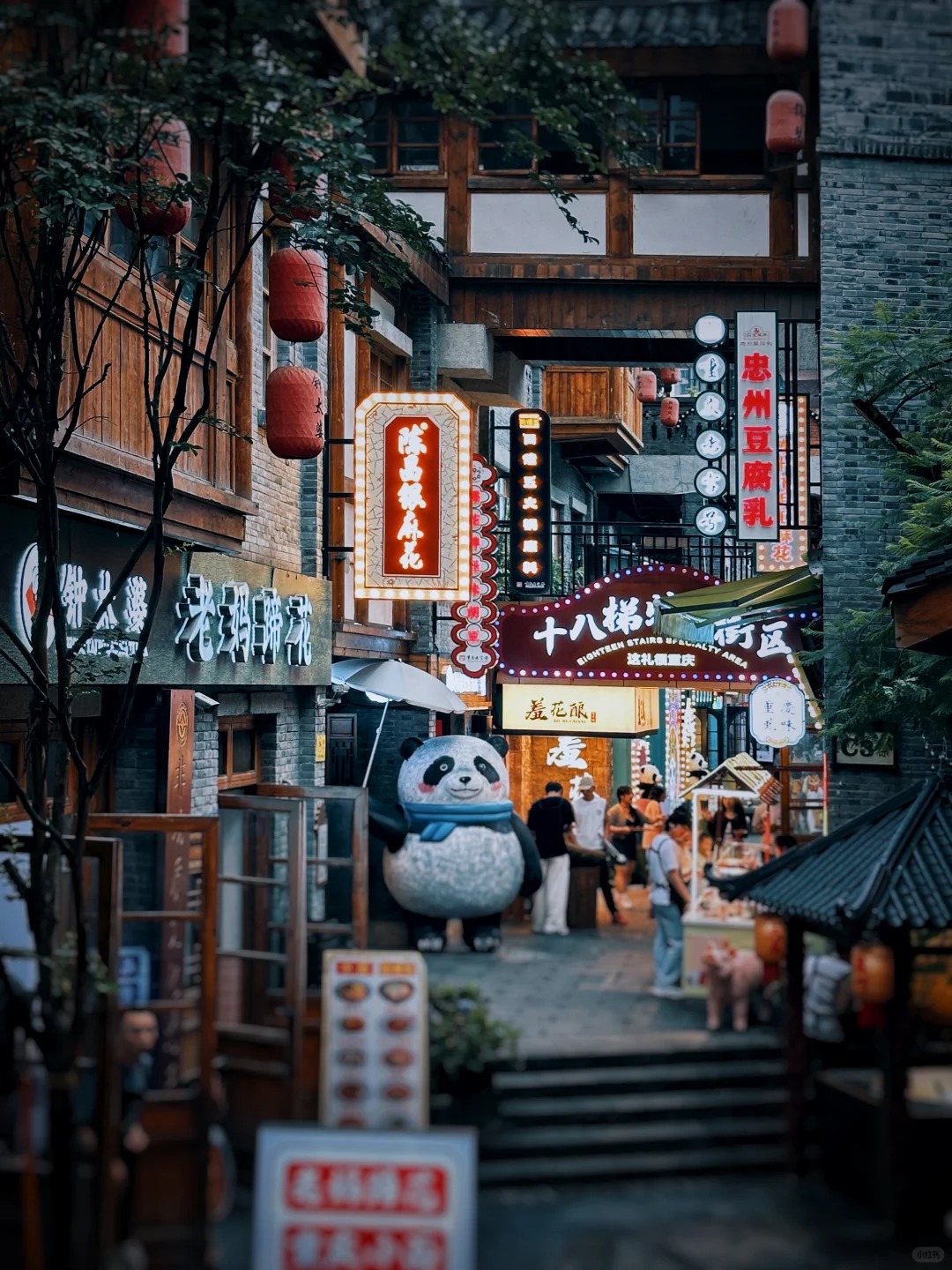
After 8PM, Ciqikou transforms significantly. The guided tours roll out, diminishing the loud shouts of merchants selling their wares. You can actually hear your own footfalls on the stone slabs beneath your feet! Just before dark, the narrow lanes of Ciqikou are illuminated by the glow of many red lanterns reflecting off the wooden shopfronts which seem so much warmer and older than they did during the day, almost giving the feeling that this picturesque town could've belonged to another century just as it did in years past — prior to the throngs of tourists and the mass consumerism that have taken over.
For those looking to experience something more than history, a good option is "Chongqing 1949," an immersive theater venue located directly in the middle of an ancient town. The show creates the atmosphere of wartime Chongqing through the backdrop of many real-life stilted buildings, docks, and arched entranceways. Tickets are around ¥200 (approximately $31 USD) for an 80-minute performance with varied starting times in the evening, but usually about 7:30PM.
What to Eat at Ciqikou — A Street Food Survival Guide
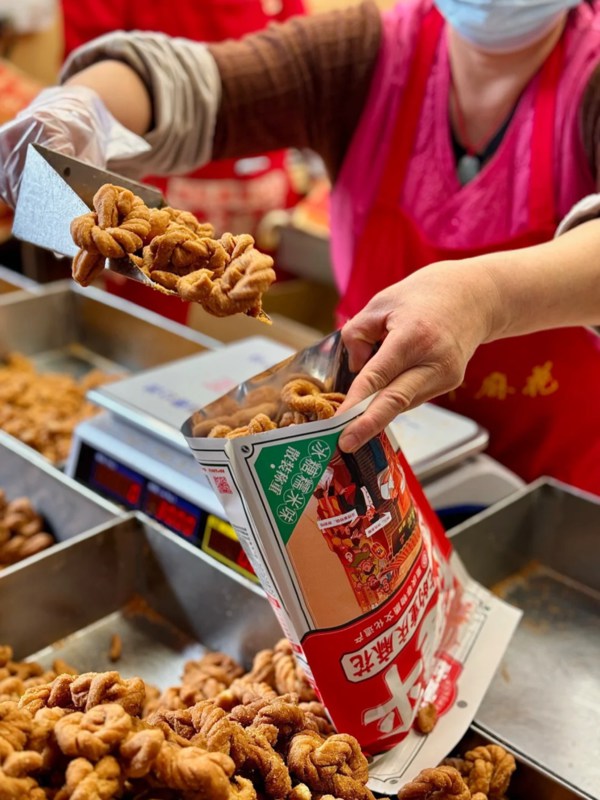
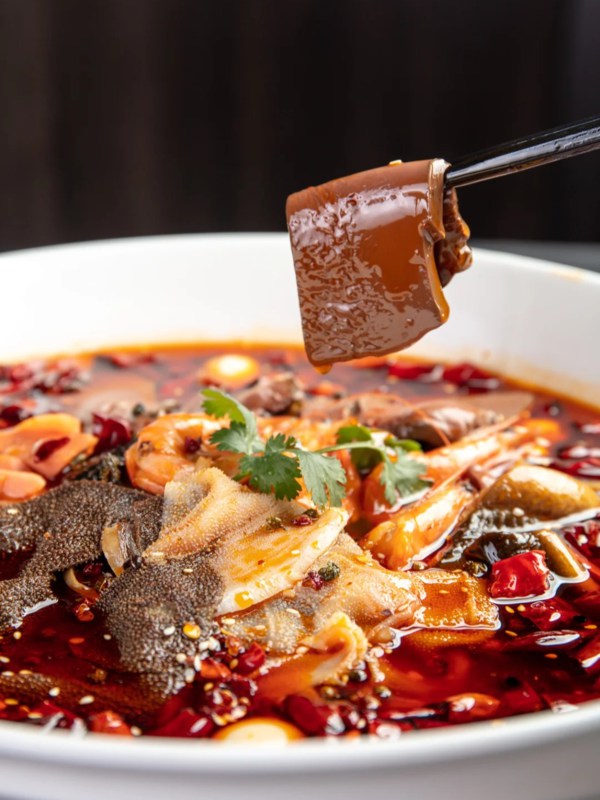
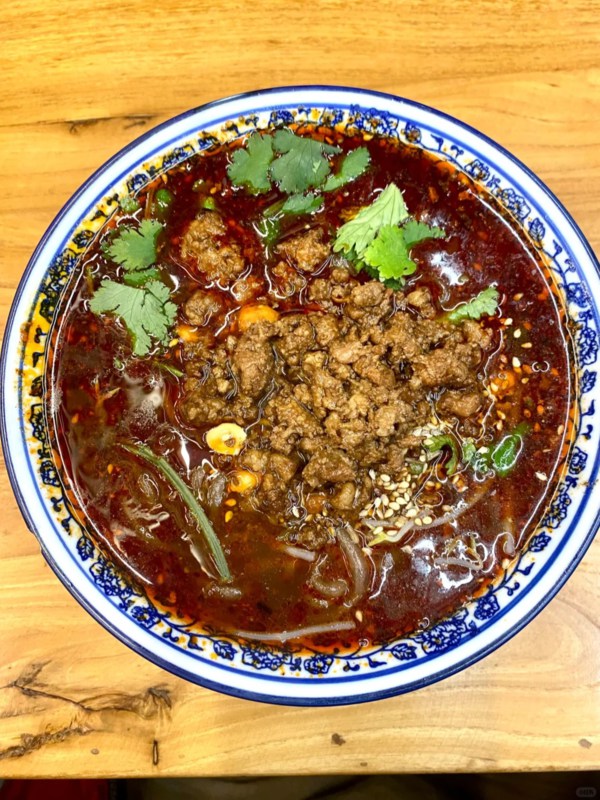
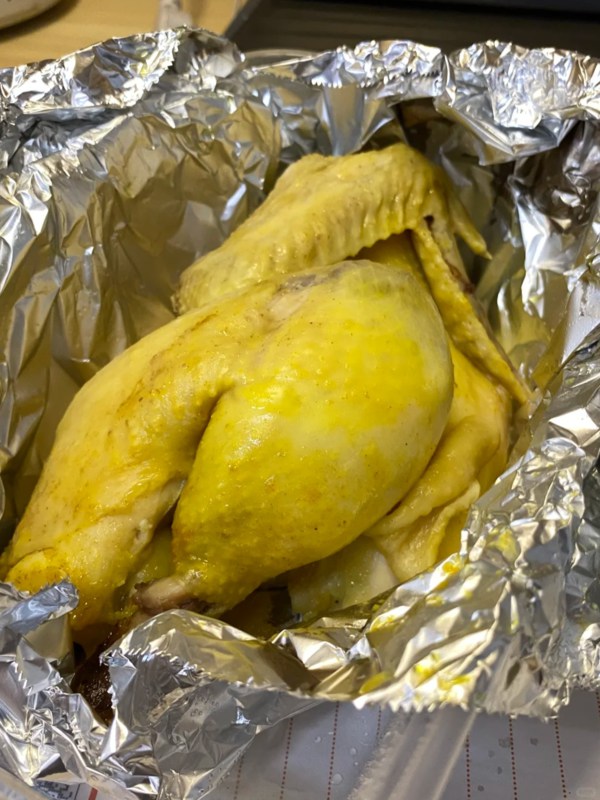
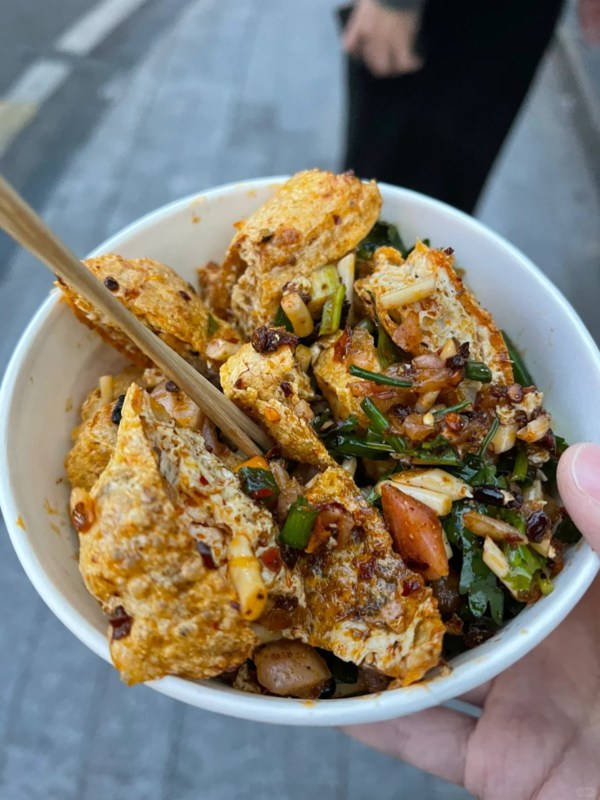
The food at Ciqikou hits you before you're ready for it. Walk through the main gate and within thirty seconds you'll smell chili oil, caramelized sugar, and something frying in hot oil. Vendors wave samples at you. Steam rises from bamboo baskets. It's overwhelming in the best way — or the worst way, depending on how hungry you are. If you want to dig deeper into what makes Chongqing's food scene so intense, our complete Chongqing food guide covers everything from fiery hotpot to hand-pulled noodles.
Here's the thing about eating at Ciqikou: there are maybe a dozen signature snacks, and every shop claims to sell the "original" version. Some are genuinely good. Some are tourist traps charging double for the same product. I've eaten my way through this town enough times to have opinions. Take them or leave them.
The Famous Ciqikou Snacks You Can't Miss
Chen Mahua (陈麻花) is what they are known for here. These crispy, twisted dough sticks are on the sweeter side and are not really that greasy as they look. The original shop is "陈昌银" (Chen Changyin); look for the characters on the sign. You should expect to pay about ¥15-18 per bag. There are literally 30+ mahua vendors on the main street, but locals say Chen Changyin still does it best. I personally think the salty version beats the sweet one, but that's just my own preference.
Maoxuewang (毛血旺) is said to have originated right here in Ciqikou. It is a spicy bowl featuring duck blood curds, tripe, slices of beef, and assorted vegetables soaked in a bright red chili oil sauce. How spicy is it? I would rate it 🌶️🌶️🌶️🌶️ out of five. So if you're not a fan of spicy foods, this dish may not be for you. A normal serving usually costs about ¥35-50 depending on the restaurant you visit.
Suanlafen (酸辣粉) — Hot and Sour Sweet Potato Noodles — is worth watching just for how it gets made. The cook will stretch the noodle dough by hand and swing it before cutting it into the large pot. The noodles are extremely slippery, spicy and tangy when they are finally served up to you. They usually cost between ¥12-15 each.
Jiaohuaji (叫化鸡) or Beggar's Chicken may not be well-known but it offers a lot. One TripAdvisor user described it as "cooked inside a clay container, wrapped in Lotus leaves"; this is completely true. When you eat the "beggar's chicken," the flesh is tender and very slightly earthy from being baked in the clay. You will see vendors cracking open the container just outside the large square.
Honest Warnings — What to Skip
Chou doufu, or stinky tofu, is a dish well known by many foods in China due to its overwhelming odour. Kosher stores carry this item, which is likely how the stinky tofu interpretation started. I don't understand how anyone could possibly consume this item or be able to tolerate its smell! If you like stinky tofu, you will know from experience what strong wafts of this fermented snack bring. Since my stinky tofu experience many years ago, I have not eaten it, nor will I.
Whenever purchasing mahua (a type of fried doughnut in China), please remember that pricing can differ from shop to shop; this is something you should always check before making a purchase. Beware of the shops that usually have long queues for holiday periods. These shops may not always have the highest quality items, as they may be located closer to an entrance than other shops that do.
One more thing: if a vendor is too aggressive with free samples, they're usually expecting you to buy. It's not a scam exactly, but the social pressure is real. Feel free to try the sample, say "谢谢不用了" (thanks, no need), and keep walking. Nobody will chase you.
FAQ About Ciqikou
Q: How do you pronounce Ciqikou?
Say it like "tsuh-chee-koh" — three quick syllables. The official pinyin is cí qì kǒu. In Chinese characters, it's written 磁器口. The first two characters 磁器 (cíqì) mean "porcelain" or "ceramics." The last character 口 (kǒu) means "port" or "mouth." So the full name translates roughly to "Porcelain Port" — a reference to the ceramics trade that once dominated this town.
Q: Is Ciqikou Ancient Town worth visiting?
It depends on your expectations. TripAdvisor gives it a 4.0 out of 5, which feels about right. The main street is undeniably commercial — souvenir shops, crowds, vendors everywhere. But the back alleys, temples, and traditional architecture still have genuine charm. My advice: go on a weekday morning or after 8PM. Avoid national holidays unless you enjoy being packed like sardines.
Q: How much time do you need at Ciqikou?
For a quick walk through the main street plus a snack or two, budget around 2-3 hours. If you want to explore Baolun Temple, wander the back alleys, sit in a teahouse, and actually eat a proper meal — plan for 4-5 hours. I'd say don't rush it. Half the experience is stumbling onto things you didn't expect to find.
Q: What is Ciqikou famous for?
A few things. First, history — this was a major porcelain trading port during the Qing Dynasty, hence the name. Second, the well-preserved Ming and Qing architecture. Third, Chongqing street food — mahua, maoxuewang, and suanlafen all have roots here. And fourth, teahouse culture. Ciqikou once had over 100 teahouses. A handful still operate today, some with live Sichuan opera performances.
Q: How do I get to Ciqikou from downtown Chongqing?
Metro Line 1 is the easiest option. Get off at Ciqikou Station and take Exit 1 — you'll be at the entrance in about five minutes on foot. From Jiefangbei or Chaotianmen, the ride takes roughly 30-40 minutes. If you prefer a taxi, expect to pay around ¥40-50 from downtown, depending on traffic. Didi works fine here too.
Q: Is there an entrance fee for Ciqikou Ancient Town?
The ancient town itself is completely free to enter. You can wander the streets, eat snacks, and take photos without paying anything. A few specific sites inside charge small fees: Baolun Temple costs ¥5, and Zhong Family House is also ¥5. The town is technically open 24 hours, though most shops close by 10PM.
Q: What should I eat at Ciqikou?
Start with Chen Mahua (陈麻花) — the crispy fried dough twists this town is known for. Look for the shop labeled "陈昌银" and expect to pay about ¥15-18 per bag. Try maoxuewang if you can handle serious spice — it's a Chongqing classic and Ciqikou claims to be its birthplace. Suanlafen (hot and sour noodles) is another safe bet, usually around ¥12-15 a bowl.
Q: Is Ciqikou crowded?
On weekends and public holidays? Extremely. Some visitors describe barely being able to move on the main street. Weekday mornings before 10AM are much calmer. Another trick is to visit after 8PM — most tour groups have left by then, and the lantern-lit streets are actually quite peaceful. If you're visiting during Golden Week or Spring Festival, just mentally prepare yourself for chaos.