Beijing Central Axis
Beijing Central Axis stretches 7.8 kilometers from the Drum Tower in the north to Yongdingmen Gate in the south. It cuts straight through the Forbidden City, Tiananmen Square, and Temple of Heaven. UNESCO added it to the World Heritage list in July 2024, making it Beijing's 8th listed site. The whole thing took about 700 years to build and refine.
I walked the full length last autumn. Some sections feel like open-air museums. Others are just regular streets with bike repair shops and fruit vendors. This guide covers what to actually see, what to skip, and how to avoid the crowds that pile up after 10 AM.
What Is the Beijing Central Axis? A Building Ensemble Exhibiting Ideal Order
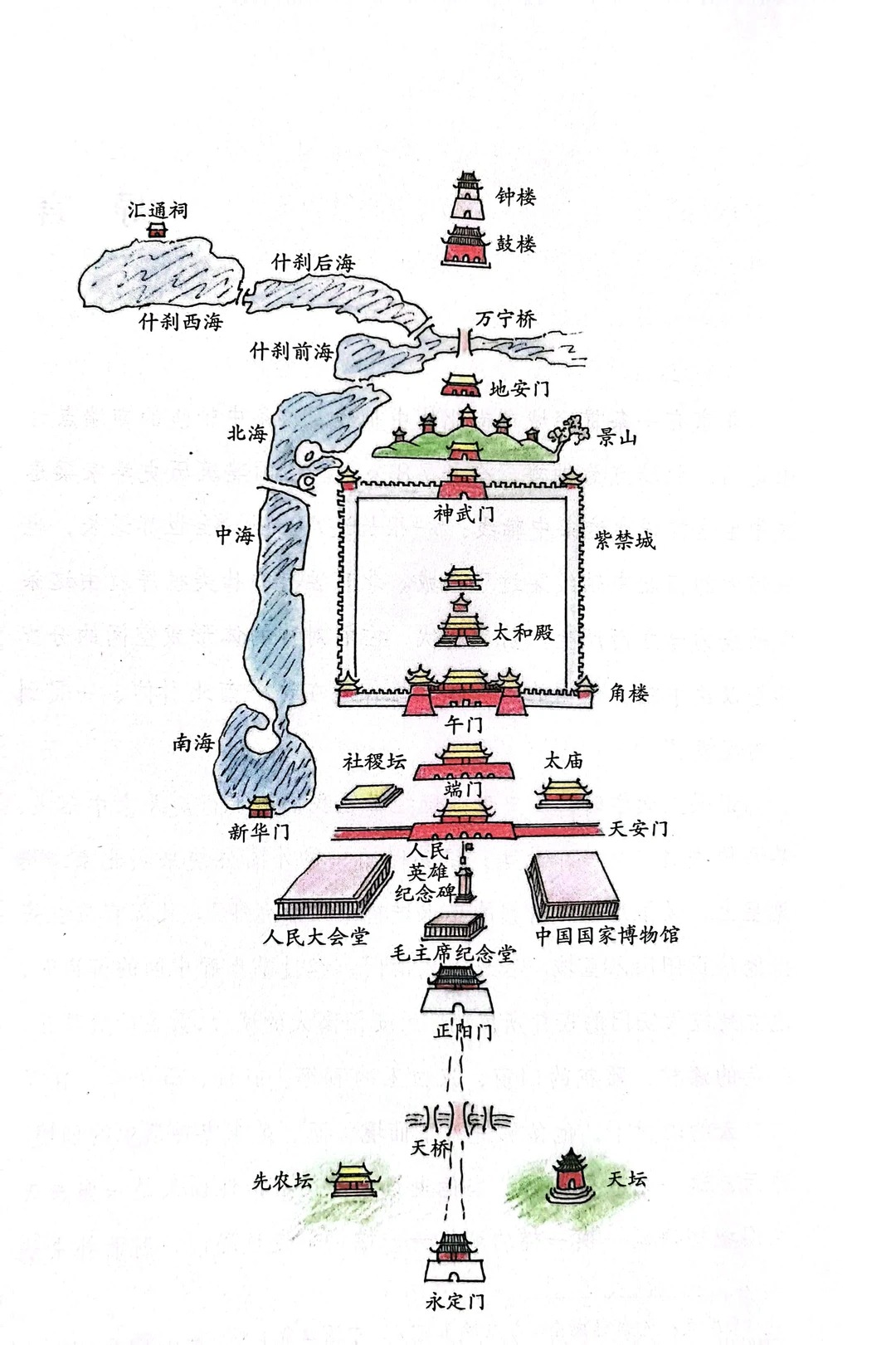
Illustration of Beijing Central Axis
Beijing Central Axis cannot be considered as a single landmark. It is a complex of buildings with the optimal structure of the Chinese capital - a 7.8-kilometer north-south line of 15 heritage sites. Bell tower, Forbidden city, Tiananmen, Temple of heaven. They are all seated on this axis or reflected on the axis.
It began to be constructed in the 13th century under the Yuan Dynasty. To it, the Ming and Qing emperors continued to add. When they were complete, Beijing was one of the most strategically planned cities in human history. There were strict rules concerning the location and ratio of each gate, each temple, each bridge.
Beijing Central Axis in Chinese: The Meaning Behind
It is referred to as Běijianchouzhongzhou Xiayuan in Chinese (meaning in Beijing in between). Zhong means center. Zhou means axis. Xian means line. Simple enough.
The idea of it is not an easy one. The ancient Chinese city planning was based on the concept of tianren heyi - harmony between heaven and man. The emperor sat at the center. All the other things were in place in a symmetrical way. That cosmic order was demonstrated in physical evidence by the Central Axis. It is something abstract until the moment you get on Jingshan Hill and observe it extending on both sides. Then it clicks.
Why UNESCO Listed Beijing Central Axis as a World Heritage Site
UNESCO inscribed the Beijing Central Axis as a World Heritage Site in July 2024. The committee referenced two criteria in their decision.
Criterion (iii): The Axis represents a significant contribution to global urban planning. This kind of centralized city layout influenced capitals across East and Southeast Asia for centuries.
Criterion (iv): It is an exceptionally well-preserved example of Confucian principles applied to governance and city design. The ancient text Kaogongji described how a proper capital should be built. Beijing followed those instructions more faithfully than anywhere else.
This brings Beijing's total UNESCO sites to eight. The Forbidden City and Temple of Heaven were already listed individually. Now they are also recognized as part of something larger. For visitors, that means one ticket to the Forbidden City gets you into a World Heritage Site twice over — not that anyone is counting.
Drum Tower, Bell Tower & Wanning Bridge — North Section
-
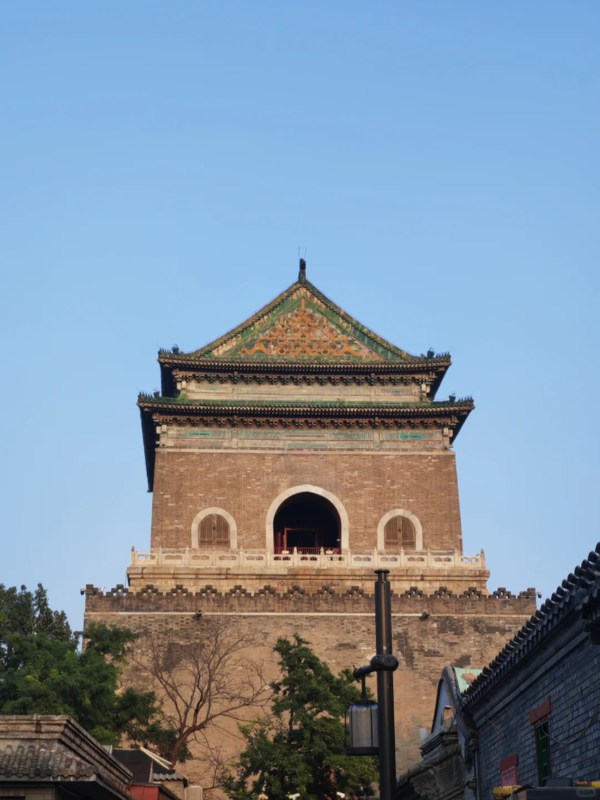

- The Bell Tower
-
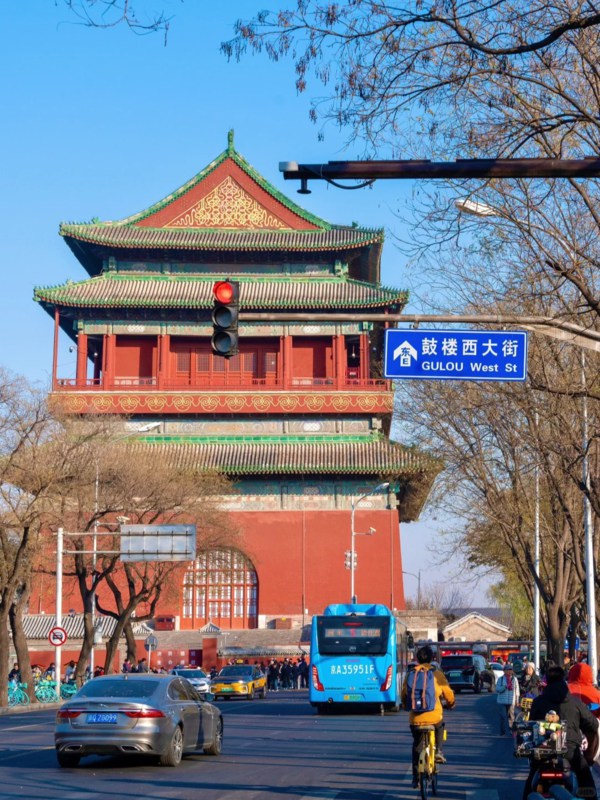
- The Drum Tower
-
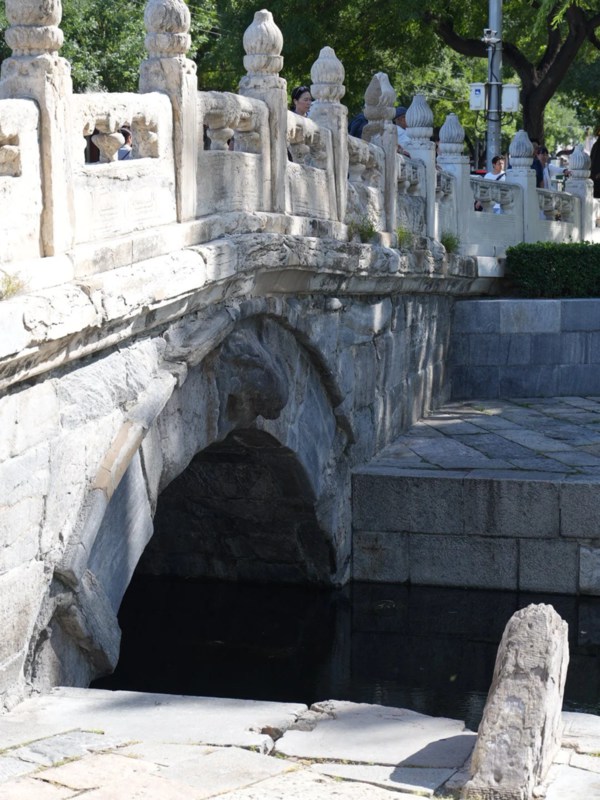
- Wanning Bridge
The northern end of the Beijing Central Axis feels different. Less monumental. More lived-in. This was the area where imperial timekeeping met everyday Beijing life, long before modern clocks existed.
The Drum Tower (鼓楼) stands 47 meters tall. For centuries, drummers here marked the hours after sunset, night after night, dynasty after dynasty. That ritual still continues. I attended the 5:30 PM performance on a Thursday. There were fewer than twenty spectators. The drumming lasts about ten minutes—loud, rhythmic, almost physical. It was absolutely worth climbing those steep wooden stairs.
Just behind it stands the Bell Tower (钟楼). Inside hangs a bronze bell weighing 63 tons. Guards once struck it each morning to announce the start of the day. This tower is also climbable, offering a clear view across grey-tiled hutong rooftops, a reminder that time here once ruled both palace and street.
Nearby is Wanning Bridge (万宁桥). At first glance, it looks unremarkable—a small stone bridge over a narrow canal near Di’anmen. Yet it dates back to the Yuan Dynasty, more than 700 years ago, and marks the starting point of the Central Axis. Most tourists pass without stopping. I almost did too. Look closely at the carved stone animals along the railings.
Together, these three sites sit within classic Beijing hutong neighborhoods. Narrow alleys. Bicycle bells. Laundry hanging between brick walls. Someone making jianbing on a street griddle. Shichahai Lake is only a five-minute walk west, making this section feel like a living postcard of old Beijing.
Jingshan Hill & the Forbidden City — Central Section
-
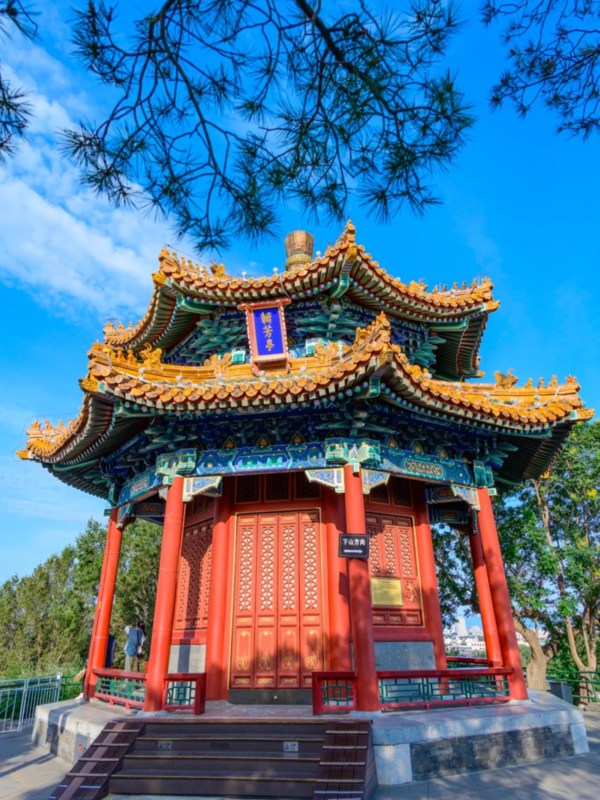
- Jingshan
-
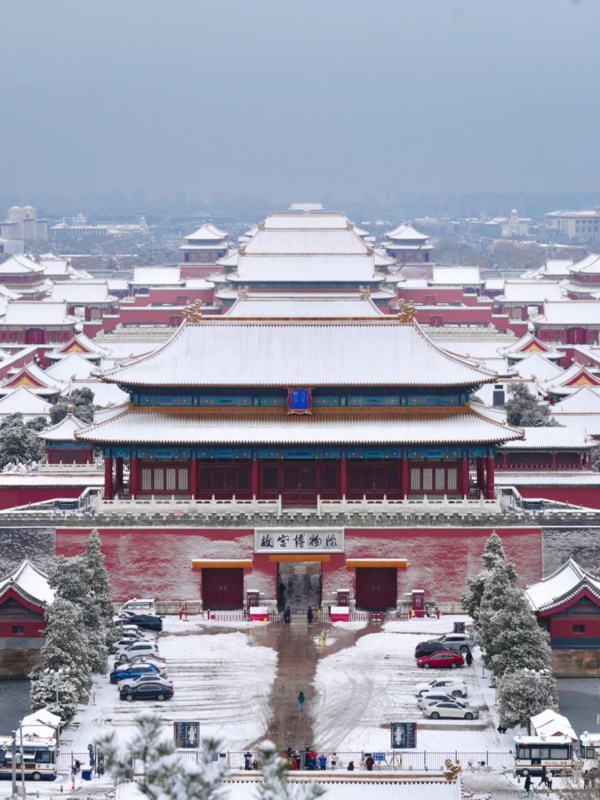
- The Forbidden City
This is what most people imagine when they hear the word Beijing. Golden roofs. Red walls. Vast courtyards. The central section of the Beijing Central Axis contains the highest concentration of imperial power and symbolism.
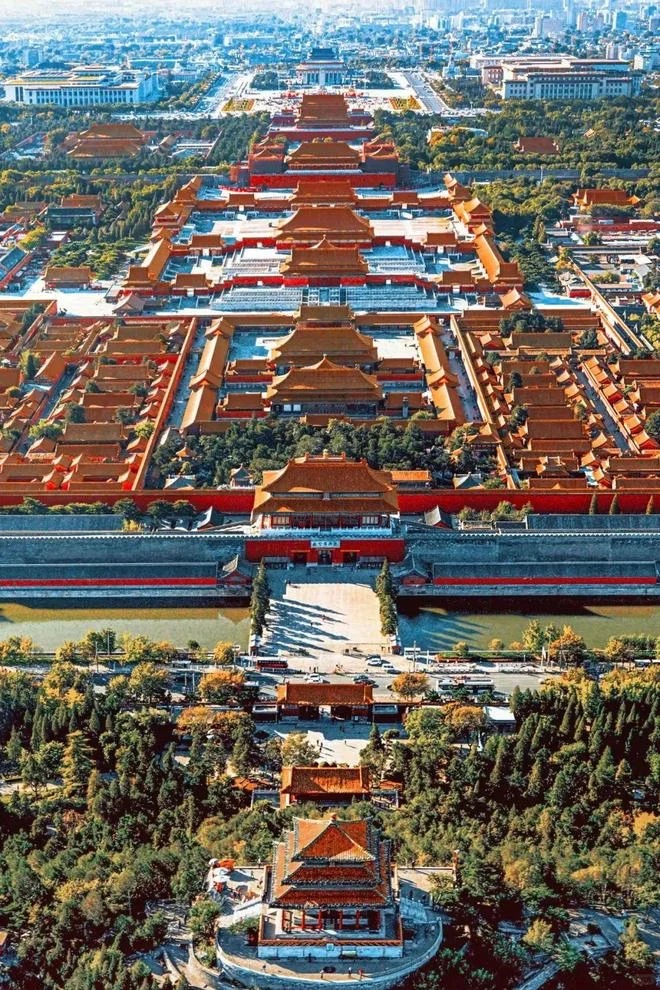
The best viewpoint of the entire axis is Jingshan Hill (景山). Climb to Wanchun Pavilion at the summit, and the Forbidden City unfolds below like a perfectly drawn diagram. The symmetry becomes obvious only from above. Even the hill itself is symbolic—it was formed using the earth excavated to build the palace moats.
The Forbidden City (故宫) needs little introduction. Its scale overwhelms first-time visitors: 980 buildings and roughly 8,700 rooms. Crowds are unavoidable. On a Wednesday in October, I still found myself edging through tour groups at the Hall of Supreme Harmony. The experience can feel intense, but that density also reflects its status as the political center of imperial China for nearly 500 years.
Tiananmen Gates, Outer Jinshui Bridges & Tiananmen Square — Central Section
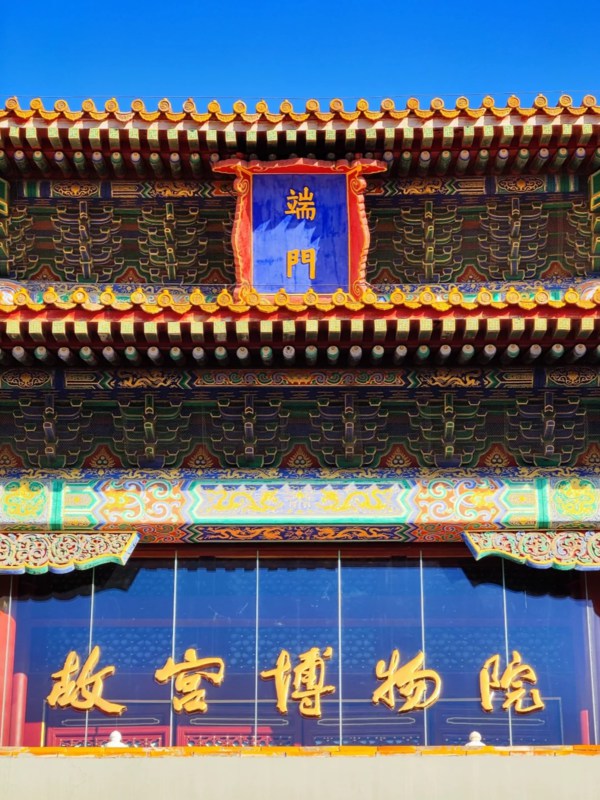
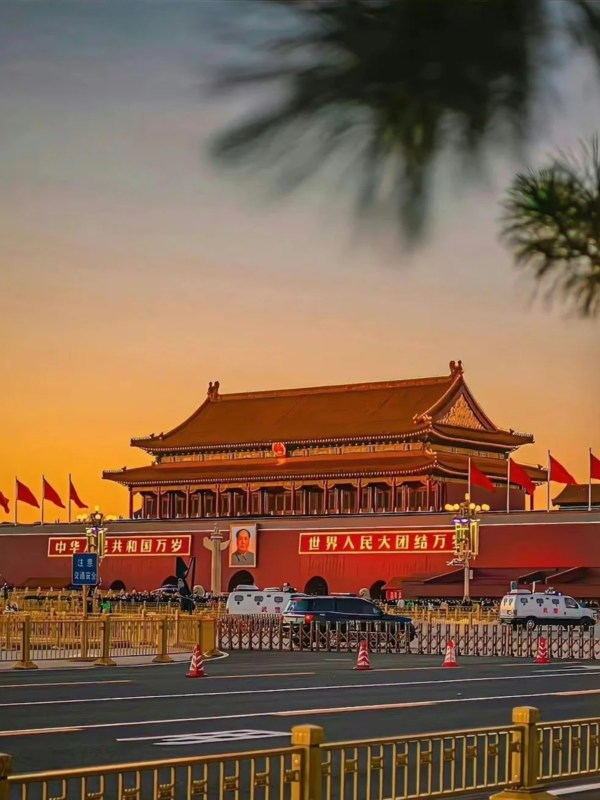
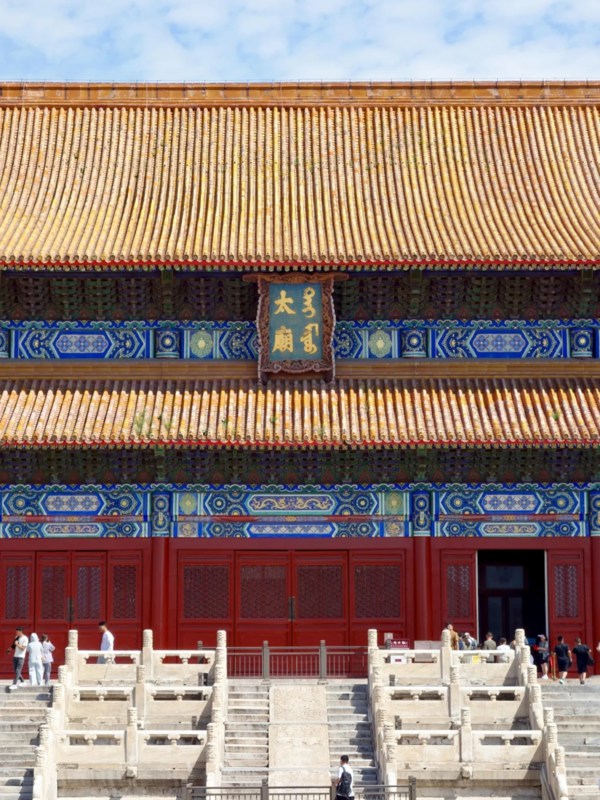
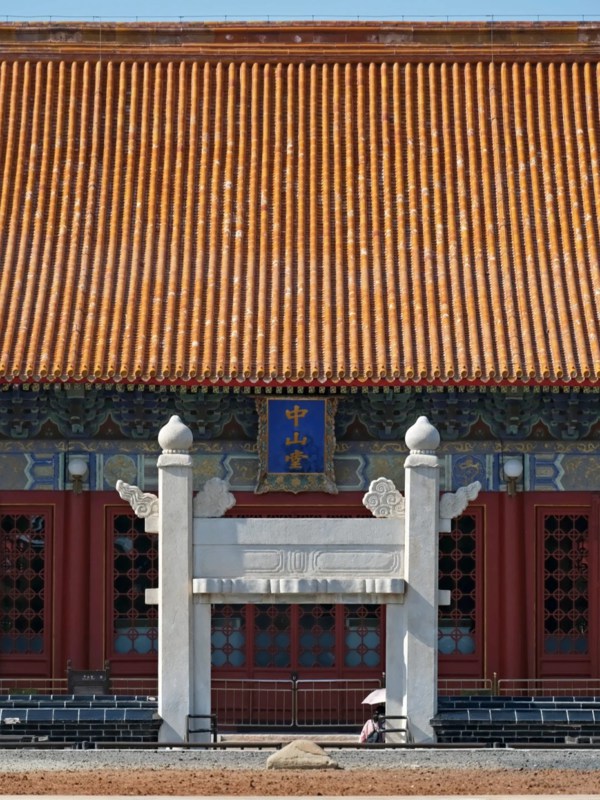
South of the Forbidden City, the axis continues through a sequence designed to impress, regulate, and ritualize movement.
The Upright Gate (端门) and Tiananmen Gate (天安门) form the ceremonial southern entrance. Tiananmen, with Mao’s portrait, is the visual symbol most recognized worldwide. Upright Gate sits just behind it and often hosts temporary exhibitions. Both can be passed through without tickets if you are simply walking the axis. Before reaching Tiananmen, you cross the Outer Jinshui Bridges—five marble bridges spanning a canal. The central bridge was reserved exclusively for the emperor. Officials used the side bridges according to rank. Today, everyone queues for whichever line moves fastest.
Flanking Tiananmen Gate are the Imperial Ancestral Temple (太庙) to the east and the Altar of Land and Grain (社稷坛) to the west. The ancestral temple now functions as the Cultural Palace of the Working People, though its original ritual role remains legible in the architecture.
Further south opens Tiananmen Square (天安门广场), one of the largest public squares in the world. The daily flag-raising ceremony at sunrise draws crowds year-round. Security checks are mandatory and can take 15–20 minutes during peak times. The National Museum of China and the Great Hall of the People anchor the square’s east and west sides.
Qianmen & Southern Road Archaeological Sites — South Section
-
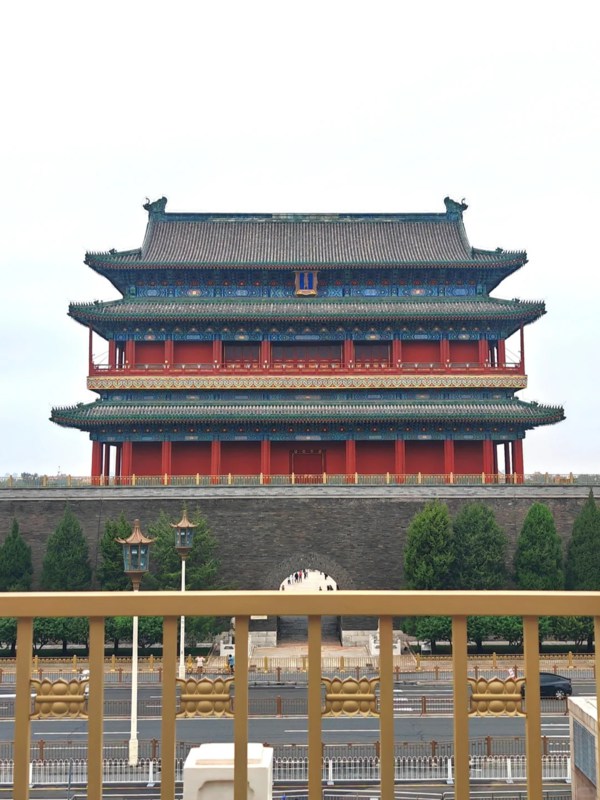
- Zhengyangmen Gate
-
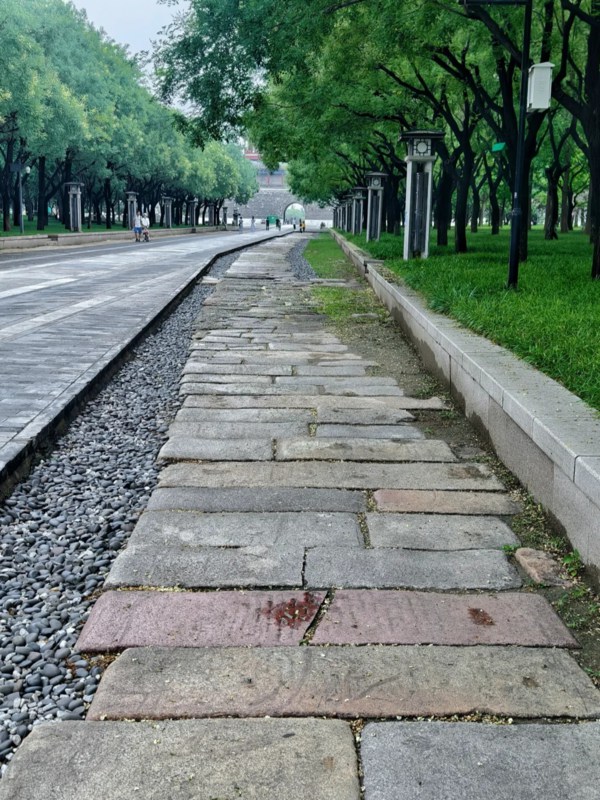
- Southern Road Archaeological Sites
South of Tiananmen Square, the atmosphere changes. The crowds thin. The axis becomes quieter. Some of the most underestimated sites lie here.
Zhengyangmen Gate (正阳门), commonly known as Qianmen, once marked the boundary between Beijing’s inner and outer cities. Its gate tower and arch remain, while Qianmen Street has been rebuilt as a pedestrian shopping avenue. Touristy, yes—but lively. One branch of Quanjude, the roast duck restaurant founded in 1864, still operates here.
Nearby are the Southern Road Archaeological Sites (南段道路遗存). Sections of the original imperial road have been excavated and preserved beneath glass panels. Ming Dynasty stone paving is visible. It’s not a destination in itself, but it adds historical depth if you’re already passing through.
Temple of Heaven & Altar of the God of Agriculture — South Section
-
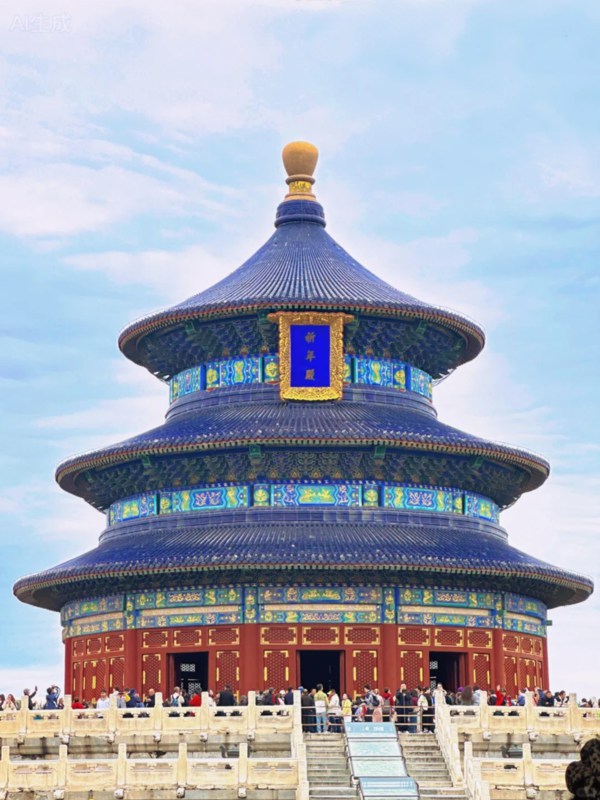
- The Temple of Heaven
-
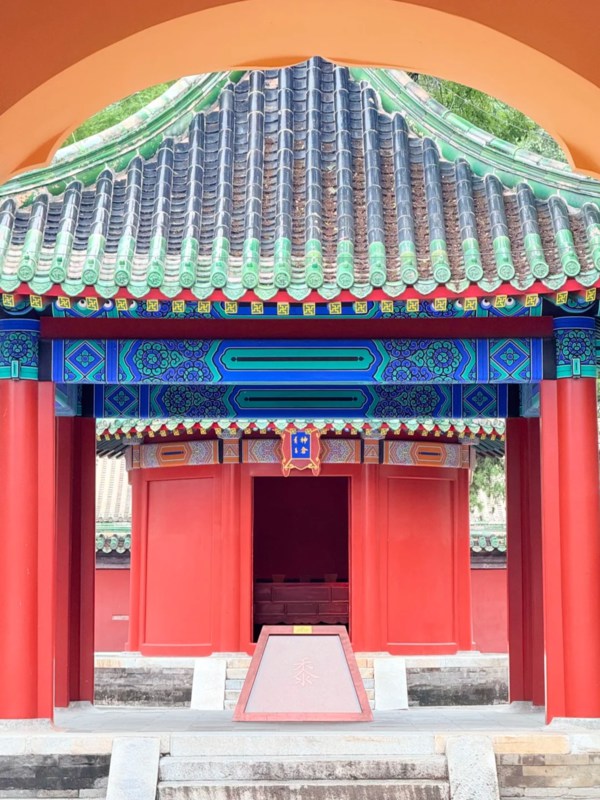
- Altar of the God of Agriculture
The Temple of Heaven (天坛) is my personal favorite site along the Beijing Central Axis. The Hall of Prayer for Good Harvests looks exactly as it does in photographs, but the real surprise is sound. Stand on the central stone of the Circular Mound Altar and speak softly—your voice echoes back from all directions. The Echo Wall is said to carry whispers up to 65 meters. I tried. Too many tourists chatting.
Just west lies the Altar of the God of Agriculture (先农坛). Each spring, emperors ploughed the first furrow here in a ritual symbolizing agricultural order. Today, it houses the Beijing Museum of Ancient Architecture. During my visit, I was the only foreigner in the entire complex.
Yongdingmen Gate — South End
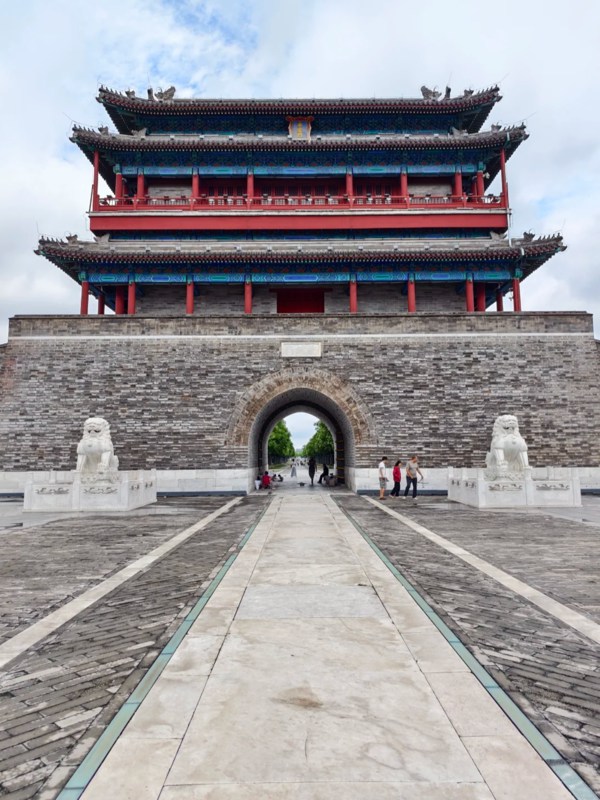
Yongdingmen Gate
The southern end of the Beijing Central Axis concludes at Yongdingmen Gate (永定门), the “Gate of Eternal Stability.” The original structure was demolished in 1957 and reconstructed in 2005. From here, looking north, you gain a final sense of how precisely the entire axis aligns—a straight line binding centuries of ritual, power, and everyday life.
How to Explore Beijing Central Axis: Tours, Routes & Insider Tips
There are several ways to cover the Beijing Central Axis. Bus tour, walking, or a mix of both. Each has trade-offs. Here is what I learned after trying different approaches.
Great Beijing Central Axis Sightseeing Bus Tour – Worth the Hype?
Following the UNESCO listing, Beijing initiated a Great Beijing Central Axis Sightseeing Bus Tour in official capacity. This path passes through Yongdingmen at the south to North to the Drum Tower. There are buses, red, two-decker, open-top. Hard to miss.
The cost of a ticket is approximately ¥40- 50, according to the route. You are able to park on and off at various points. English and Chinese audio instructionals. The entire circuit lasts about two hours without alighting.
Is it worth it? Depends. The bus spares you the hassle of your legs and provides acceptable photo opportunities at the upper deck. And yet you cannot experience the sites in this way. Security screening is needed in Tiananmen square. The Forbidden City should be booked in advance. Temple of heaven will take not less than two hours on foot. The bus simply passes by these locations.
My impression: helpful when one is visiting the museum for the first time and wants to get a broad overview, or when that person lacks time. But do not expect depth. You will see the Axis. You will not feel it.
The Beijing Central Axis Passport: A Collector's Souvenir
Beijing Central Axis Passport is a miniature booklet that has pages about all the heritage sites. Go to a location, locate the stamp station, attach the stamp. Simple concept. Surprisingly satisfying.
I choose mine in the gift shop of Drum Tower. Price was ¥39. They are also located at the Forbidden City, Temple of Heaven, and some others. Designs are slightly different - there are those with red covers, and those with blue.
Each stamp is a site-specific stamp. Some include the date. It takes dedication to get all 15 takes. Five or six are enough to the majority of the visitors, who tend to run out of time or energy.
Worth buying? Yes, in case you prefer to have tangible souvenirs. The passport provides order to your visit. It also compels you to observe smaller attractions such as Wanging Bridge and Altar of Agriculture which majorities of tourists do not visit. I filled about half of mine. The blank pages provide a reason to come back.
Self-Guided Walking Routes
Walking the full Beijing Central Axis takes about three hours without stops. With proper sightseeing, plan for two or three days. If you’re still deciding what else to pair with the Central Axis, explore more classic and lesser-known experiences in Beijing — see this complete Beijing things to do guide.
Half-Day Route (4-5 hours): Jingshan Hill → Forbidden City → Tiananmen Square → Qianmen Street for lunch. This covers the core. Start early. Enter Jingshan when it opens at 6:00 AM. The Forbidden City allows entry from 8:30 AM.
Full-Day Route (8-9 hours): Bell and Drum Towers → Wanning Bridge → Jingshan → Forbidden City → Tiananmen → Qianmen → Temple of Heaven. Ambitious but doable if you keep moving.
Best Time to Visit Beijing Central Axis
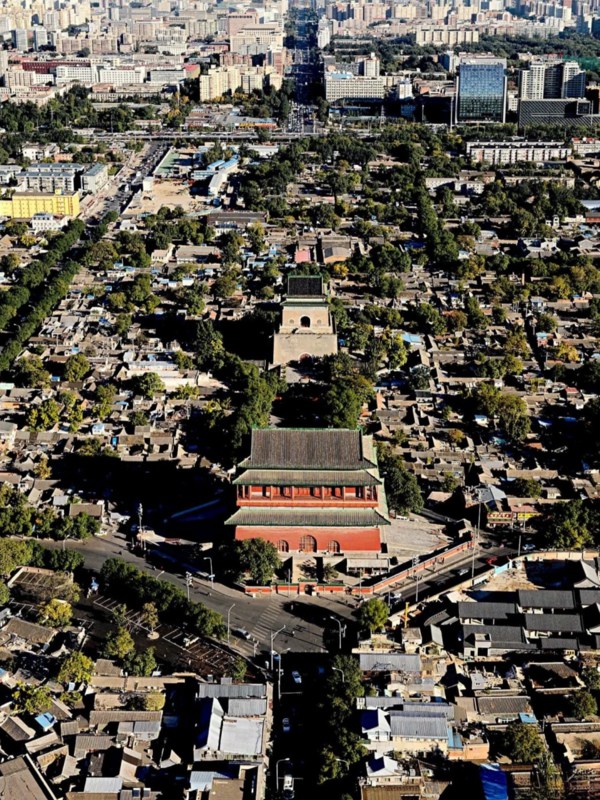
Architecture on Beijing Central Axis
Seasonal Guide & Photography Sweet Spots
Autumn (September to November) is the sweet spot. Skies turn blue. Humidity drops. Ginkgo trees along the Axis glow yellow in late October. The Forbidden City looks its best with golden leaves scattered across red walls. Photographers crowd Jingshan Hill around sunrise.
Spring (April to May) works well too. Cherry blossoms in Zhongshan Park. Peonies at Jingshan. Comfortable walking temperatures around 15-22°C.
Summer (June to August) means heat and humidity. Expect 35°C days and sudden afternoon thunderstorms. Air quality can dip. The upside: longer daylight hours.
Winter (December to February) is cold. Often below freezing. But the sites are emptier. A rare snowfall on the Forbidden City rooftops makes for dramatic photos — if you time it right.
Crowd Patterns & Booking Must-Knows
Chinese national holidays should be avoided. The Golden Week (October 1-7), Labor Day (May 1-5) and Chinese New Year are accompanied by the crowds of overwhelming numbers. The Forbidden City only allows a daily number of 80,000 visitors. On holidays, the tickets are sold out in a few minutes after being released.
The weather is significantly milder during weekdays than on weekends. Tuesday is a holiday exception - the Forbidden city is closed, thus other cities become more crowded.
Book ahead. The forbidden city tickets are opened 7 days before the visit at 8.00 PM Beijing time. Temple of heaven and Jingshan may be booked within a 1-3 days beforehand. Always remember your passport information. The systems of booking need them.
FAQ About Beijing Central Axis
Q: How long is the Beijing Central Axis?
The Beijing Central Axis stretches approximately 7.8 kilometers (about 4.8 miles) from Yongdingmen Gate in the south to the Drum and Bell Towers in the north. This straight north–south line has shaped Beijing’s urban layout for over 700 years. While the distance itself is walkable, the density of heritage sites along the axis means most visitors spend far more time exploring than simply covering the length.
Q: Can I walk the entire Beijing Central Axis in one day?
Yes, you can walk the entire Beijing Central Axis in one day, but only at a surface level. A full end-to-end walk takes around 2.5–3 hours without stops. However, visiting major sites like the Forbidden City, Temple of Heaven, or museums requires separate tickets and several hours each. For a meaningful experience, most travelers split the axis into one or two sections per day.
Q: What does Beijing Central Axis mean in Chinese?
In Chinese, the Beijing Central Axis is called “北京中轴线” (Běijīng Zhōngzhóu Xiàn). “Zhong” means center, and “zhou” refers to an axis or spine. The term reflects ancient Chinese planning philosophy, where political power, ritual order, and cosmic balance aligned along a central line. It was not just a road, but a symbolic structure organizing the entire imperial capital.
Q: Is the Beijing Central Axis the same as the Forbidden City?
No, the Beijing Central Axis is not the same as the Forbidden City, although the Forbidden City is its most important component. The axis is a continuous urban line running through Beijing, connecting gates, towers, altars, palaces, and public squares. The Forbidden City sits at the very center of it, but the axis extends far beyond the palace walls, north and south.
Do I need tickets for Beijing Central Axis sites?
Walking along the Beijing Central Axis itself is free, but many major sites require tickets. The Forbidden City, Temple of Heaven, Drum Tower, Bell Tower, and Jingshan Park all charge admission. Other places, such as Tiananmen Square or certain gates, are free but require security checks or reservations. Budget both time and ticket costs when planning your route.
Q: What is the Beijing Central Axis Passport and where can I buy it?
The Beijing Central Axis Passport is a collectible booklet designed for cultural travelers. Visitors can stamp it at selected heritage sites along the axis, similar to a city walking passport. It is usually sold at museum shops, cultural bookstores, or official heritage sites near the axis. Availability varies, so it’s best to ask on-site rather than relying on online listings.
Q: Is there a guided bus tour for Beijing Central Axis?
Yes, there are guided bus tours covering the Beijing Central Axis, often marketed as cultural or heritage routes. These bus tours are helpful for visitors with limited time or mobility, as they connect key landmarks with narration. However, buses cannot access hutong areas or smaller sites, so walking sections are still recommended if you want to experience daily life along the axis.
Q: What’s the best viewpoint to photograph Beijing Central Axis?
The best viewpoint to photograph the Beijing Central Axis is Jingshan Hill, directly north of the Forbidden City. From Wanchun Pavilion at the summit, you can clearly see how the palaces, gates, and courtyards align along a straight line. This elevated view makes the planning logic of imperial Beijing immediately visible and is ideal for wide-angle photography.