Erhai Lake
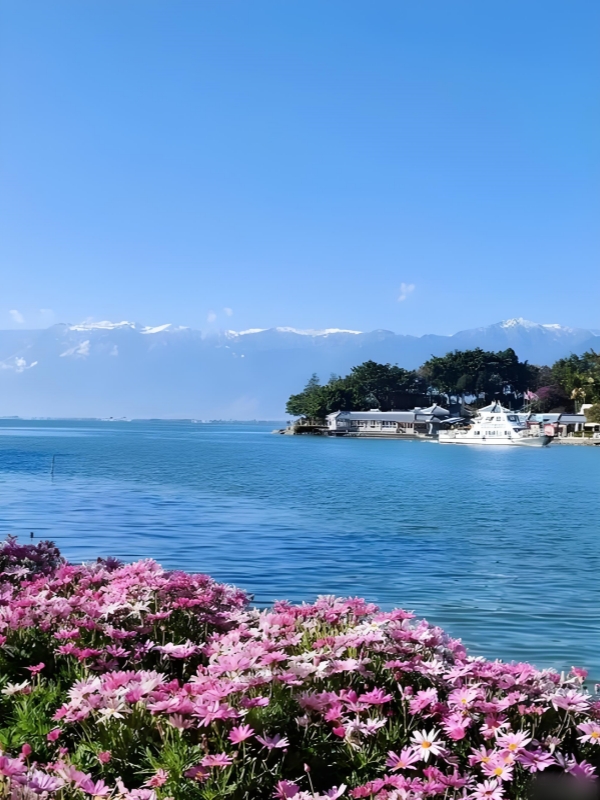
Erhai Lake near Dali, Yunnan Province, is situated at 1,972 meters (6469 feet) in altitude. Snow-capped peaks from Cangshan Mountain rise to its west. With water clear as glass, 250 square km of highland lapping at its shores, it’s the seventh largest freshwater lake in China. For over a millennia, the Bai ethnic minority have made their home here and created a culture you won’t find anywhere else. This guide will share when to visit Erhai Lake, how to cycle the famous 130-km loop, where to whisk away at sunrise that you’ll wake at 6 AM for excitedly, and which authentic experiences measures up so higher than insipid tourist shows. You’ll see how to get around, places to stay, as well as budgeting, but in practical rather than boring details. Let’s go!
Erhai Lake at a Glance: Essential Information
| Category | Details |
|---|---|
| 📍 Location | Dali Prefecture, Yunnan Province, China |
| 🏔️ Elevation | 1,972 meters (6,470 feet) above sea level |
| 📏 Size | 42.5 km (N-S) × 9 km (E-W) = 250 km² |
| 🏆 Ranking | China's 7th largest freshwater lake |
| 🌊 Water Source | 27 rivers feeding the lake |
| 🌡️ Climate | Subtropical highland - mild year-round |
| 👥 Culture | Bai ethnic minority heartland (1,000+ years) |
| 🏛️ UNESCO Status | World Heritage tentative list |
| 🎯 Best Season | Autumn (September-November) ★ |
| ⏱️ Recommended Stay | 3-4 days for comprehensive exploration |
| 🚴 Cycling Loop | 130 km complete circuit (1-2 days) |
| 🎫 Entry Fee | Free (some attractions charge separately) |
🌊 Before you hop on a bike by Erhai Lake, Things to Do in Dali: Discover Erhai Lake Views, Local Markets, and Yunnan’s Bai Culture helps you explore beyond the shoreline.
Erhai Lake's Four Seasons Reveal Different Natural Wonders
-

- Erhai Lake in Spring
-
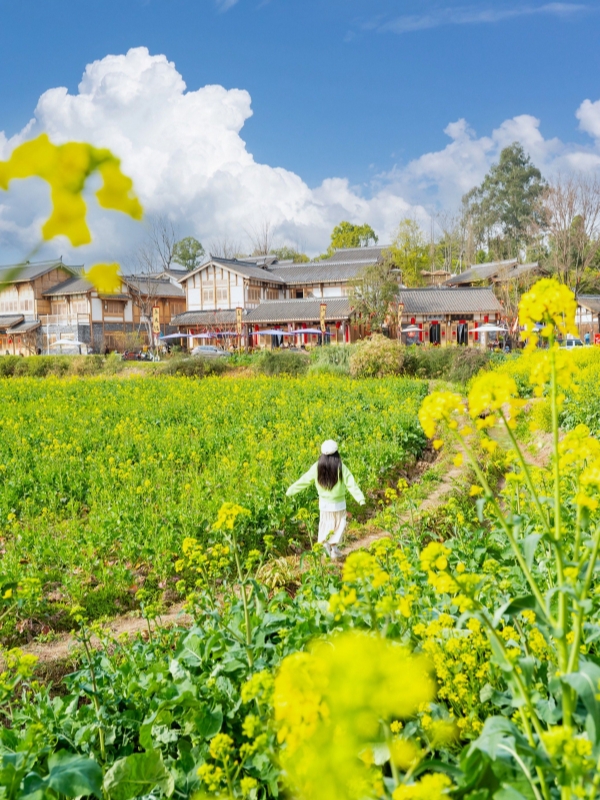
- Xizhou’s Rapeseed Fields
-
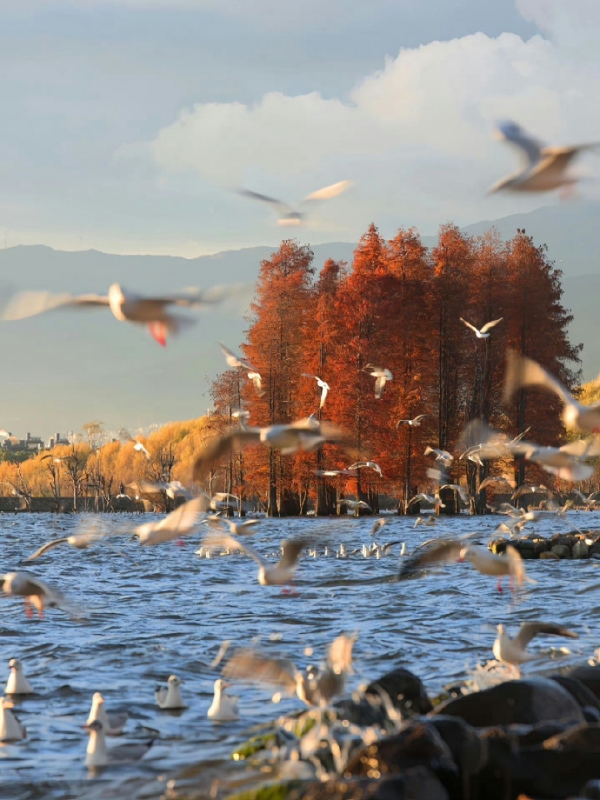
- Erhai Lake in Autumn
Spring Paints Golden Fields and Celebrates Bai Festivals (March-May)
Every picture of the Erhai Lake region in Spring has the same bright palette, with the temperature being in the range of 15-22°C, making it perfect for cycling. Meanwhile, Xizhou’s rapeseed flowering fields brighten up to yellow and extend towards the Wong Mountains, or the Cangshan as the guide book perhaps pretentiously lists it as. These yellow tapestries make pictures that are impossible to take anywhere else.
There is very little rain at this time of the year and one can be assured of proper sunny weather being on a cycling trip. Clear skies also mean snow capped peaks are just beautiful to see. The highlight of Bai peoples’ year is their Third Month Fair at around the middle of April, mule or horse races on display, archery skill, traditional dances in entertainments you might hay want to go and see. That said, mid of April till early part of May see numbers of visitors from China pour in for their May Day holidays, so you may want to secure places earlier.
Autumn Delivers Erhai Lake's Most Photogenic Moments (September-November) ★
The peak time, in all honesty? Autumn, punches in between 10-23 °C, weeks of stable weather, and crisp clear air at its max making those dreamy mountain reflections in Erhai truly postcard perfect. The rice paddies turning golden in September-October set against the blue water. That great soft quality of the light, so much better than summer's stark blinding sunshine. I was surprised that the summer tourist crowds thin out after the rush is over, so you can look forward to better bargains, spontaneous bookings and greater peace at the tourist places like panxi s bend.
Winter Transforms the Lake Into Red-Billed Gulls Paradise (December-February)
Winter is cool (5-15 C) and sunny, but the star attraction does indeed make it unforgettable—to red-billed gulls. In late November, tens of thousands of gulls migrate from Siberia and begin wintering at Erhai Lake. Watch for them at Longkan Pier and Little Putuo Island, wildlife spectacles of incredible proportions.
The morning mists with sunrise colors and flocks of seagulls make for magical pictures; hotels drop their prices substantially in January (except New Year) which makes it attractive for budget travellers. Bring your warm clothing layers though, that 15 degree (with 5 degrees in the morning) thermal is deceptive and needs smart “layering”.
Cycling Erhai Lake Delivers the Most Immersive Experience
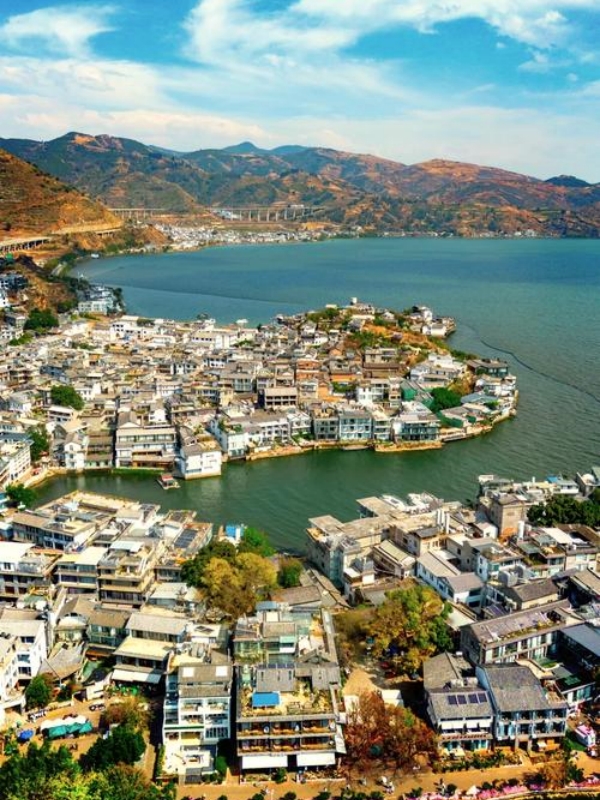
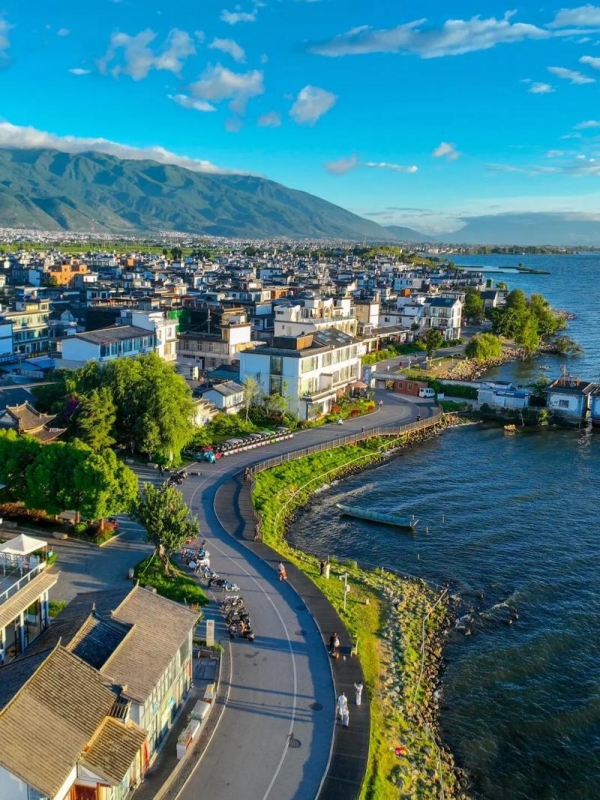
The Western Ecological Corridor Showcases Pristine Landscapes
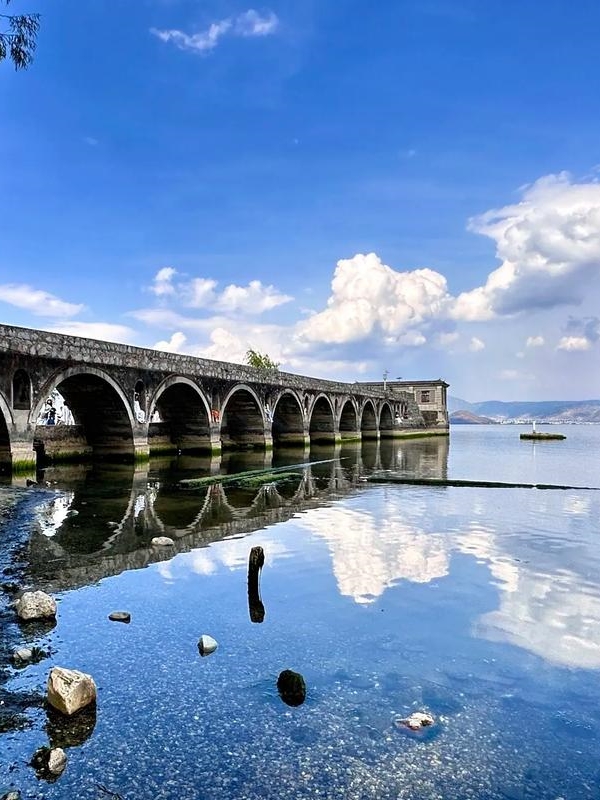
The western shore eco-corridor of Erhai Lake a lovely rewilding project. It’s a 20km dedicated route from Dali Ancient City to Xizhou past Longkan Pier. You cycle through restored wetlands and native plants that naturally filter the water.
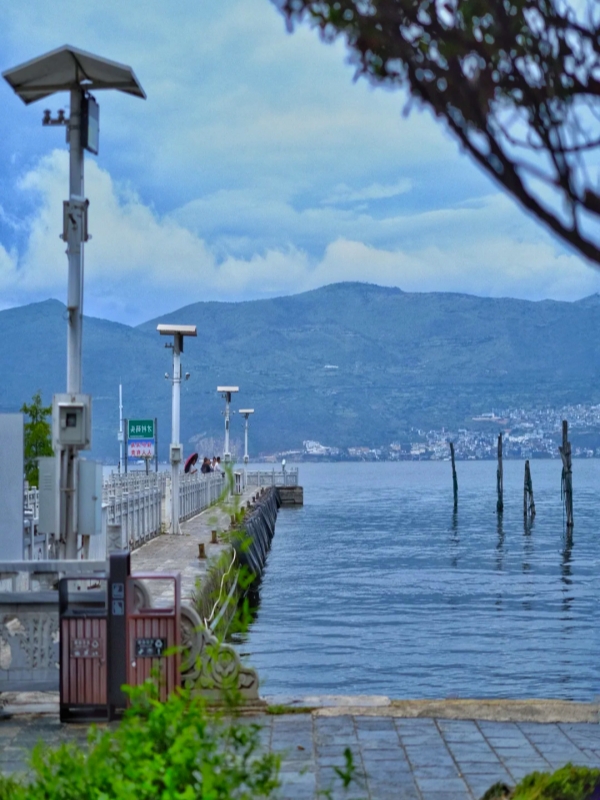
Longkan Pier first, arrive 6.30am to watch the sun rise. Later in winter, the red-billed gulls cause havoc and beauty at once. Progress to the Panxi S-Bend next, the shoreline curves naturally, and you’re greeted by that S-shape we associate with Erhai Lake. Golden light is to be found best from 8am to 10am before visitors start appearing. Only normal bicycles or walking are allowed (electric bikes are not allowed through this protected area).
Eastern Shore Routes Offer Panoramic Views and Sunset Drama
The eastern shore invites you closer too, but sends you up for the more impressive bird’s eye views. Getting a start in Shuanglang and moving south to Wase, the road rises and you’re constantly treated to lake views with Cangshan looming in the background.
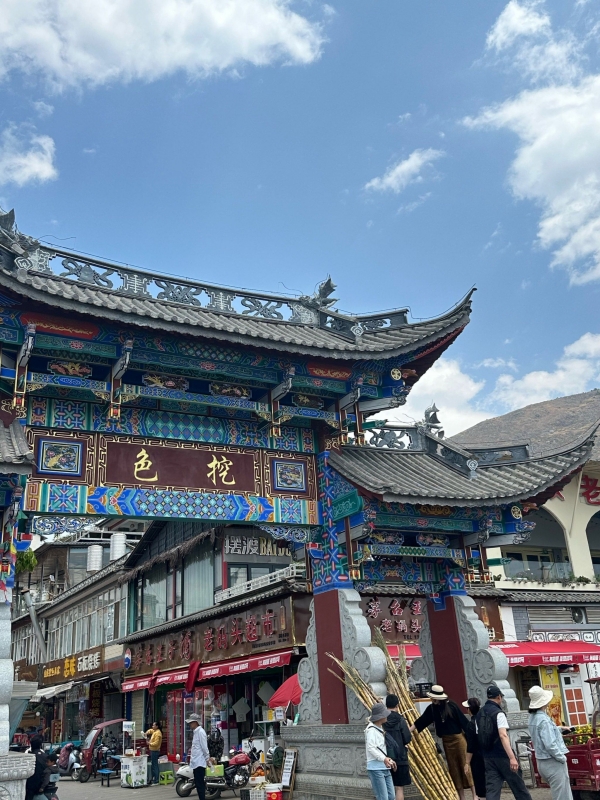
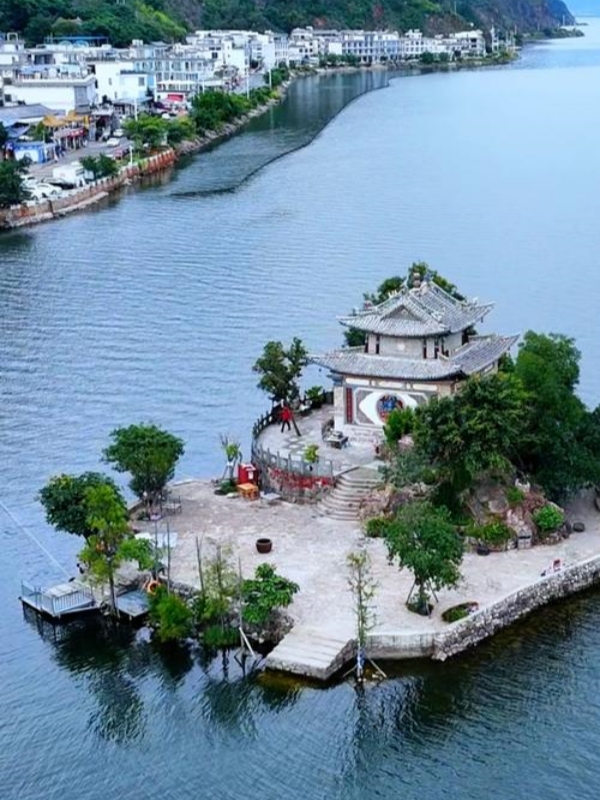
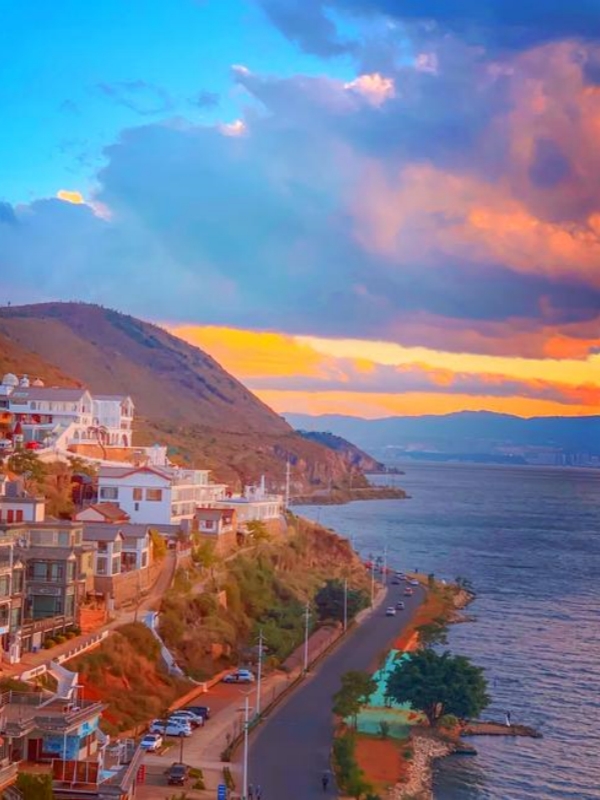
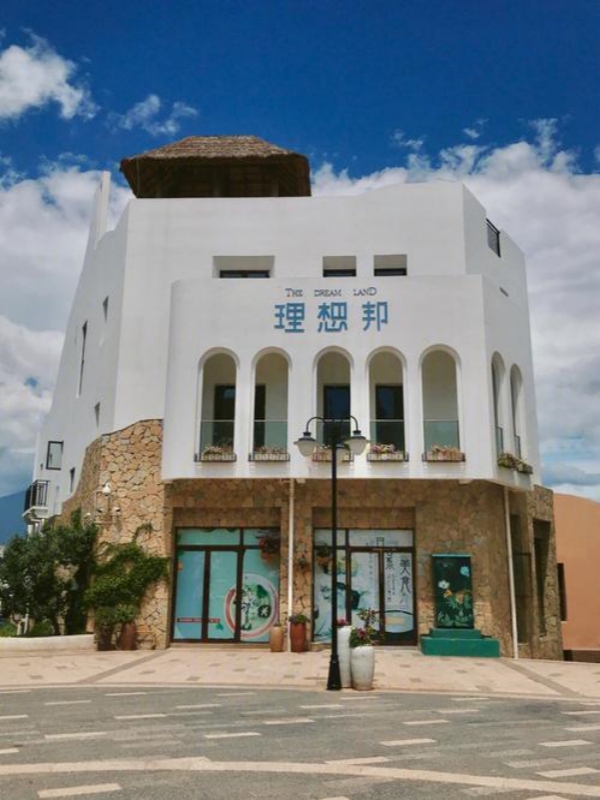
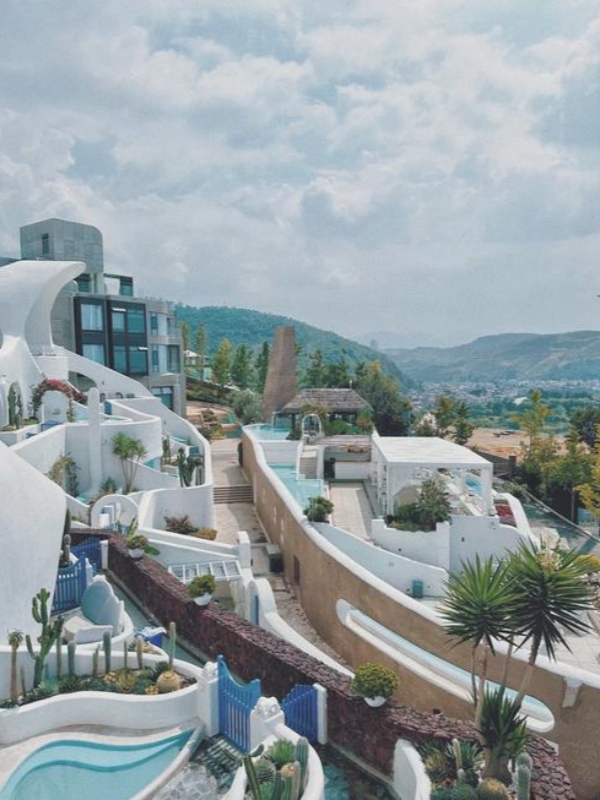
Wase is your cue to approach Little Putuo Island, jutting out into the water and absolutely deserving of the short boat ride. From there continue south to the Rainbow Road outside Wenbi Village where the colourful surfaces deliver that manga aesthetic you will love. Finally, after a ride to Ideal Town and the Santorini style thoroughfare, wait until sunset when the white buildings catch the light, setting everything off like a glowing pink and orange canvas. Like $10 worth of fun, your 50 RMB ticket covers a drink of your choice.
Two-Day Complete Loop Covers 130 Kilometers
The entire loop around Erhai Lake is a commitment but worth it. The first day is spent riding along the western shore from Dali to Xizhou (30km, 4-5 hours). Most of the ecological corridor is flat so it’s easy riding in the cool of the morning. We spent the night in Xizhou, our beautiful lakeside guesthouse had a rooftop deck to watch the sunset over the water. The following day tackled the east and north shores – 70km taking around 6-7 hours. There is a lot of up and down in the east, but the views along the way are worth the effort. By late afternoon we were rolling back into Dali. What we have read is that some riders leave Dali and stay in Shuanglang after taking the western shore. That makes for two days around 50km.
Erhai Lake Cruise Connects Three Iconic Islands in 2-3 Hours
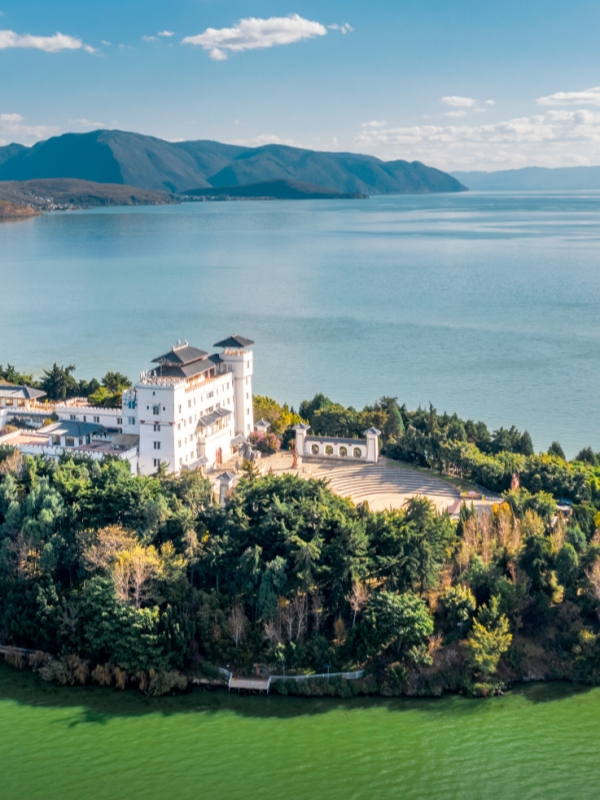
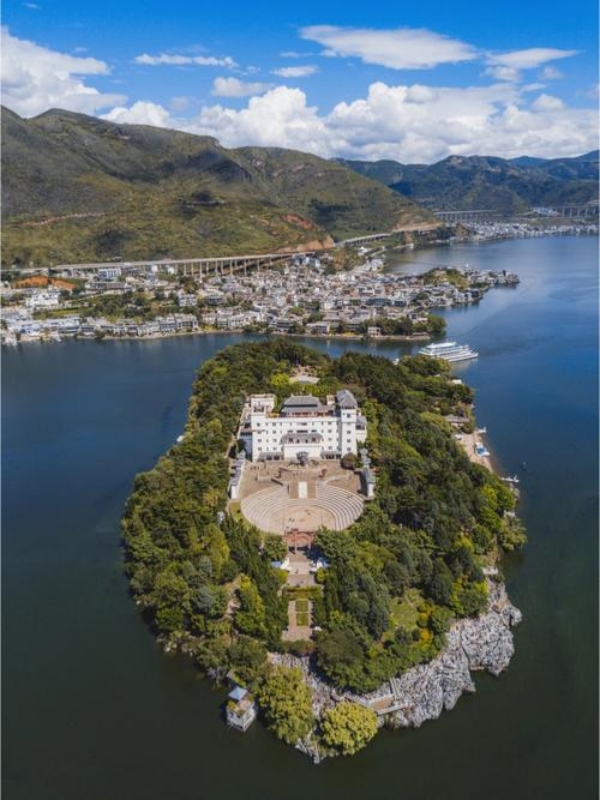
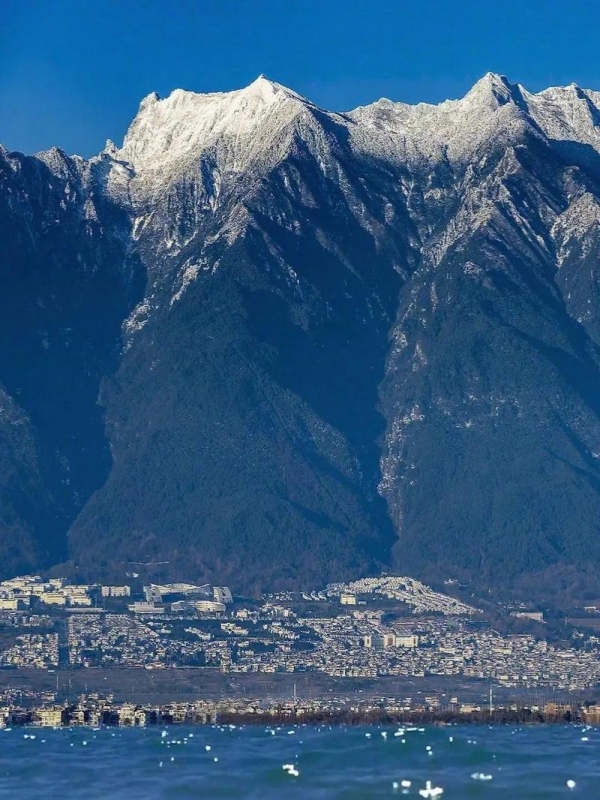
Water Perspectives Reveal Mountain-Lake Scale
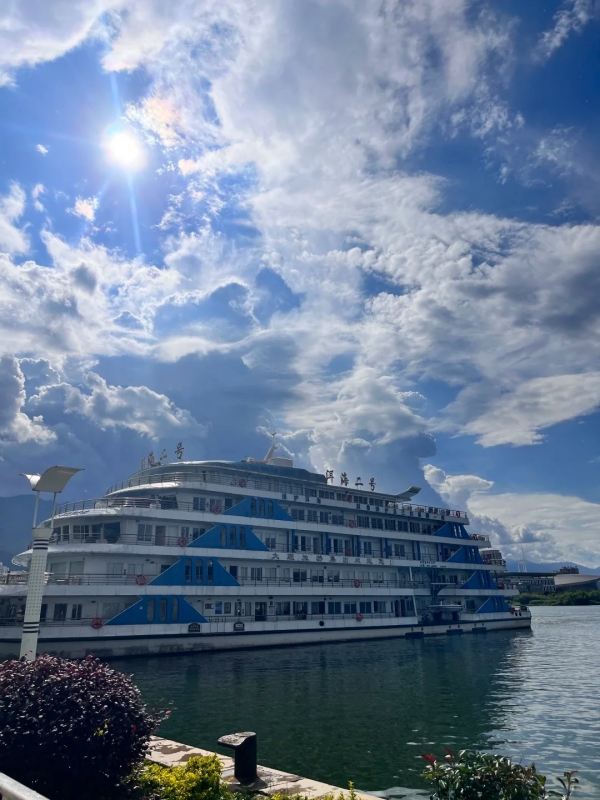
Not everyone has a pedal power of 130 km and that’s fine too. From the cruise you can appreciate perspectives on the land that you can’t from land: you can see the fullness of Cangshan (Cloud) rising behind the western shore in all nineteenth peaks together. The scale becomes apparent in other surprising ways too.
Cruises are good for families and are appropriate for the elderly or anyone who would like to relax whilst scenery rolls out before them. The boats are spacious both inside and out. Most include Bai culture performances—traditional Bai songs and dances that provide some context for the landscape you are drifting through. What I appreciated was the feeling for Erhai Lake geography from the water.
Classic Route Stops at Nanzhao Island and Little Putuo
Most cruise boats leave directly from Dali Port or from Longkan Pier or Taoyuan Pier. The classic route visits Little Putuo first then heads on to Nanzhao Folk Island—overall including stopovers the round trip takes around 2-3 hours.
Little Putuo is a big rock with a temple on it. In winter it’s completely covered by red-billed gulls and you can feed them from the deck of the boat. Nanzhao Folk Island is home to statues representing history and mythology. You’ll have 45-60 minutes to wandering around various pathways and enjoy watching the cultural performances. The cruise boat ticket (around 140-180 RMB) also grants access to the islands.
Three Ancient Towns Preserve Centuries of Bai Culture
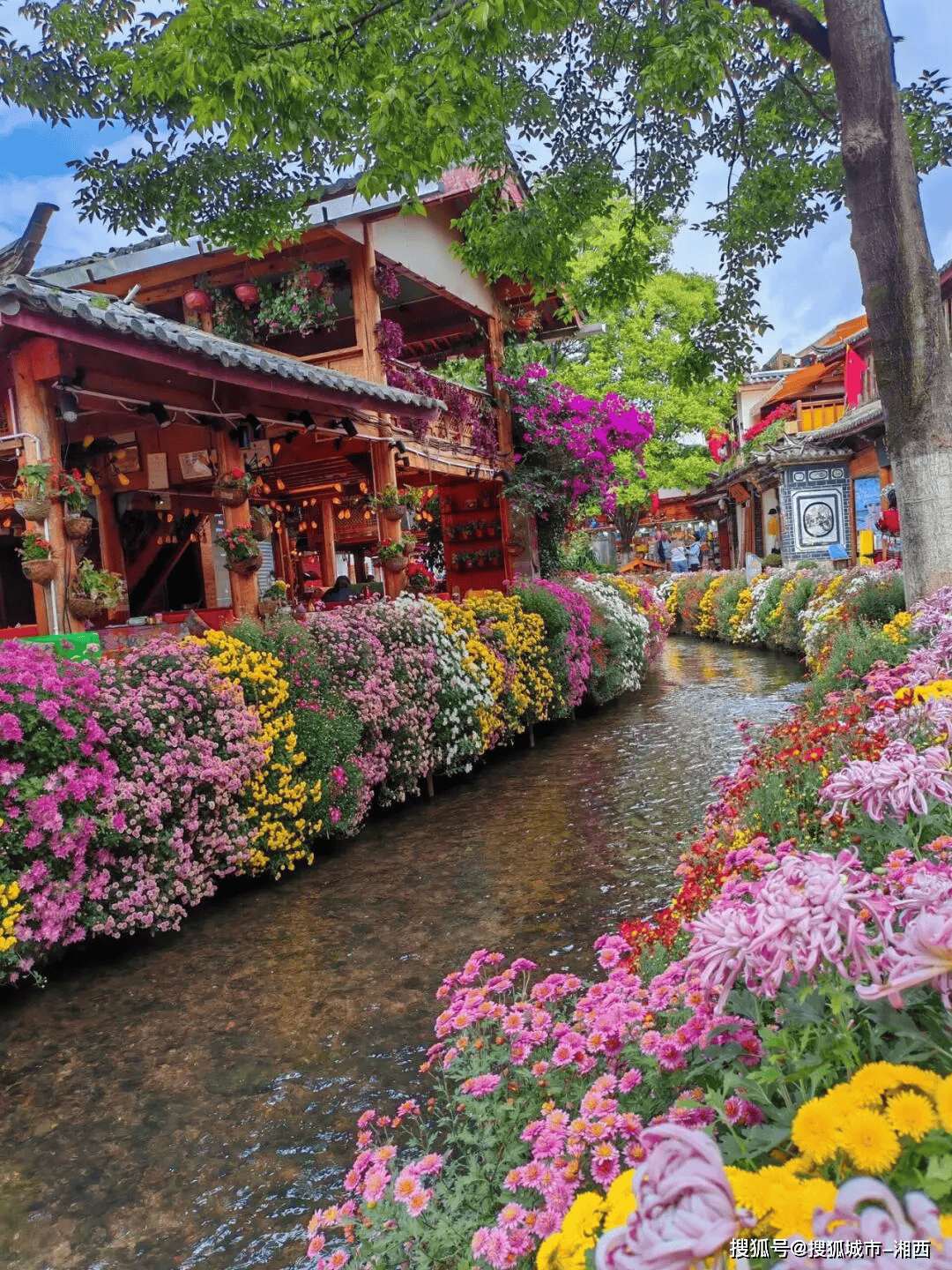
Dali Ancient City: Your Cultural Gateway Since Tang Dynasty
Dali Ancient City is the place from which to explore Lake Erhai. Most travelers base themselves here for the selection of accommodation and its convenient location. Renmin Road runs through the centre of the city from north to south, lined with cafes, bookstores and artisan shops. This street has developed a reputation with travelers who were sick of Lijiang’s commercialism, providing a more subdued retreat.
Foreigner Street joins Renmin Road. It’s more commercial, with bars and Western restaurants. After dark, live music will turn this place into a fun party-like atmosphere. 5 Phoenix Tower is the main structure in town and has great views of the entire old town at sunset with Cangshan in the backdrop.
Shuanglang: The "First Town of Cangshan and Erhai"
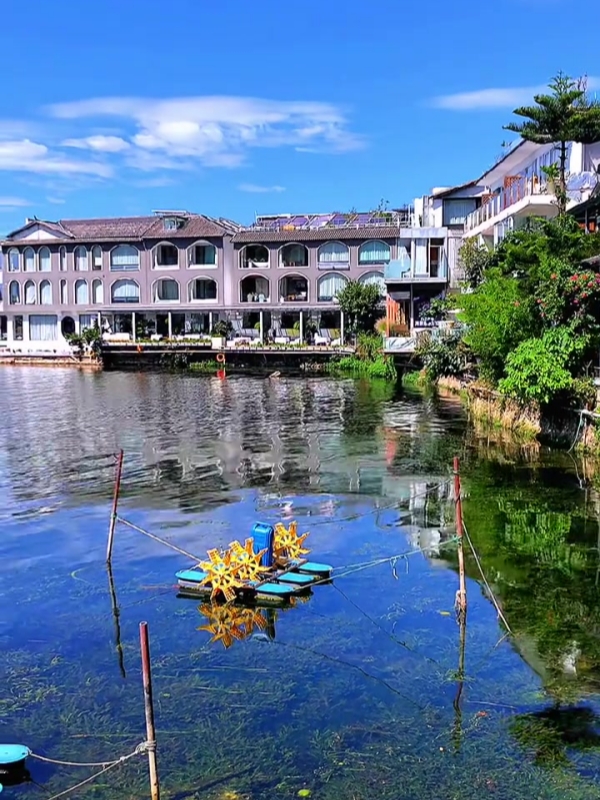
Shuanglang sits in prime realty along Erhai Lake’s northeast shore. Three sides rise to hills while one side rolls directly into water: protected conditions, great views.
Yuji Island juts from the shore of Shuanglang, and it’s here we have the “Sun Palace,” built by celebrity dancer Yang Liping. You need a reservation to enter the palace itself, but you can walk the perimeter of the peninsula in thirty minutes for mountain watching. Lakeside restaurants & cafes give the town its ambience. There are dozens of restaurants with terraces facing the lake where you can sip coffee (25-40 RMB) and watch life on Erhai Lake unfold.
Xizhou: Over 100 Traditional Bai Architecture Courtyards
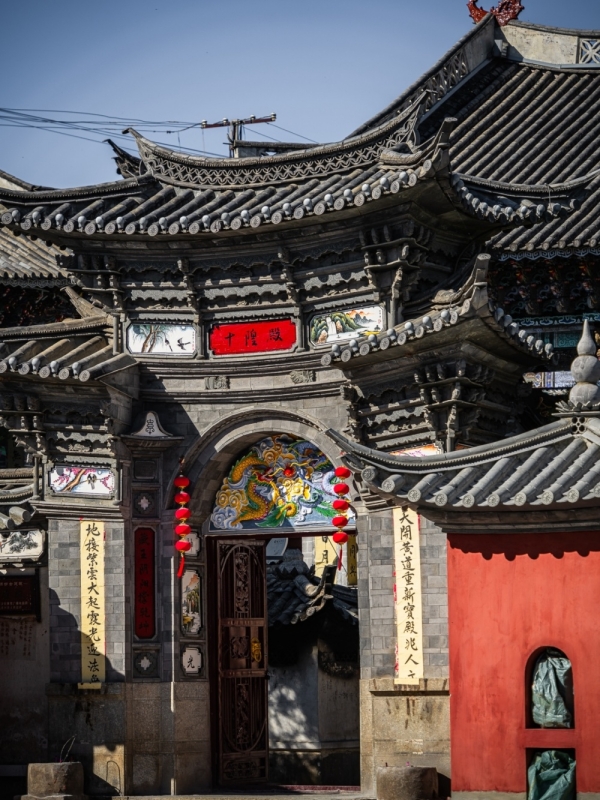
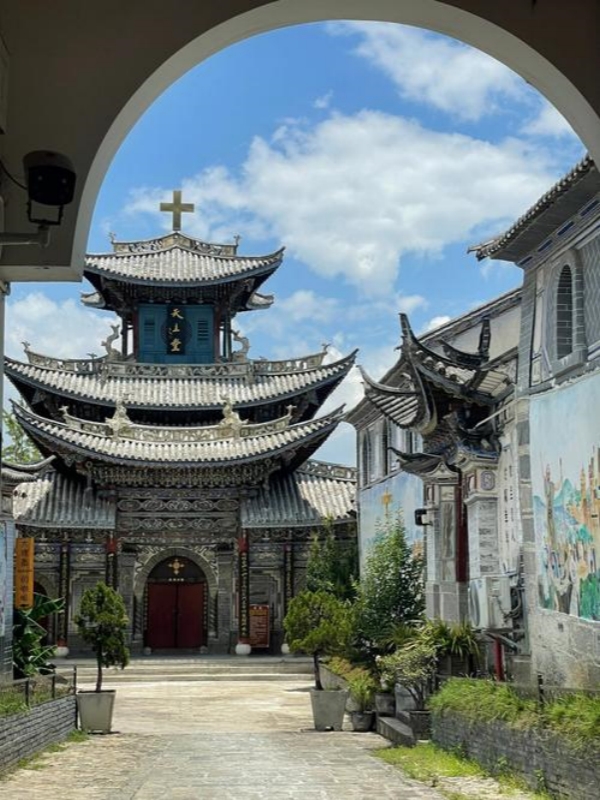
Xizhou Ancient Town: Located 20km north of Dali on the western shore, this town has some of the best preserved Bai architecture around Erhai Lake, with over a hundred traditional courtyard houses still lived in by their Bai families.
Bai architecture traditional white walls with painted raked eaves. Look closely for intricate motifs and meanings derived from nature as well as good fortune symbols. Xizhou is also blessed with pretty views of the surrounding rice paddies the verdant green of Spring/Summer, and golden yellow in Autumn. Snack on Xizhou baba (Chinese flat layered pastry cakes) from one of the many shops lining the main square – hot from the oven (5-8 RMB each)!
3 Authentic Experiences Immerse You in Bai Culture
-
- Three-Course Tea Ceremony
-
- Bai Tie-Dye
-
- Bai Festival
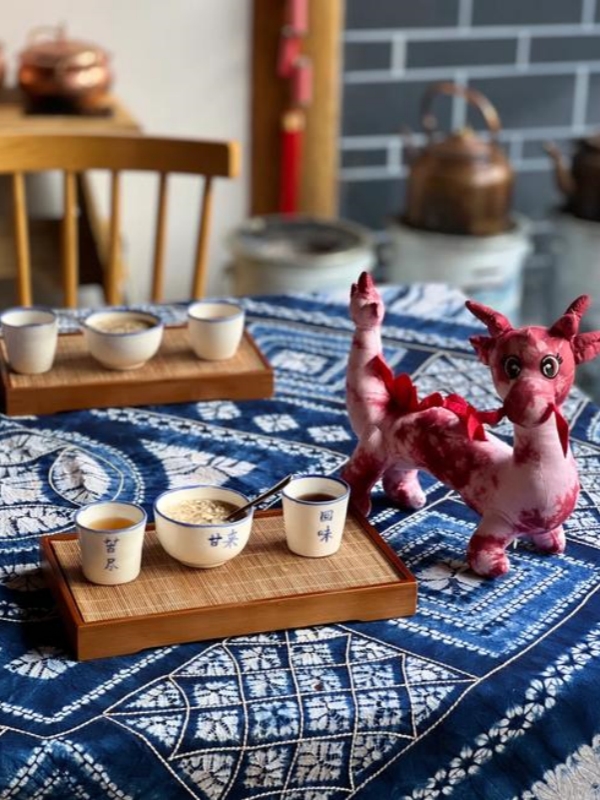
Three-Course Tea Ceremony Reveals Bai Philosophy of Life
Three courses of tea, and the Bai people share with you their philosophy. First course is bitter tea, the suffering of life. Second, sweetened with honey and a walnut, relief after hardship.Third is a soupy brew of Sichuan Pepper and ginger, a complexity of flavors that resonates with the taste of one’s own soul.
You can have a hit of the real deal at Xizhou Ancient Town. It takes 45 to 60 minutes for the life changing experience to unfold, with your hosts appearing in white Bai garb to serve each round. In between courses there are folk songs and sometimes musical performances. Prices vary from 50 to 80RMB per person. Don’t hurry, hurrying, you forget the point of the whole exercise of the teacup is to pause and reflect on the dragon whose tail we are endlessly chasing.
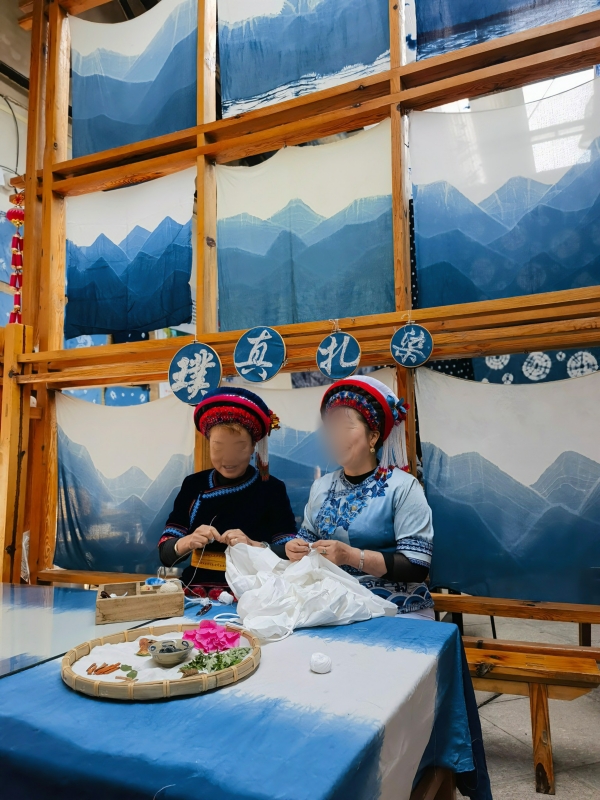
Tie-Dye Workshop in Zhoucheng Village Teaches Ancient Craft
Dubbed the “Hometown of Bai Tie-Dye,” this practice has existed in Zhoucheng Village for over a thousand years. As you wander through the village, the indigo-blue cloth drying everywhere truly hits you with the visual of just how significant this craft is.
A couple of family-owned workshops allow you to get right into it. You’ll learn the folding, binding, and dyeing techniques to create the resist patterns. There’s the actual binding, which takes 30 to 45 minutes of pretty meticulous work. Once that’s done, your cloth goes into the indigo dye vats, and when that’s done, you unbind the fabric and that magical moment of revelation happens. The whole workshop takes 2 to 3 hours at a cost of about 50 RMB, and you leave with your finished piece.
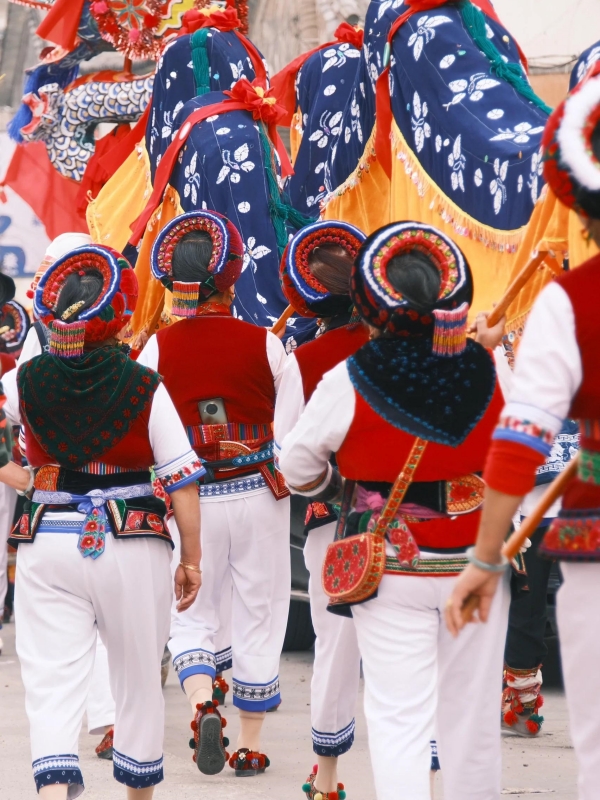
Bai Festivals Throughout the Year Celebrate Traditional Culture
If your visit coincides with some Bai festivals, the experience will be incredible. The Third Month Fair is around the middle of April each year, and it lasts for about five days. This is when horse racing, archery, traditional wrestling and huge market selling varieties of things are held etc. (2016: about April 10-15) . Then, there is the Raosanling Festival in late May, in which pilgrims go from one temple to another singing and dancing.
A particularly interesting one is the Torch Festival held in late July when after darkness villages carry bamboo torches and light huge bonfires and hold performances and moving hundreds of torches in darkness creates memorable images.
🍜 Beyond ethnic traditions and landscapes, Yunnan Cuisine: 10 Signature Dishes Mixing Wild Mushrooms, Herbs & Ethnic Flavors proves the food is just as unforgettable.
Nearby Attractions: Extending Your Journey
-
- Cangshan Mountain
-
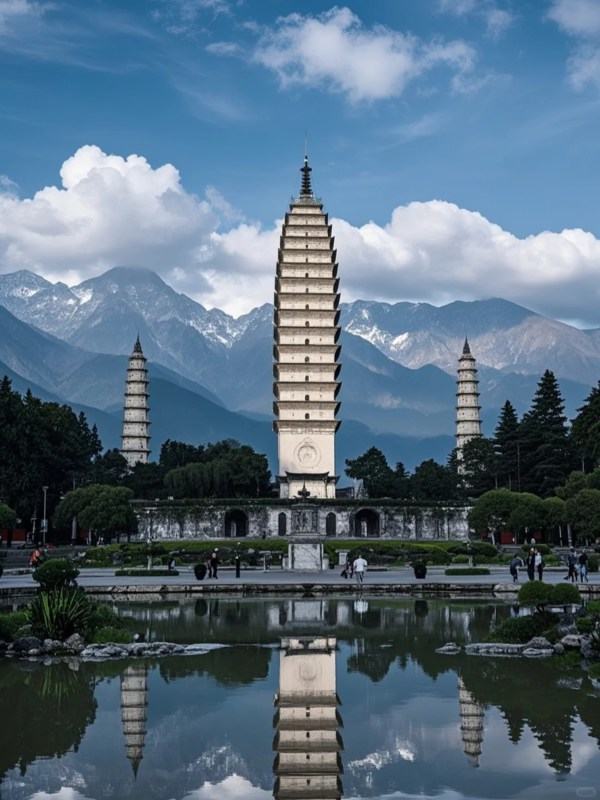
- Three Pagodas
-
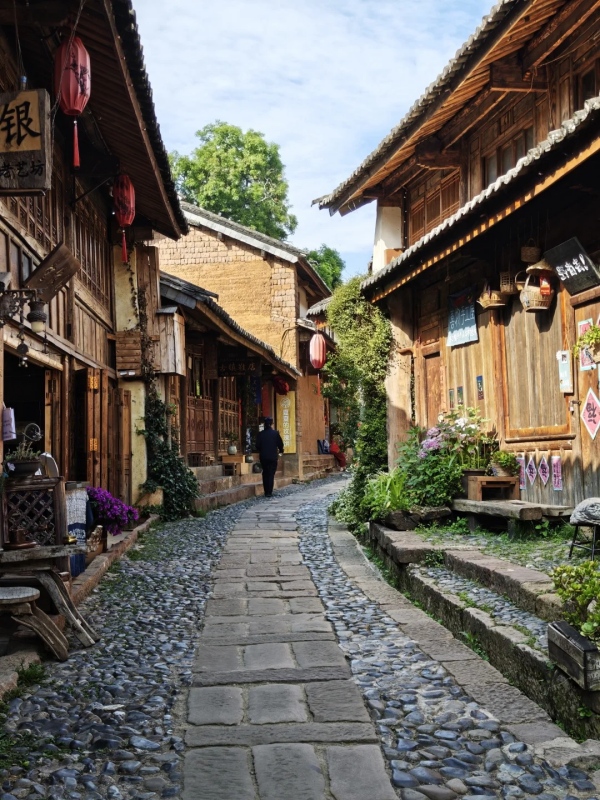
- Shaxi
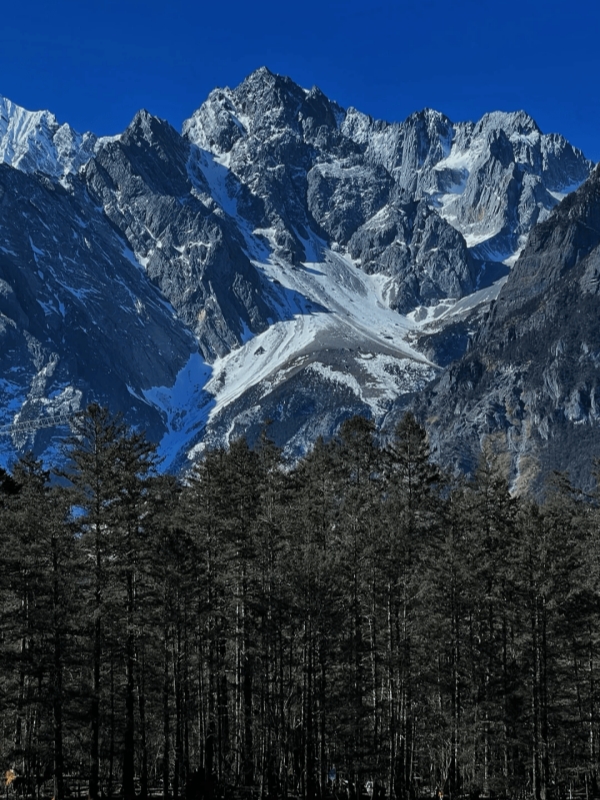
Cangshan Mountains: 19 Peaks Rising to 4,122 Meters
The Cangshan Mountains form the picturesque backdrop to every Erhai Lake photo. There are three cable cars to whisk you up—Gantong (120 RMB), Zhonghe (100 RMB and you can view the temples during transport) and Ximatan for 280 RMB, which takes you to the top of Cangshan’s 3,920m peak. From Cangshan, the perspectives of the land are so bird’s eye that you realise just how big the layout is. The rhododendrons bloom in spring (Apr-May) and bring in the golden autumn (Sept-Oct).
Three Pagodas and Shaxi Ancient Town
The Three Pagodas are one of the most iconic attractions in Yunnan. Built in the 9th century, still tall at 69.13 metres! They are located just 2km outside of Dali Ancient City and offer a nice reflection pool on a calm day. Entry fee is 75 RMB and it will take you 2-3 hours to stroll around.
Shaxi Ancient Town is two hours from Dali. A very well-preserved old trading post on the Tea Horse Road. It doesn’t feel commercialised like other towns and maintains its authenticity with quiet streets and local buildings. On Fridays the market is filled with locals from surrounding villages- it’s like stepping back in time.
🌄 To really feel Yunnan’s rhythm, Yunnan Travel Itinerary Guide: 10 Days of Lakes, Ancient Towns, and Snow-Capped Peaks is where the journey begins.
Practical Information: Getting There and Around
Transportation to Erhai Lake Region
By Air: Dali Airport (DIG) receives flights from major Chinese cities. The most common route is Kunming to Dali—about 45 minutes flying. From airport to Erhai Lake areas takes 40-60 minutes. Airport shuttle buses (30 RMB) run to Dali Ancient City, while taxis or ride-hailing apps cost 80-120 RMB.
By High-Speed Rail: The Kunming-Dali route takes approximately 2 hours, costs 145 RMB for second-class seats. Trains depart frequently, making this most convenient from Yunnan's capital. From Dali Station, public buses (Routes 4 and 8) reach Ancient City in 30-40 minutes for 2 RMB, while taxis cost 50-80 RMB.
Local Transport: Dali operates scenic bus routes circling Erhai Lake with hourly departures (2-10 RMB depending on distance). Bike and e-bike rentals (20-80 RMB daily) provide perfect local mobility. Car rentals start at 200-300 RMB per day. Most experienced travelers recommend clockwise routing—heading north along western shore first places you on the lakeside lane, making stops easier.
Essential Tips for Smooth Adventures
Budget & Sun Protection: Economy travelers manage on 200-300 RMB daily covering basic accommodation, meals, and bicycle rental. Mid-range budgets should allocate 400-600 RMB. The highland altitude makes UV radiation significantly stronger—apply SPF 50+ sunscreen every 2 hours. Pack layers for 15-degree temperature swings between day and night.
Language & Safety: Mandarin Chinese dominates with limited English outside high-end hotels. Translation apps help communication. Swimming is strictly prohibited in Erhai Lake protection zone due to water quality protection efforts. Altitude sickness rarely occurs at 1,972 meters—most visitors experience no significant problems. Respect Bai customs when visiting villages and temples. Three to four days allows comprehensive exploration without feeling rushed.
Accommodations Near Erhai Lake: Where to Stay
Luxury Lakeside Properties (800-2,000 RMB/night)
Shuanglang and Wase areas host impressive properties like the Grev Hotel providing floor-to-ceiling windows framing Erhai Lake and Cangshan Mountains. What you're paying for: location, design, amenities including private terraces and soaking tubs positioned for views. Book 1-2 months advance during peak seasons.
Mid-Range Guesthouses (400-700 RMB/night)
The Caicun and Longkan areas on western shore represent my top recommendation for value-conscious travelers. Located just 3-4 kilometers from Dali Ancient City, these neighborhoods offer easy access to both lake and town. Family-run guesthouses feature rooftop terraces where breakfast is served with views. The local atmosphere stays relatively authentic.
Budget & Ancient City Options (150-500 RMB/night)
Staying inside Dali Ancient City trades lake views for convenience at 300-500 RMB per night in traditional courtyard-style inns. Budget travelers find basic guesthouses in Xizhou, Zhoucheng, and eastern shore areas starting around 150-250 RMB. Understanding seasonal pricing impacts budgets—peak seasons see 50-100% increases, while off-peak periods bring substantial discounts.
Frequently Asked Questions About Erhai Lake
Q: Do I need tickets to visit Erhai Lake?
Erhai Lake itself is free to access—you can walk, cycle, drive along the shoreline without paying. The lake is a natural public resource open to everyone. Some specific attractions around the lake do charge admission though. Little Putuo Island costs around 40 RMB including boat transfer, Butterfly Spring charges 60 RMB, places like Ideal Town require 50 RMB entry. The ecological corridor on the western shore? That's free—it's a public pathway designed for cycling and walking. Most villages and towns around the lake also don't charge entry fees, so you can explore quite extensively without spending much.
Q: How long does cycling around the entire lake take?
The complete loop measures about 130 kilometers. If you're a serious cyclist, you could technically finish in 6-8 hours of continuous riding, but honestly, why would you rush? Most casual visitors plan for two days to actually enjoy the experience. Day one covers maybe 30-40 kilometers, giving you time for photo stops, meals, cultural exploration. Day two tackles the rest. This relaxed pace lets you appreciate the changing scenery, chat with locals, arrive at destinations without exhaustion. If you only want highlights though, the western shore's ecological corridor—about 20 kilometers—can be done in 2-3 hours with stops.
Q: What are must-try local dishes?
Suanlayu (酸辣鱼) tops every foodie's list—this sour and spicy fish dish uses Erhai's native carp in Bai-style preparation with tomatoes, herbs, chilies. The flavors are bold, complex, unlike anything you've probably had before. Rushan (乳扇) is unique to Dali—thin sheets of milk cheese that are grilled or fried, then served with rose jam or sugar. It's an acquired taste, I'll admit, but worth trying. Xizhou baba (喜洲粑粑) are layered flatbreads filled with either scallions (savory) or brown sugar (sweet). You'll also find excellent Yunnan coffee around the lake—the high altitude produces distinctive flavors. Try these at family-run restaurants in Xizhou, Shuanglang, or small villages for most authentic experiences and reasonable prices.
Q: Is Erhai Lake good for families with young children?
Absolutely works for families. The western shore's ecological corridor features completely flat, paved paths perfect for children learning to bike. Erhai Park near Dali Ancient City has playgrounds and open spaces where kids can run safely. The lake cruises provide restrooms and comfortable seating, preventing the need for constant walking. Most guesthouses welcome families and can provide extra beds or cribs.
Q: Will altitude sickness be a problem?
Most visitors experience no significant altitude-related problems at Erhai. At 1,972 meters, the elevation is moderate compared to truly high-altitude destinations. Some people might notice slightly faster breathing during exertion or minor headaches during the first day, but these typically resolve within 24 hours as your body adjusts.
Q: Where are the best photography spots?
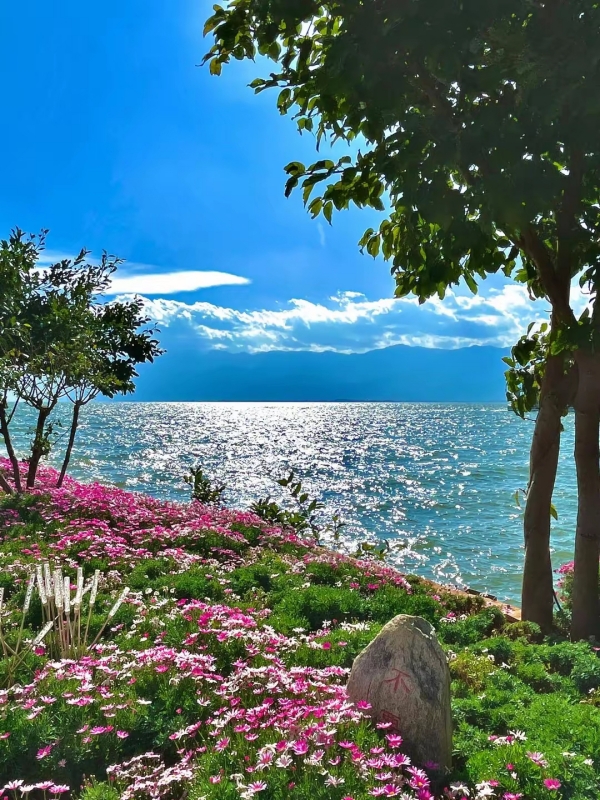
Five locations stand out. Longkan Pier delivers spectacular sunrises, especially during winter when red-billed gulls add dynamic elements—visit around 6:30-7:00 AM. Panxi S-Bend creates that iconic cycling-silhouette-against-blue-water shot, best light happens 8-10 AM. Wenbi Village's Rainbow Road works brilliantly for people photography during mid-morning. Ideal Town's Santorini-style buildings frame sunsets perfectly—arrive 90 minutes before sunset. Haishegonguen Park's "Twin Trees" offer natural framing during golden hour.
Q: Does rainy season disrupt travel plans significantly?
The rainy season (June-August) brings afternoon showers but rarely ruins entire days. Typical patterns show clear mornings, with rain developing around 2-4 PM and lasting 30-90 minutes. This predictability helps planning—schedule cycling, photography, outdoor exploration for mornings, then seek indoor activities or rest during afternoon hours.
Q: When and where can I see red-billed gulls?
Red-billed gulls migrate from Siberia to Erhai each winter, arriving late November and staying through February. Peak populations occur mid-December through mid-January when 10,000+ birds gather. Best viewing locations are Longkan Pier and Little Putuo Island where gulls congregate in massive numbers.
Q: Which Bai festivals can I experience?
The Third Month Fair happens around mid-April by lunar calendar—2026's dates likely fall in early-to-mid April. This week-long celebration features horse racing, archery, traditional wrestling, massive markets. The Raosanling Festival occurs late May, involving temple-to-temple pilgrimages with singing and dancing that welcomes visitor participation.
Q: How many days should I allocate?
Three to four days allows comprehensive exploration without feeling rushed. A sample itinerary: Day 1 arrives in Dali, explores Ancient City, gets oriented. Day 2 cycles western shore from Longkan to Xizhou, stays overnight in Xizhou. And Day 3 takes lake cruise visiting islands, then explores Shuanglang. Day 4 visits cultural sites (Three-Course Tea ceremony, tie-dye workshop) or nearby attractions like Cangshan before departing.