Huguang Guild Hall in Chongqing
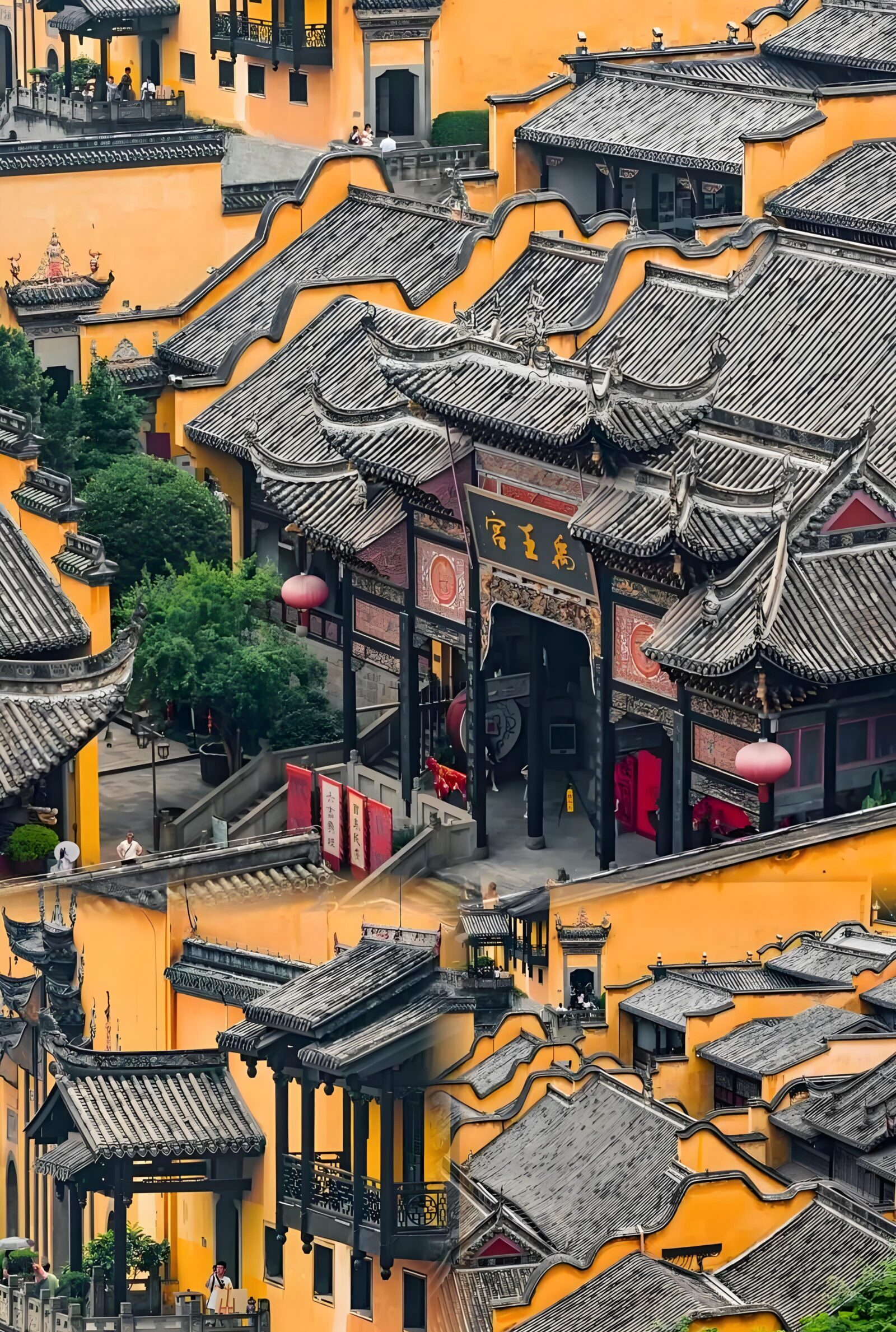
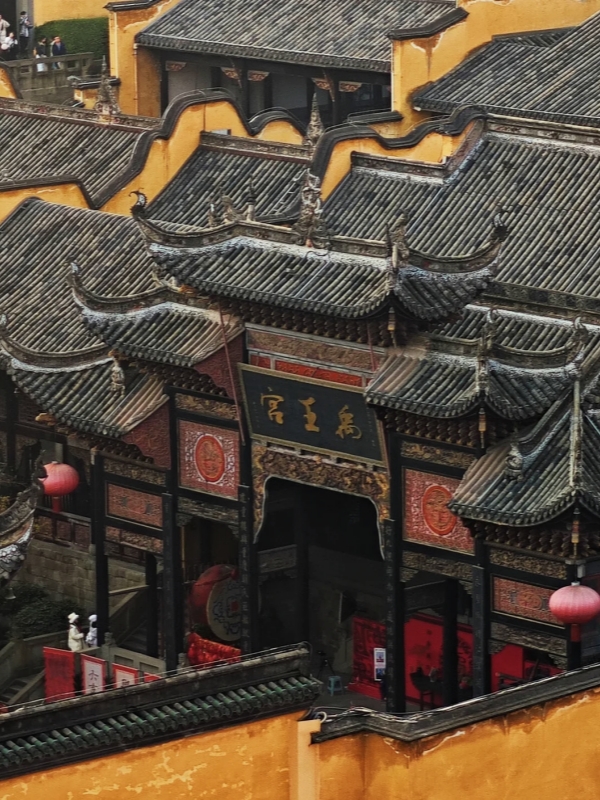
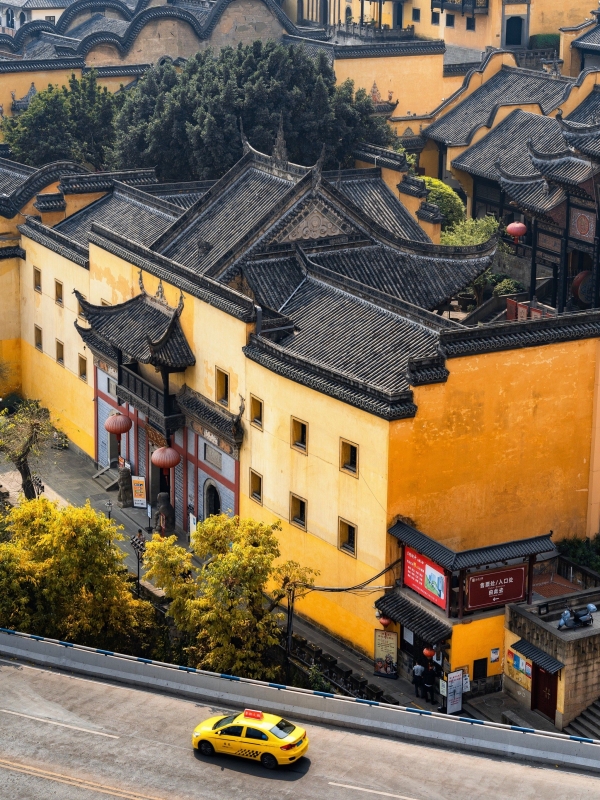
There’s this moment when you first see Huguang Guild Hall that literally stops you in your tracks. You’re walking down from Xiaoshizi metro station and wandering through the maze of old Chongqing when—boom—there are these radiant yellow walls against the grey of the Yangtze spilling out to meet the sleek cables of Dongshuimen Bridge looming in the skyline. Someone just kind of photoshopped ancient China against a backdrop of modernity.
Right, so this is the thing about Huguang Guild Hall in Chongqing. It isn’t just another old temple you check off your bucket-list-to-see-at-some-point-if-I-can-remember-this-stupid-list. It tells the story of millions of migrants who thronged here to resettle all over again some 260 years ago. And once you understand that, it’s hard not to marvel every time you see each carved beam and worn stone step. In this guide I’m going to tell you everything you need to get the best from your visit—the historical context that makes it all so astonishing, the right vantage points for that Instagram shot, the chance to watch a traditional opera, and all the nitty-gritty info from tickets to transport options. Whether you have 2 hours or half a day, let’s see how to make the most of it!
Quick Facts: Huguang Guild Hall at a Glance
Before we dive deeper, here's what you need to know at a glance:
| Item | Details |
|---|---|
| Chinese Name | 湖广会馆 (Húguǎng Huìguǎn) |
| Address | No.4 Dongshuimen Zheng Street, Yuzhong District, Chongqing |
| Opening Hours | Mon-Fri: 9:00-18:00 / Sat-Sun: 9:00-19:00 |
| Tickets | ¥32 (Adult) / ¥16 (Students, Seniors 60-64) / Free (Under 6 or Over 65) |
| Suggested Visit | 2-4 hours |
| Phone | 023-63914697 |
What to See Inside Huguang Guild Hall
Migration Museum — Understanding the Journey
Honestly? Start here. I know museums can feel like homework sometimes, but this one earns its spot at the beginning of your visit.
Where does this all come from? Well, back in the Ming/Qing era (1600s), Sichuan basically emptied. Wars, famine, plagues—the works. Millions of people from Hubei and Hunan (what’s known as Huguang) flooded into Sichuan, some by boat up the Yangtze, others carrying their goods by foot through mountain passes, and then finally settle in places like Zhongqing. And you know what they did? They found community.
These displays try to recreate what those journeys looked like. There are family jammed together on a boat, traders haggling over what to bring into the new city. There are life-size dioramas, sure a bit old-looking, but they help you get a grasp of the size of the event.
Spend about a 30-40 minutes here. When you walk into the old guild halls, the carved dragons and painted beams mean something different. It’s a monument to the people who fled and wanted nothing more than to start over.
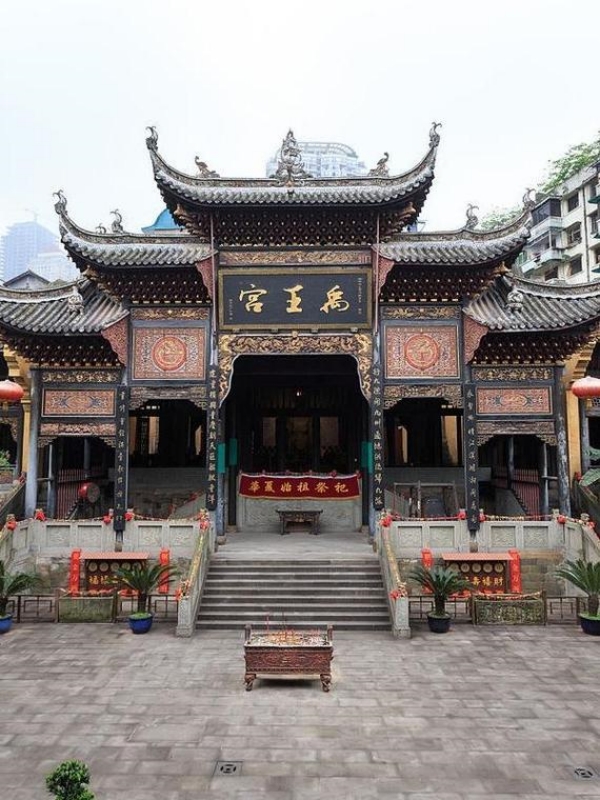
Yu Wang Palace (禹王宫) — The Grandest Hall
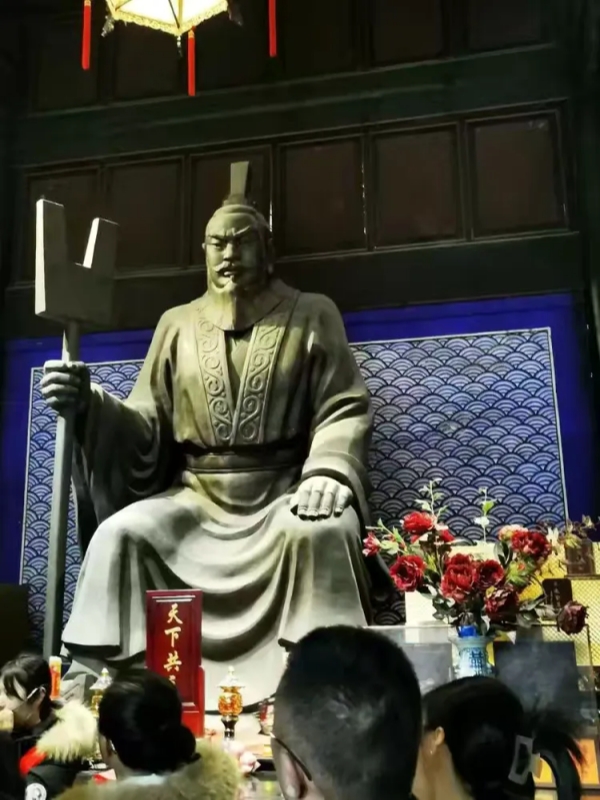
This is the big one—the tallest structure in the complex—built by migrants from Hubei and Hunan, and dedicated to Yu the Great, who supposedly tamed China’s floods more than 4,000 years ago. To those whose lives revolve around the Yangtze River, having Yu look after you counts for a lot.
Look up when you go in. The dragon-head brackets at the eaves are all aimed seaward—this is known to the locals as “Great Dragon Locks the River.” It’s designed to keep the waters calm and the homeland safe. The woodwork here is spectacular, the kind of thing that you don’t see any more. These elaborate carvings were not produced by machine. Someone spent months on each one.
Standing in the main hall, with dust motes lit by sunlight streaming through an ancient set of windows, you can almost feel the centuries.
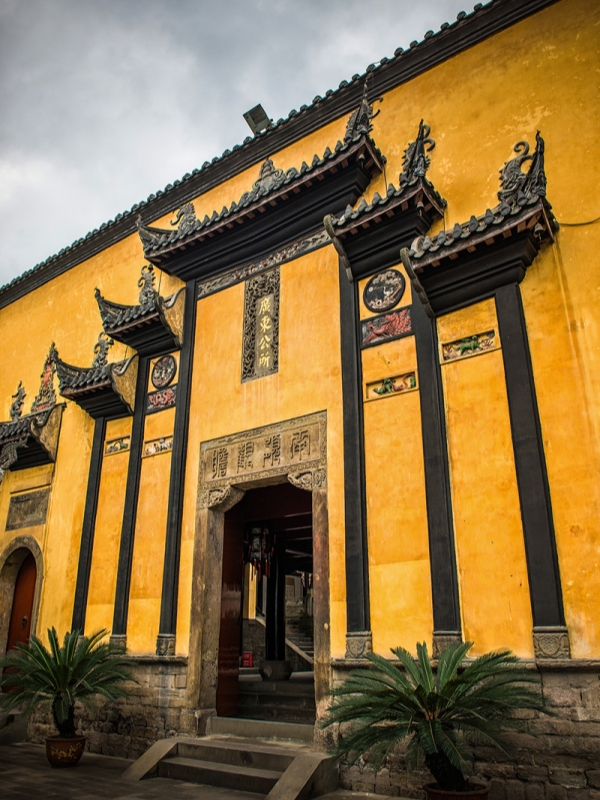
Guangdong Assembly Hall (广东公所) — The Largest Opera Stage
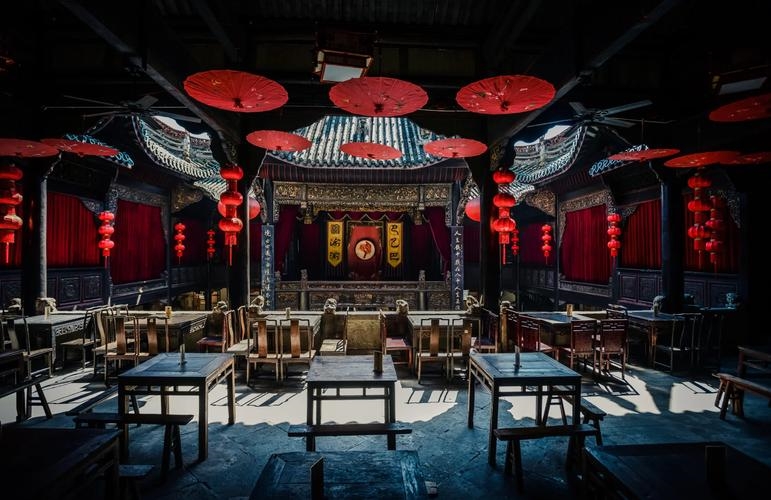
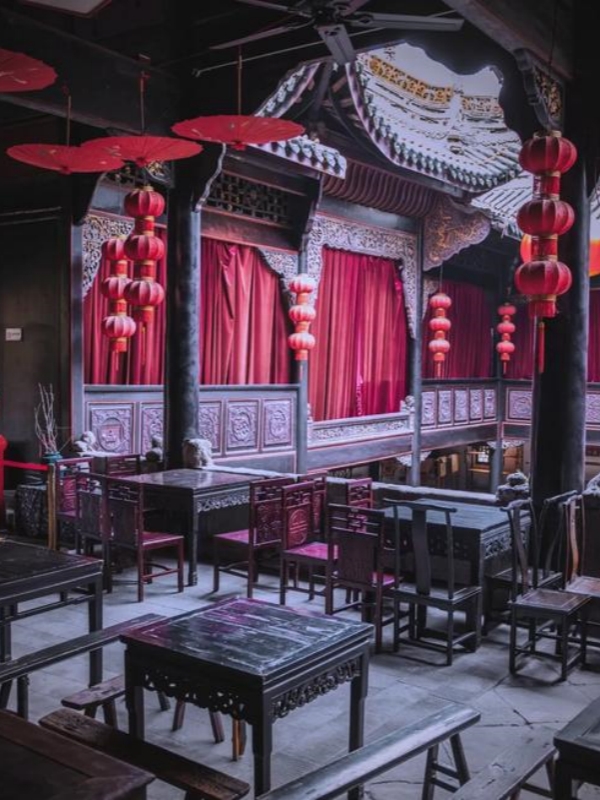
The Cantonese who built this section clearly had some money to spend, and it shows. This hall contains the complex’s largest opera stage, and even if you aren’t lucky enough to see a performance, the architecture is worth your time.
Look up at the octagonal ceiling above. It’s not a traditional design just for show – that shape is actually a natural amplifier, carrying the sound of actors’ voices throughout the hall before they had microphones. Clever, right?
But the biggest draw? There’s a wood carving above the stage called “Two Dragons Playing with a Pearl”. The pearl that the dragons have in their mouths is actually turning. Someone carved that by hand, centuries ago, with chisels and love. I’ve seen a lot of Chinese wood carvings now, and this one still makes me stop.
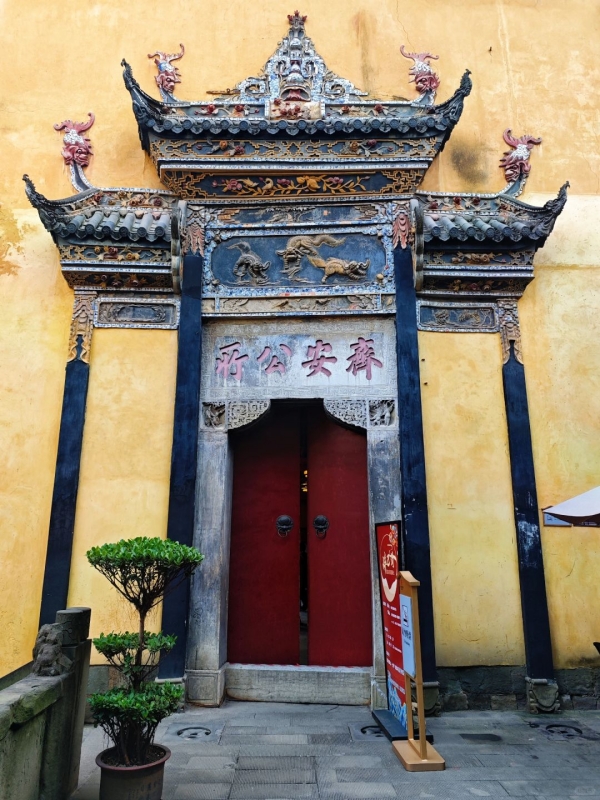
Qi'an Assembly Hall (齐安公所) — Best-Preserved Gem
This hall was built by migrants from the Huangzhou Prefecture in Hubei, and is the best-preserved of the three. But it’s this kind of thing that gets me: the main door doesn’t face outwards at all, but angled slightly away to the east.
Why? Because east is where Huangzhou lies, and these builders, hundreds of kilometers from home, plunked their door where it faced all the things they had left behind. It’s not a big thing architecturally, but it makes me think. Take half an hour to walk around, and peruse the wood carvings inside.
They are said to depict the migrants’ hometowns, and Chongqing itself. With a bit of imagination they can be read almost as a comic book, of farmers slogging in their paddies, and boats bobbing down the rivers. The different landscapes of two worlds, and hearts.
Must-Do Experiences at Huguang Guild Hall

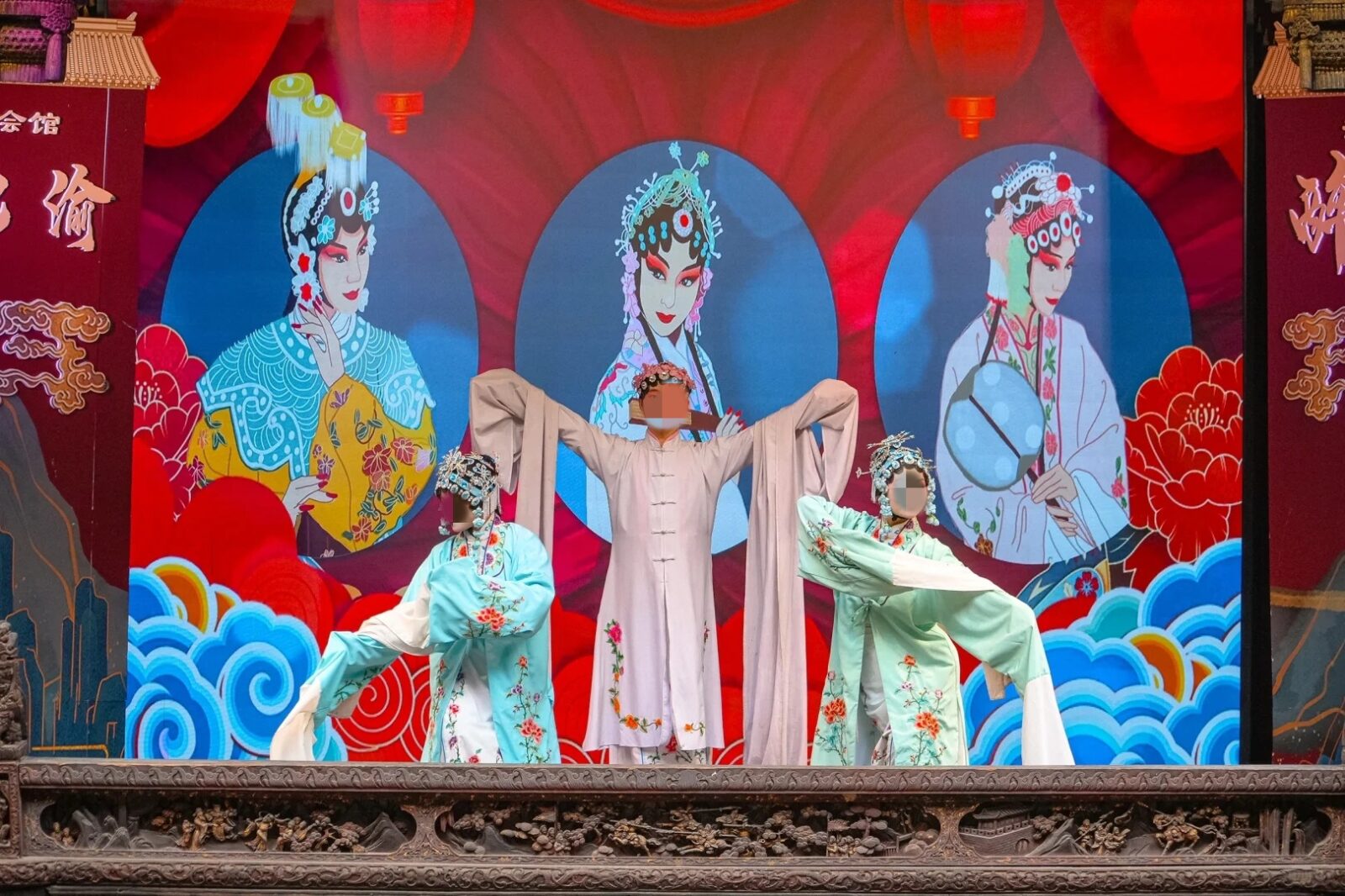
Watch the "Zui Bayu" Traditional Performance
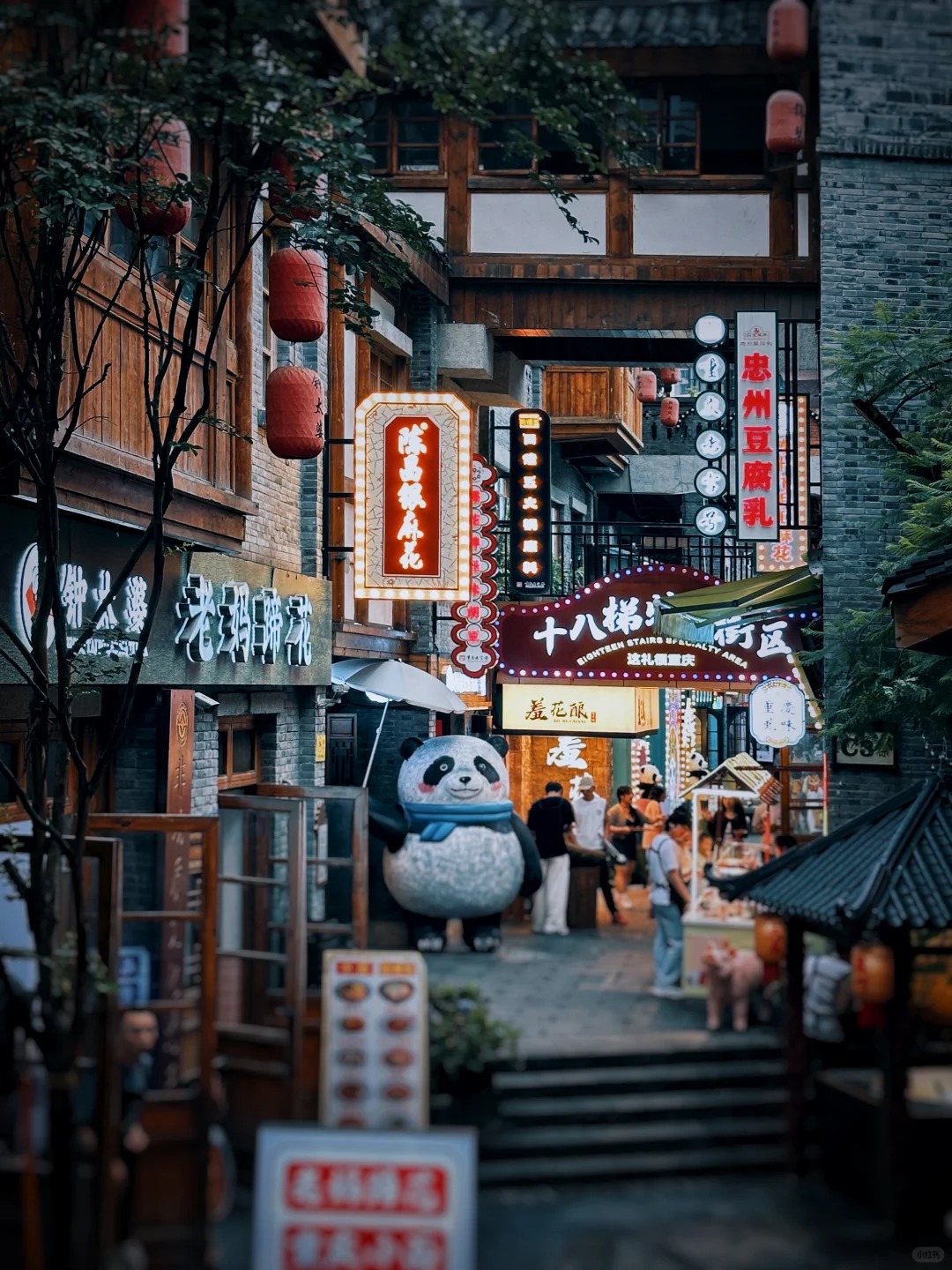
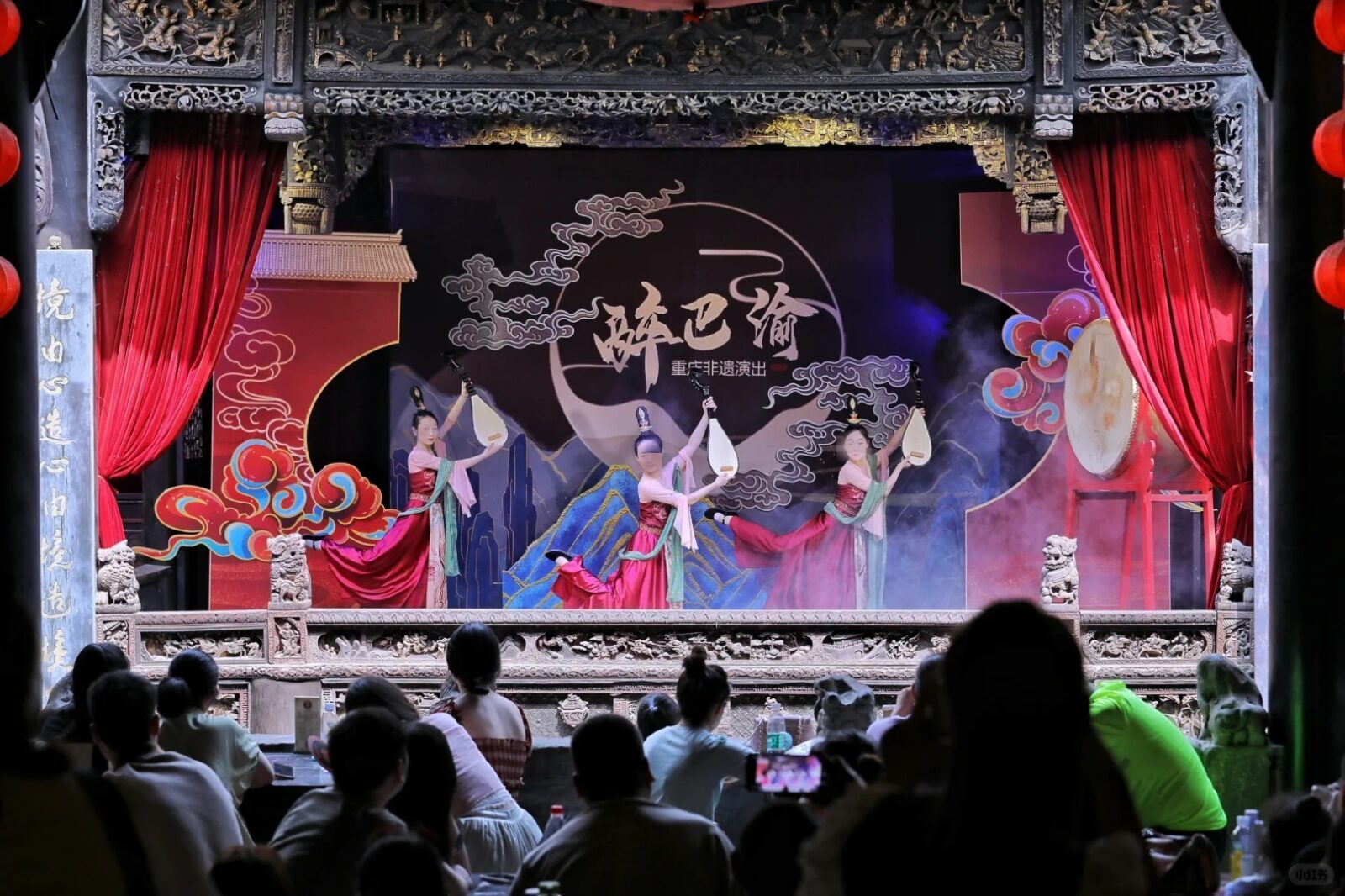
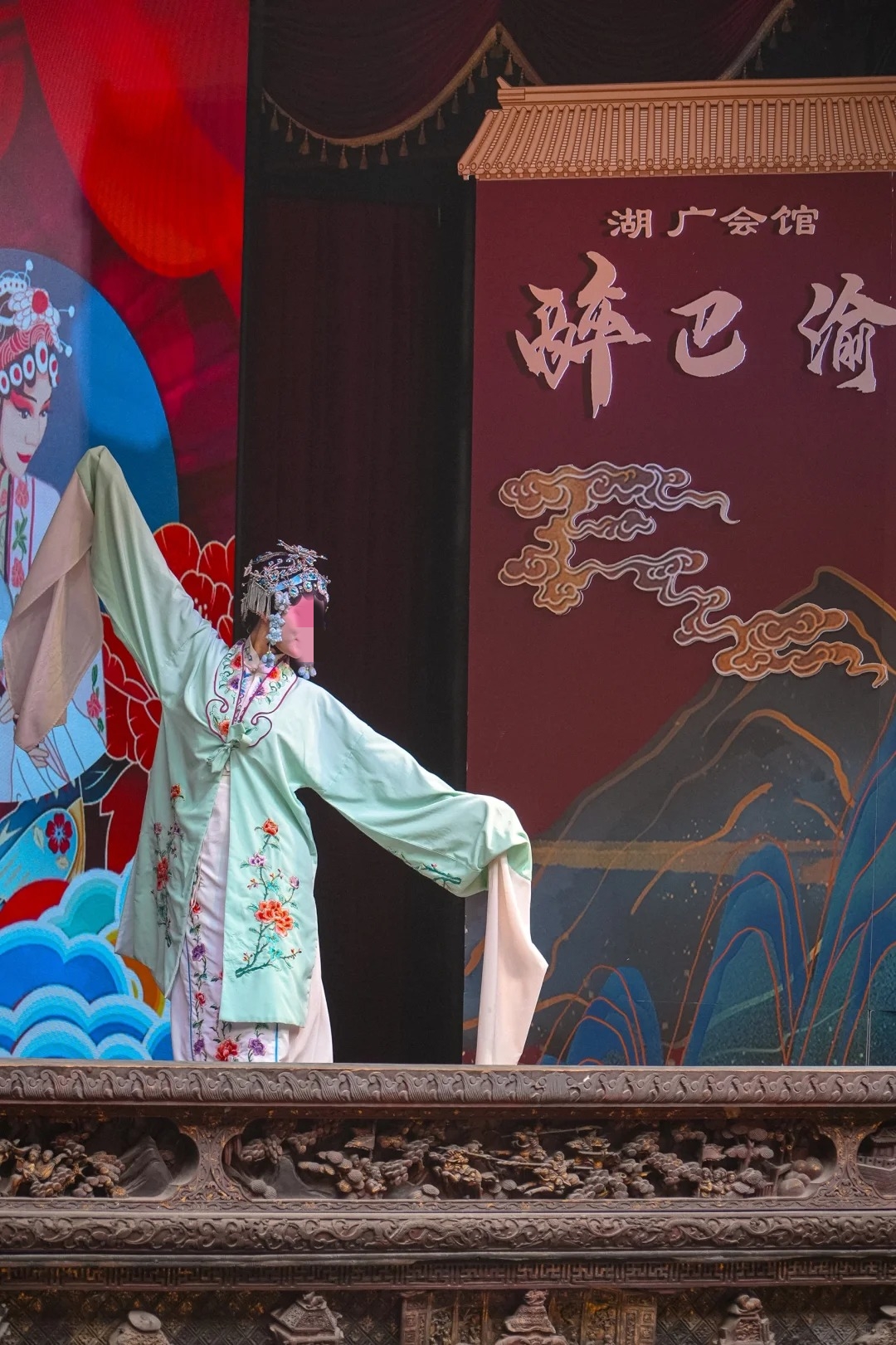
Okay, I'll be direct: don't skip the show. Yes, it costs extra. Yes, it's "touristy." But watching Sichuan Opera on a stage that's been hosting performances for over two centuries? That's not something you can replicate at home. It can be regarded as a Chongqing city icon alongside the "Yuzhou Stories" at 18 Steps Chongqing, a living museum where mountain city soul meets modern revival.
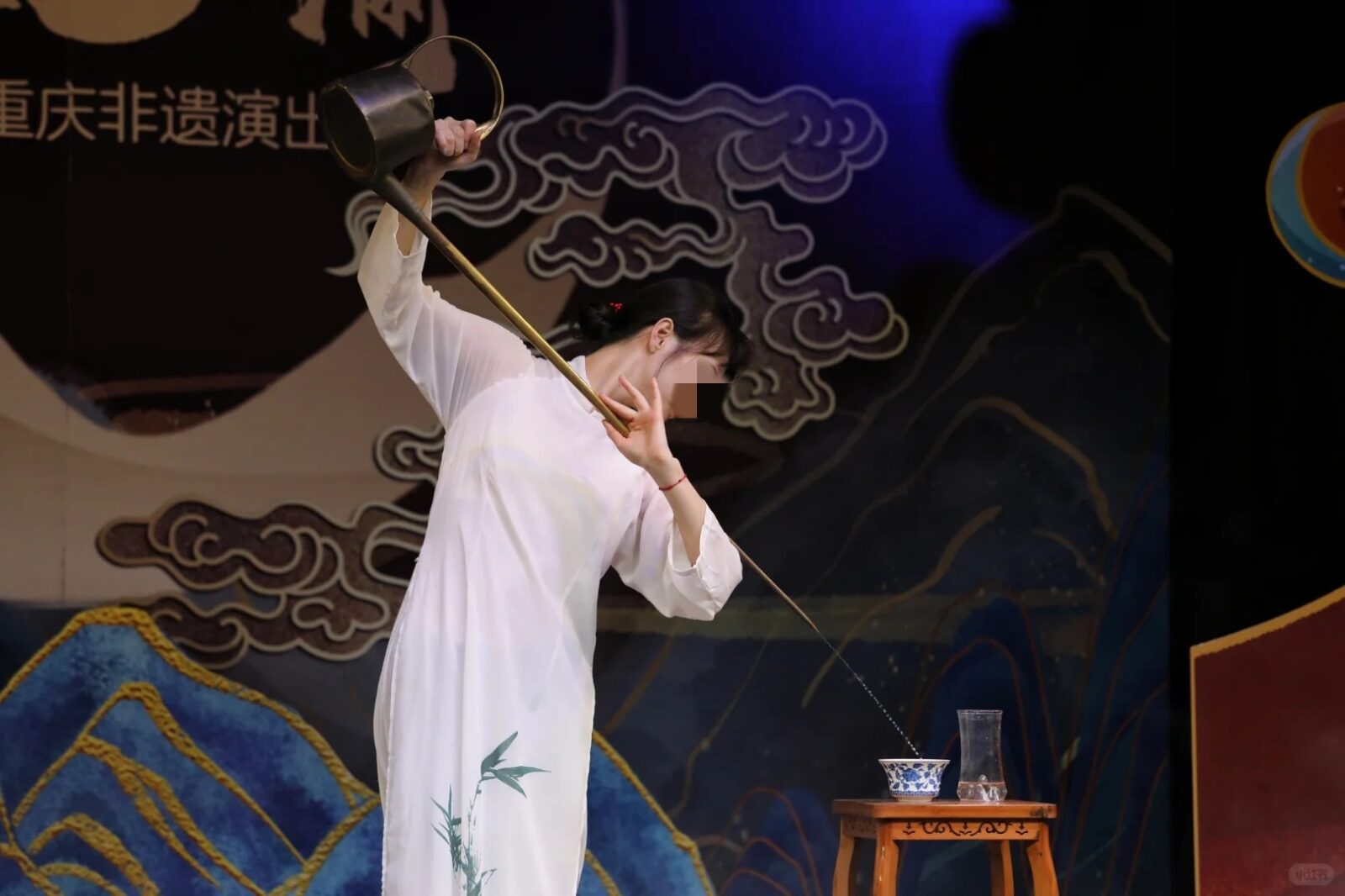
Our Zui Bayu (Drunken in Bayu) performance ran for approximately 40 minutes. The highlight is the “face-changing” segment. The performers change masks so rapidly, it’s almost disorienting. You will also get to see the long-spout teapot performance, where “waiters” pour from pots with ridiculously long spouts without any spillage. Traditional dance and folk music rounded things out.
Usually, performances run from 14:10-14:50 and again from 16:40-17:20, but check the schedule. The combo tickets are a good deal: ¥88 for entry and a show, ¥118 for entry, a show, and gaiwan tea service.
Somehow, sitting there in that ancient opulent theater, feeling the warmth of tea in your hands, and watching performers in opulent costumes unfold… it’s a moment that stays with you. Some visitors mention modern additions (the show contains some modern music as well), which could be a purist concern, but the traditional acts are still the core and the atmosphere of the venue carries things.
Photography: Best Spots for That Perfect Shot
Let's be real—part of why Huguang Guild Hall has blown up on Chinese social media is those incredible photos. The yellow walls against the modern bridge create exactly the kind of "ancient meets future" contrast that looks amazing on screen.
Here are the spots that actually deliver:
Dongshuimen Bridge elevator platform: Take the glass elevator up to the bridge level. From there, you can shoot down at the entire complex—all those layered yellow rooftops against the Yangtze. Late afternoon light makes the colors pop.
Guangdong Assembly Hall terrace: Position yourself with the traditional gate in your foreground and the bridge's cables behind. It's the classic "ancient-modern dialogue" shot that floods Instagram.
Qi'an Assembly Hall staircase: The long flight of stairs leading up to this hall creates great depth. Works especially well for full-body portrait shots.
Pro tip from someone who's been there: Afternoon light, roughly 2-5 PM, is your friend. Mornings can be harsh. And if you're considering wearing hanfu (traditional Chinese clothing)—do it. The bright colors against those yellow walls just work. Rental shops are all over Chongqing's tourist areas; expect to pay ¥50-150 for a few hours depending on how elaborate you want to go.
Nearby Attractions — Plan Your Day Trip
-
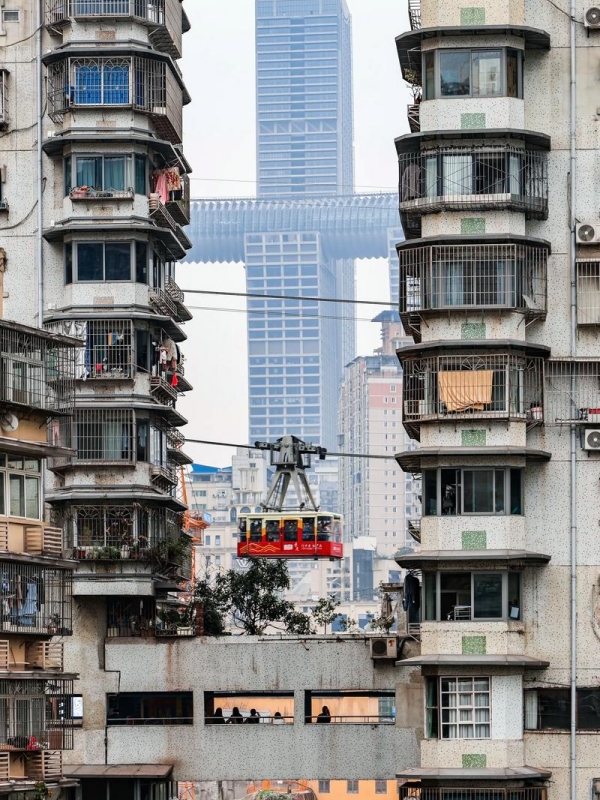

- Baixiangju
-

- Longmenhao Old Street
-
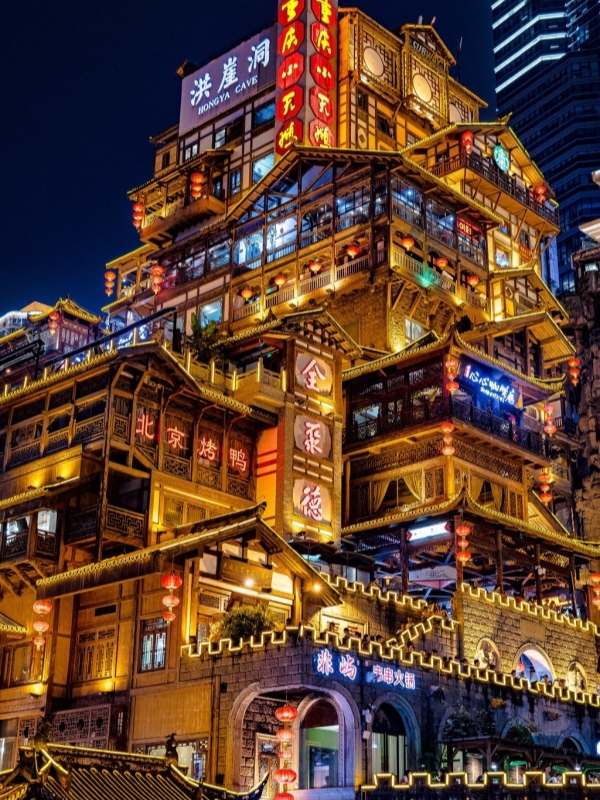
- Hongyadong
Half-Day Cultural Route
Huguang Guild Hall → Baixiangju → Yangtze River Cableway
Here’s a recommended route: After visiting the guild hall, walk around 10 minutes to Baixiangju, another residential building that went viral for perfectly embodying Chongqing’s “3D city” DNA—apartments stacked on a hillside, with entrances several stories up; outdoor corridors that feel like they’re pulled from a Miyazaki film. It’s free to wander around (don’t be a jerk, people live there), and you get some nice views toward the Yangtze.
From there, make your way to the Cableway for sunset views over the city. The whole loop takes maybe 3-4 hours at a comfortable pace.
Full-Day Classic Chongqing Route
Liangjiang Ferry → Longmenhao Old Street → Yangtze Cableway → Huguang Guild Hall → Hongyadong
This is the “greatest hits” method if you have a whole day. Start with the ferry for views from the water, then wander Longmenhao’s old streets that have recently been revitalized, cross the river by cable car and spend the whole afternoon (and perhaps beyond) at Huguang Guild Hall, and then finish at the impressive Hongyadong at night when it is all lit up.
It’s a lot to do in a day, honestly. I’d probably break it up by getting lunch at Longmenhao (versatile assortment of good local restaurants). But one day in Chongqing and want to see everything? This is the route.
How to Get to Huguang Guild Hall
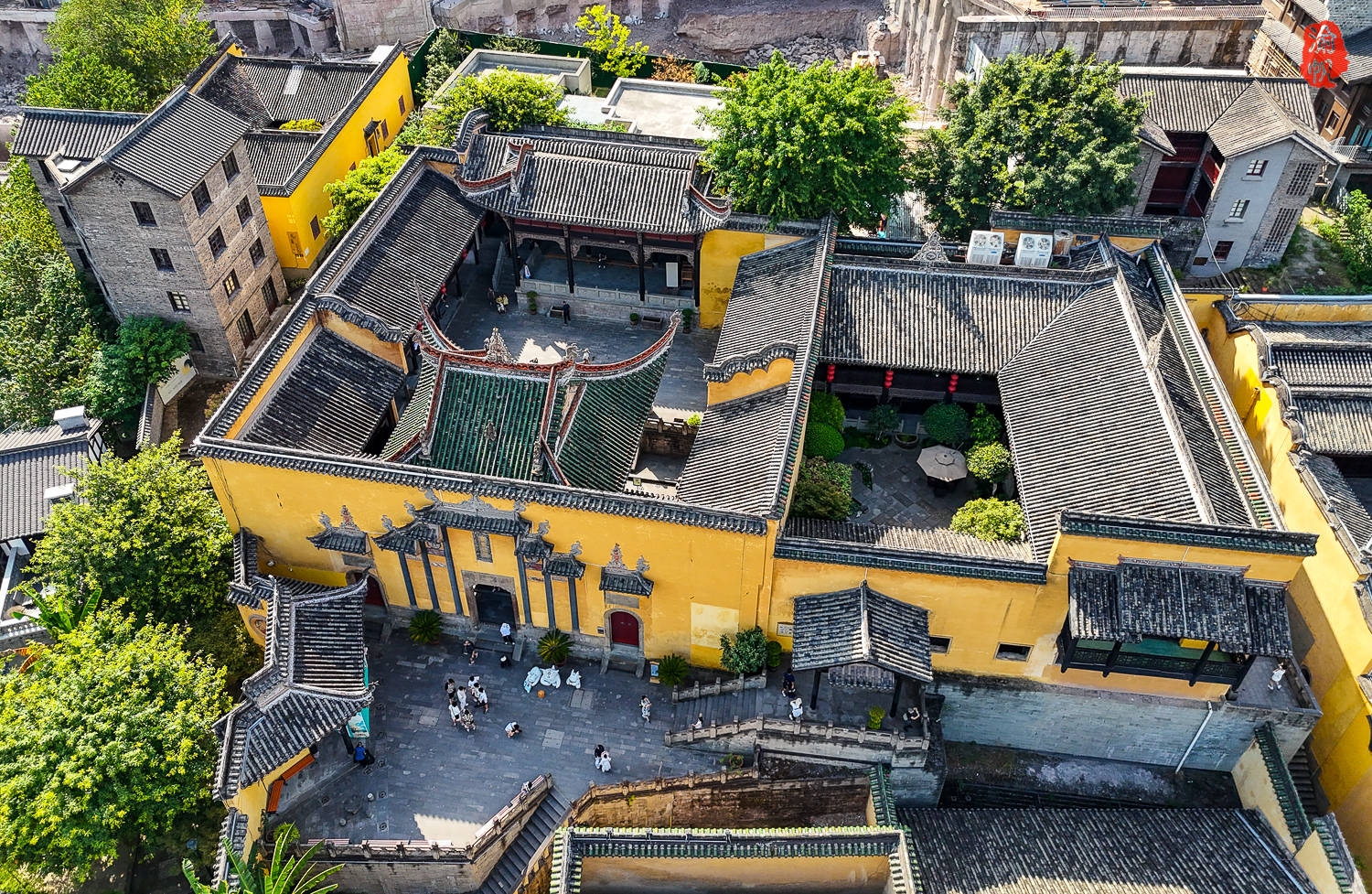
Huguang Guild Hall Landscape
By Metro (Recommended)
This is the easiest option, hands down. Take Line 1 or Line 6 to Xiaoshizi Station. You want Exit 8 or Exit 4B—both work, though Exit 8 is slightly more direct.
From there, follow the signs. It's about a 10-minute walk, mostly downhill through old neighborhood streets. The walk itself is actually interesting—you'll pass traditional shopfronts, maybe spot some elderly folks playing mahjong, get a feel for non-touristy Chongqing. Just watch your step on the uneven pavement.
By Bus
Routes 414, 440, and 480 all stop at Huguang Guild Hall Station. If you end up on routes 112, 120, or 141, get off at Daomenkou Station instead—it's a short walk from there.
By Taxi or Ride-Hailing
Show your driver "湖广会馆" on your phone—that'll avoid any confusion. The East Gate parking lot charges around ¥2 per hour if you're driving yourself.
One heads up: Chongqing traffic can be... challenging. During rush hour, the metro is often faster than sitting in a car, even if the car seems more convenient.
A Scenic Approach: Yangtze River Cableway
If you've got time and want to make your arrival memorable, consider taking the Yangtze River Cableway first. You'll glide across the river with panoramic views of the city's famous skyline, then walk to Huguang Guild Hall from the other side. It takes longer, sure, but it turns "getting there" into part of the experience.
Insider Tips for Visiting Huguang Guild Hall
Timing Your Visit Right
Here's the thing about Huguang Guild Hall—it rewards patience. If you want both great photos AND the performance, you're looking at 3-4 hours minimum. The complex is built on Chongqing's famously hilly terrain, so you'll spend more time on stairs than you might expect. Factor that in.
My suggestion? Aim to arrive around 2-3 PM. The afternoon light is flattering for photos, you can catch one of the later shows, and you'll avoid the morning tour group rush that tends to clog the narrow corridors. Weekdays are noticeably calmer than weekends, if you have flexibility.
Navigating Payment & Language
Payment reality check: Alipay and WeChat Pay dominate here, like pretty much everywhere in China. Some travelers manage with cash, but expect puzzled looks and occasional inconvenience. If you're an international visitor, consider setting up Alipay's international tourist mode before you arrive—it's gotten much easier recently. Alternatively, book your tickets through Trip.com or Klook in advance and sidestep the issue entirely.
On the language front, signs throughout the complex are bilingual, which helps. But detailed explanations on exhibits and performance commentary? Mostly Chinese. Reading up beforehand (like you're doing now) makes a real difference. A translation app with camera function—Google Translate or similar—can help decode the more detailed museum displays if you're curious about specifics.
Practical Amenities On-Site
Don't stress too much about logistics once you're inside. The complex has restrooms (reasonably clean, by Chinese tourist site standards), a small shop if you want souvenirs, luggage storage if you're traveling between destinations, and a restaurant for when hunger strikes. The facilities are actually decent for a historical site—clearly they've thought about visitor comfort during the restoration.
One small thing: bring water, especially in summer. Chongqing heat is no joke, and while you can buy drinks inside, having a bottle ready saves you from dehydrating while climbing all those stairs.
Frequently Asked Questions
Q: What is Huguang Guild Hall famous for?
It's essentially the best-preserved Qing Dynasty guild hall complex left in China—we're talking 260+ years of history still standing. But the real draw, at least for me, is what it represents: the "Huguang Fills Sichuan" migration, when millions of people from Hubei and Hunan provinces relocated to rebuild a region devastated by war and famine. The three main halls here were built by those migrants as community centers, places of worship, and yeah, status symbols too.
Q: Is there a Huguang Guild Hall in Beijing too?
Yeah, and the name overlap causes real confusion. Beijing's Huguang Guild Hall was built in 1807—about 50 years after Chongqing's—and has its own interesting history. It's famous for Peking opera and was actually where the Kuomintang (Chinese Nationalist Party) was founded in 1912. Both halls served migrants from the "Huguang" region, hence the shared name, but they're completely separate sites with different vibes. Beijing's version is smaller and more focused on opera heritage; Chongqing's is a larger architectural complex tied to migration history.
Q: Can I watch traditional opera at Huguang Guild Hall Chongqing?
Absolutely, and honestly, you should make time for it. The "Zui Bayu" show runs about 40 minutes, usually with performances at 14:10 and 16:40 (though check current schedules, as times can shift). What you'll see is distinctly Sichuan, not Beijing-style Peking opera. The highlight for most visitors is the face-changing act—performers swap elaborate masks so quickly it genuinely seems like magic. There's also the long-spout teapot pouring, where servers handle these impossibly extended tea pots with ridiculous precision.
Q: Is Huguang Guild Hall worth visiting?
Look, I'll give you the honest answer: for most travelers interested in Chinese history or architecture, yes, definitely. The visual appeal alone—those yellow walls, the ancient-modern contrast with the bridge—justifies the visit. But what elevates it beyond "nice photo spot" is the story. Understanding that these buildings represent the hopes and struggles of millions of migrants who rebuilt their lives here adds weight to every detail.
Q: How long does it take to visit Huguang Guild Hall?
Quick walkthrough: maybe 1.5 hours if you're efficient. Most visitors spend 2-3 hours exploring the museum, the three main halls, and the various courtyards at a comfortable pace. If you want the full experience—watching a performance, taking your time with photos, lingering over tea—plan for 3-4 hours. The complex is built on Chongqing's characteristic hillside, so there are lots of stairs. Comfortable shoes matter more than you might think.
Q: What should I wear to Huguang Guild Hall for photos?
The yellow walls are basically screaming for contrasting colors. If you're going the hanfu route—and plenty of visitors do—reds, whites, and rich blues photograph beautifully against that backdrop. Rental shops are scattered throughout Chongqing's tourist areas; expect to pay ¥50-150 for a few hours depending on how elaborate you want to get.