Xishuangbanna Night Market
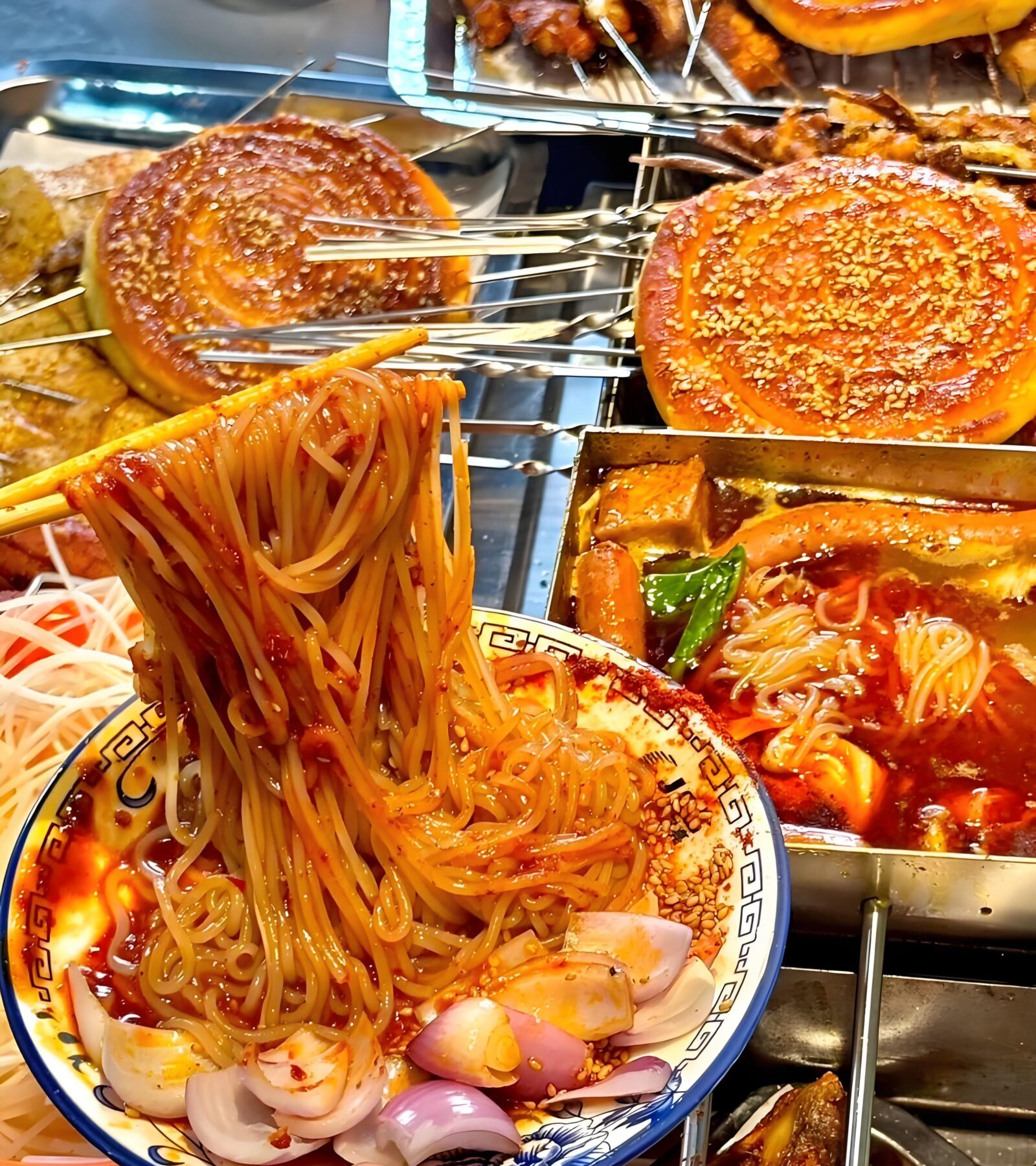
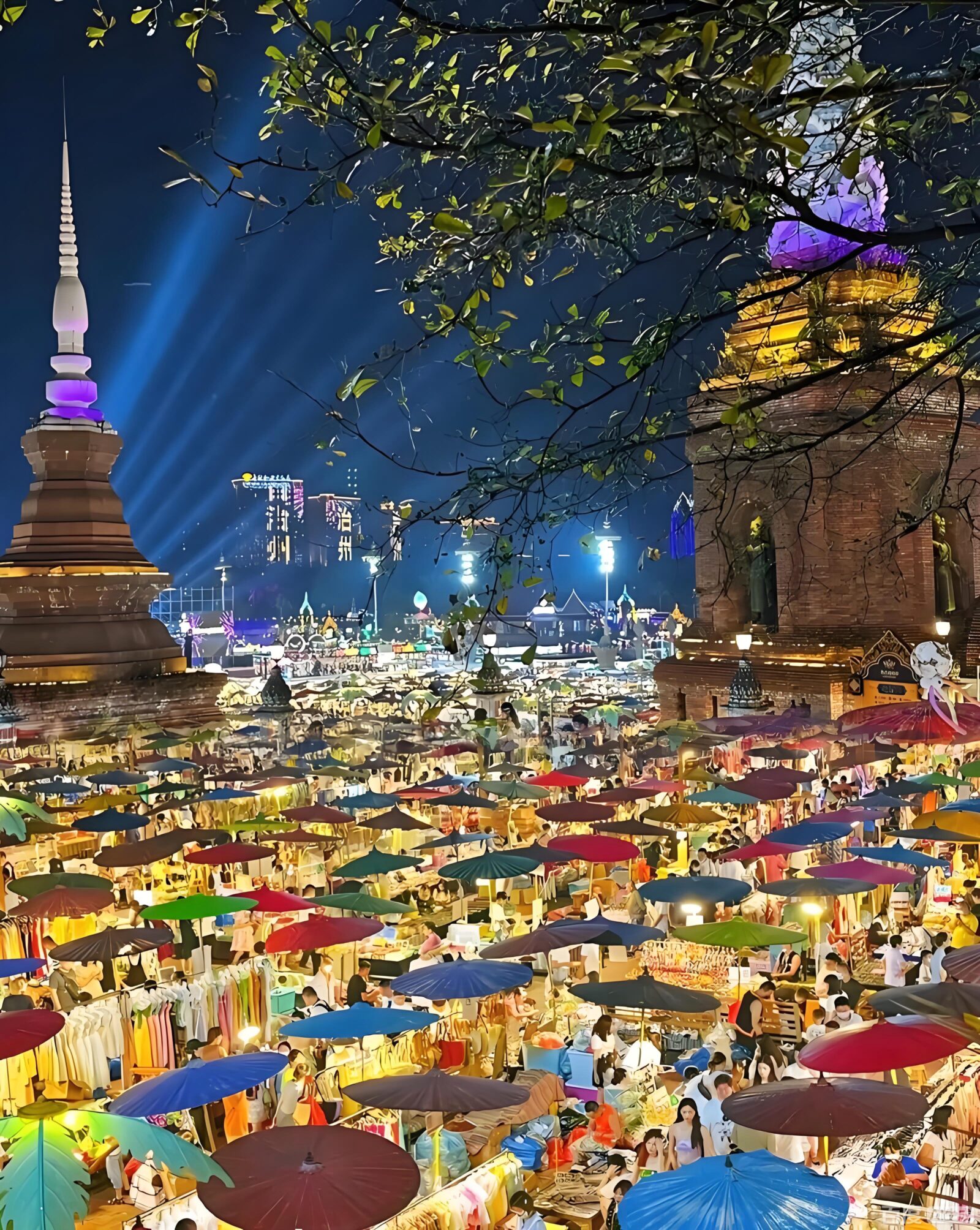
Most travelers will sample the Xishuangbanna night market scene for the first time at the Starlight Night Market in Gaozhuang. Once you go, it is easy to see why. With nearly 3,000 stalls in front of an illuminated golden pagoda, wandering its relatively organized aisles can feel like entering a very Chinese version of Southeast Asia. However, the Starlight Night Market in Gaozhuang is only one of several within striking distance that are worth exploring. They all have something unique to offer, from the local BBQ favorites, to floating boat markets where the tastes of six nations of the Mekong come together.
Whether you are an exotic food hunter, or just one who enjoys becoming immersed in local culture, the Xishuangbanna night market experience does not disappoint. We will take you through the 5 best night markets in the region, with the Starlight Night Market at Gaozhuang as the main attraction. You will learn about the unique street foods on offer; Laos iced coffee, wok grilled fish with lemongrass, and the famous pounded chicken feet. Juicy tropical fruits, like the stinky durian, sweet mangosteen, and authentic Dai souvenirs are treasures you will easily find and enjoy at a good value for your money. Ready to explore the night market in Yunnan? Let’s get into it.
The 5 Best Night Markets in Xishuangbanna (Ranked)
Quick Comparison Table
| Night Market | Scale | Best For | Price Level | Must-Try |
|---|---|---|---|---|
| Starlight (Gaozhuang) | ★★★★★ | Photos, full experience | $$$ | Laos coffee, costume photos |
| Six Nations Water | ★★★★☆ | Boat shopping, Thai goods | $$$ | Boat ride, Thai snacks |
| Jiangbian (Riverside) | ★★★★☆ | Local food, bargains | $$ | Pounded chicken feet, BBQ |
| Mandou | ★★★☆☆ | Late-night BBQ | $ | Grilled tilapia |
| Longzhou | ★★☆☆☆ | Casual evening stroll | $ | River views |
1. Starlight Night Market (Gaozhuang) – The Must-Visit Icon
-

- Starlight Night Market (Gaozhuang)
-
- Starlight Night Market (Gaozhuang)
-
- Starlight Night Market (Gaozhuang)
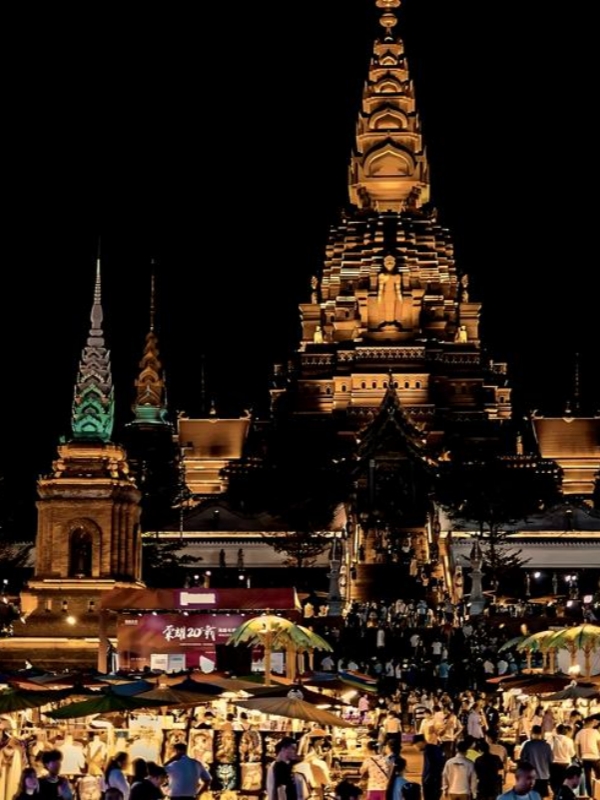
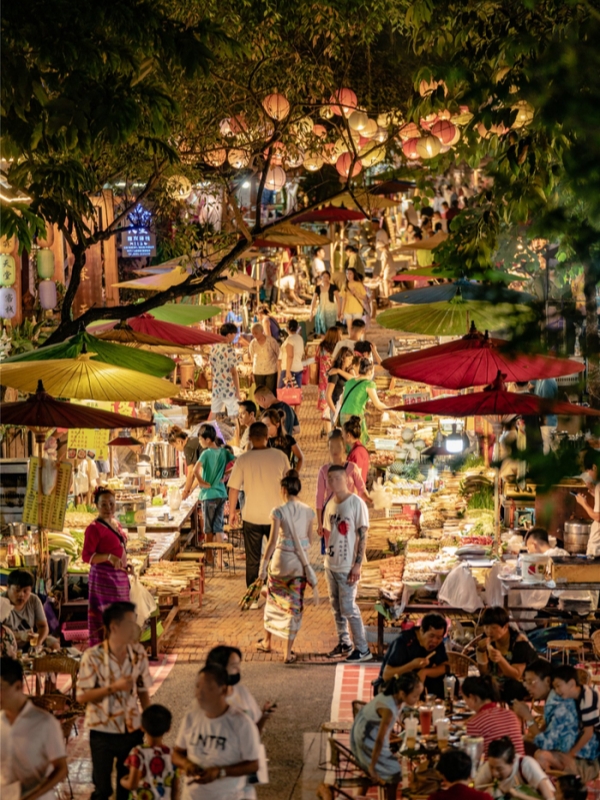
If you’re going to visit just one Xishuangbanna night market, make it this one. No contest. Starlight Night Market (星光夜市) lies in the Gaozhuang Xishuangjing scenic area in Jinghong City, spanning 530,000 square meters and close to 3,000 stalls. On that scale this is one of the largest open-air night markets in Asia—and it really feels that way when you walk through it.
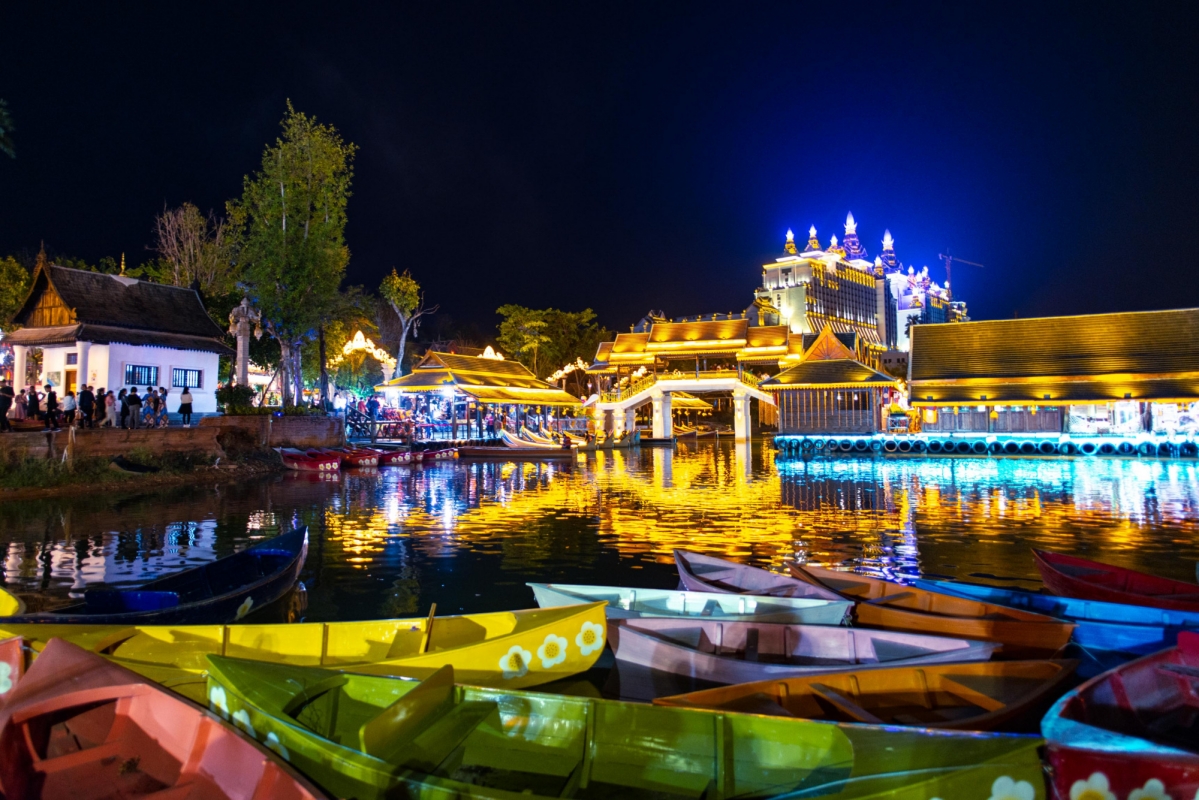
The shining highlight of the market is the Dajinta Temple (大金塔), also referred to as the Golden Pagoda. Standing at 66.6 meters in height, it represents the six countries connected by the Mekong River. As twilight falls, the pagoda begins to glow against the darkening sky, and the stalls below spring to life like—well, like fallen stars. This is how the market got its “Starlight” name, and honestly, it’s almost surreal.
What you need to know:
| Detail | Information |
|---|---|
| Location | Gaozhuang Xishuangjing, Jinghong City |
| Hours | 6:00 PM – Midnight (best at 7–10 PM) |
| Entry Fee | Free (Golden Pagoda: 30 CNY) |
| Best For | First-time visitors, photography lovers |
Must-do experiences here:
Golden Pagoda Sunset Photos: Arrive by 6:30 PM to catch the pagoda at golden hour. The stairs in front offer that classic Instagram shot everyone's after.
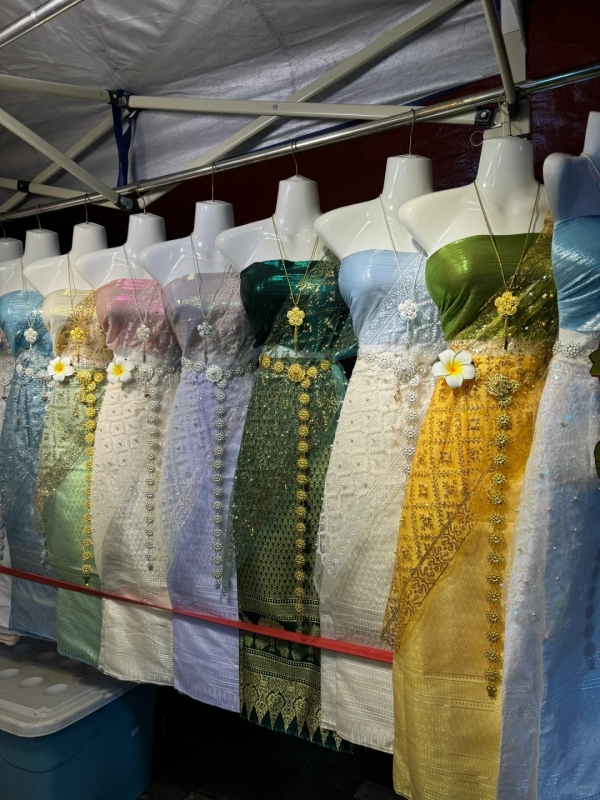
Dai costume rental: Rent a traditional outfit for 50–80 CNY and blend into the colorful scene. Professional photography packages start at 299 CNY if you want something fancier.
Free evening performances: Multiple stages host traditional dance and music shows nightly. Just wander and you'll find one.
I remember arriving around 6:30PM, and seeing those vendors setting up. In an hour the square would be practically unrecognizable, transformed into a dazzling sea of color, thousands of bulbs twinkling off of silks and teapots, the atmosphere frenetic and yet somehow utterly chill. Families parade through holding hands and having their picture snapped, the meat is grilling somewhere nearby. It’s hard to put in pictures but we all try.
2. Six Nations Water Market – Shop from a Boat
Six Nations Water Market
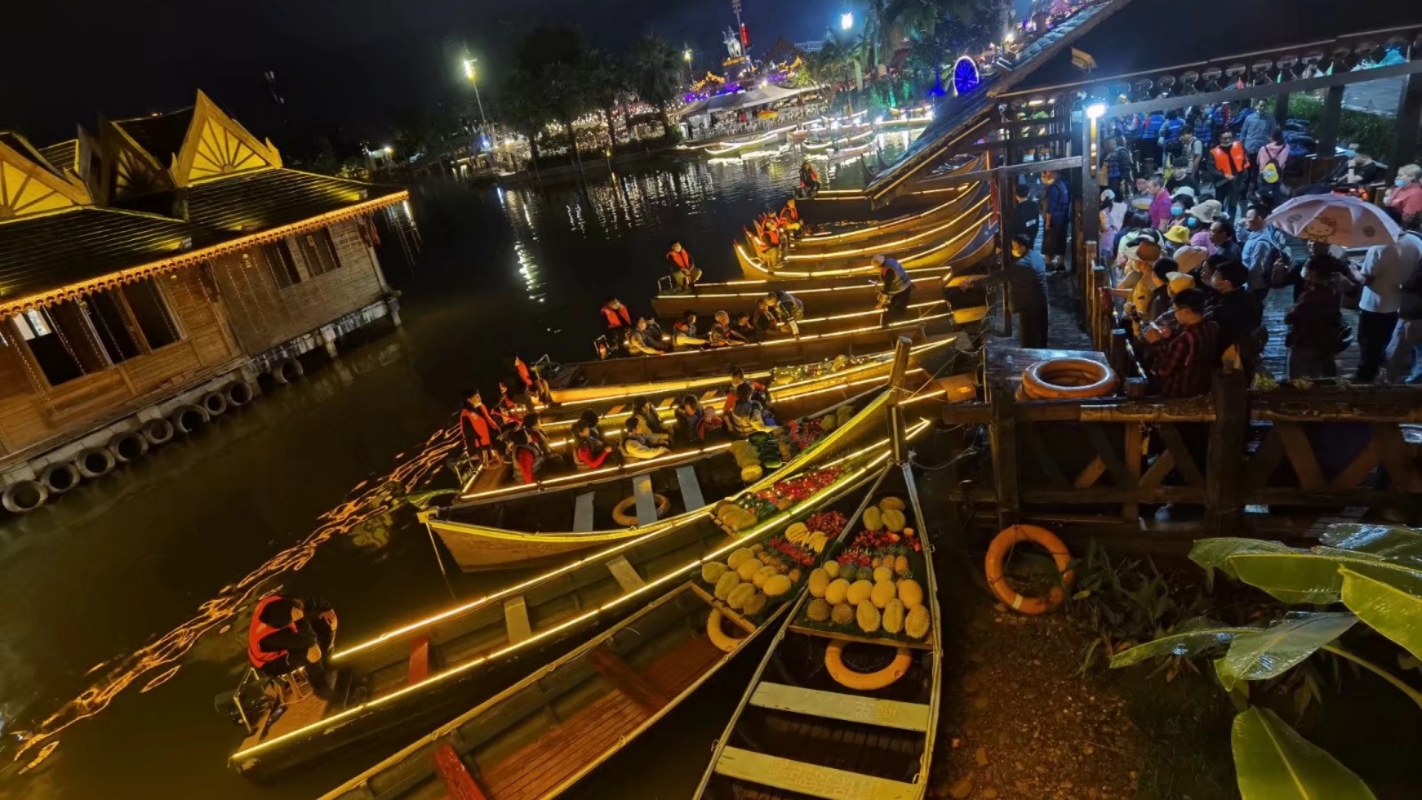
Next to Starlight Night Market is Six Nations Water Market. In addition to being a market, here you can shop from a boat. Six Nations Water Market has water channels, a row of stalls, and yes, floating vendors who paddle up to you to sell you things.
Boat rides are 60-120 CNY per person depending on the length of the route. One option is the “fruit boat”, around 120 CNY, where the boat itself is decorated with tropical fruits. If that’s your kind of thing it’s a great photo op. You see the market from the water, and all the overlaps and reflections in the water make for great photos.
In 2025 it underwent upgrades in its “Thailand street” area, and about 80 percent of the sellers there are now actual Thai people selling real Thai goods and street food. You can find Thai snacks not available elsewhere, hand made crafts from people from Thailand, and flavors that taste straight out of Bangkok itself (arguable if better than the Dai stuff).
Pro tip: Take the boat ride at twilight if you can. You'll experience both the daylight waterscape and the magical glow of evening lights—best of both worlds.
3. Jiangbian (Riverside) Night Market – Where Locals Go
-
- Jiangbian (Riverside) Night Market
-
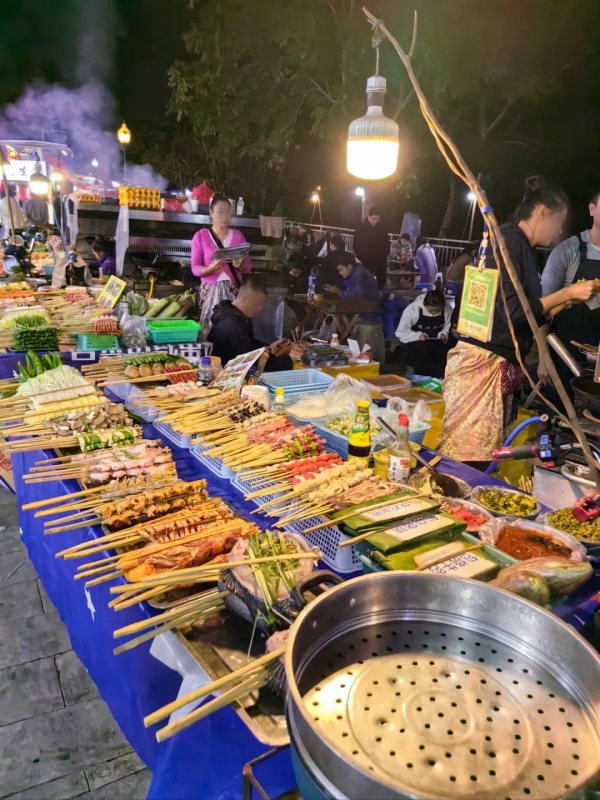
- Jiangbian (Riverside) Night Market
-
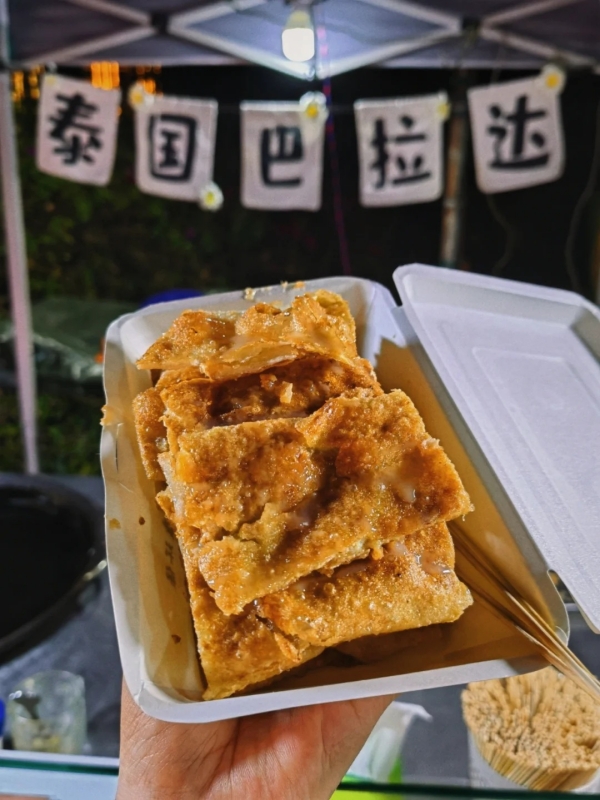
- Banana Barata
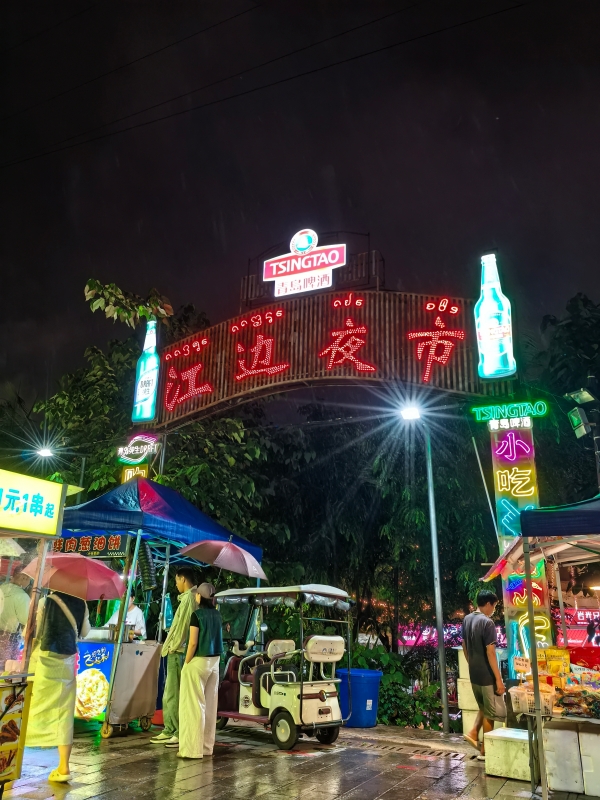
If you want to dine where locals eat, visit Jiangbian Night Market (aka Riverside Night Market, Binjiang Night Market). The 2-kilometer stretch lining the banks of the Lancang River is frequented more by residents than tourists, and you can sense that immediately.
Prices are about 20-30% cheaper than at Starlight Night Market. The food earns plaudits for being more Dai—less modified for foreign tastes, if you catch my drift. Review site Dianping ranks several stalls here as among the best street food in Jinghong. That has to say something.
What to try:
Duan's Grilled Pig Feet (段氏烤猪蹄): Crispy, savory, utterly satisfying.
Banana Barata: A local twist on the Indian flatbread.
Budget around 40–60 CNY for a filling meal. The atmosphere feels more relaxed and genuine, less "produced" for tourists. If you're staying multiple nights, I'd honestly save this market for your second evening after you've done the Starlight spectacle.
4. Mandou Night Market – Late-Night BBQ Heaven
-
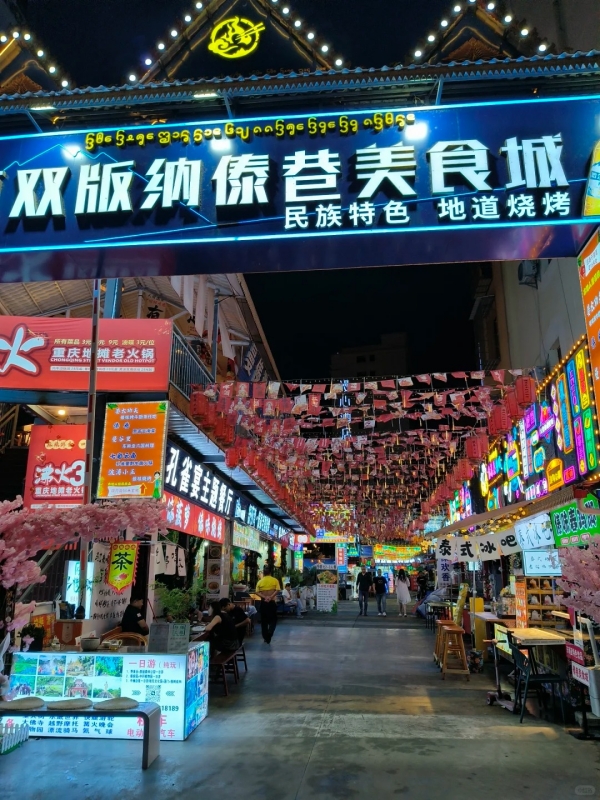
- Mandou Night Market
-
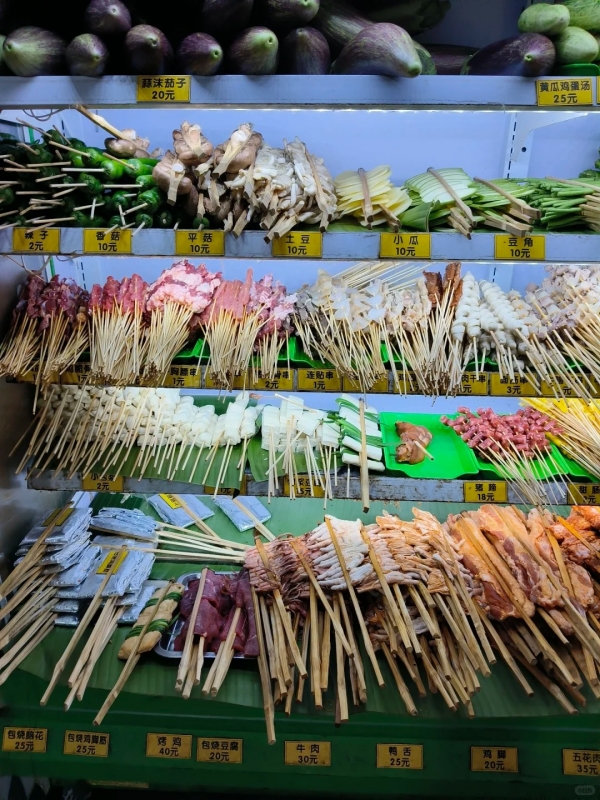
- Mandou Night Market
-
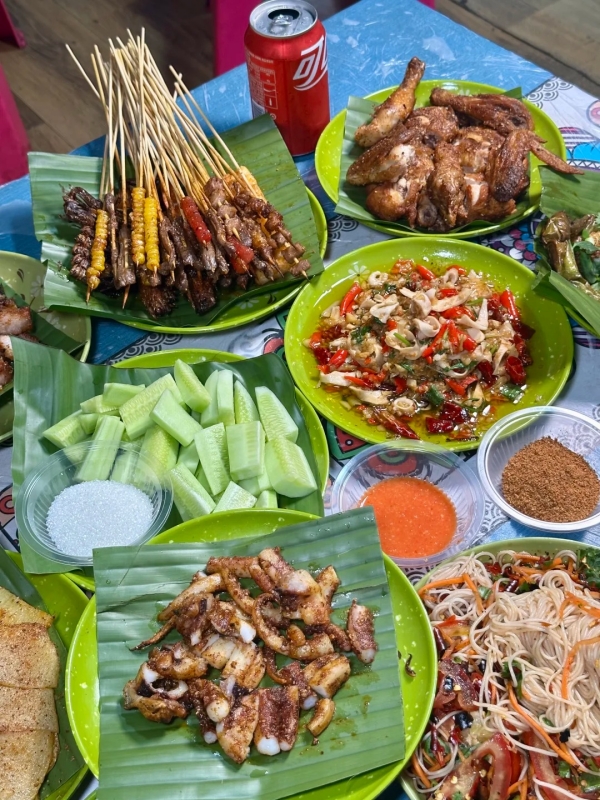
- Xiao Yu BBQ
Craving smoky, spicy Dai-style barbecue at 1 AM? Mandou Night Market has you covered. This local favorite operates well past midnight, making it the go-to spot for late-night eats when other markets have packed up.
The entire street fills with open-air BBQ stalls, like Xiao Yu BBQ (小玉烧烤). Smoke rises from countless grills cooking fish, pork belly, eggplant, and basically anything that can be skewered. The vibe is casual—plastic stools, cold beer, loud conversation, that kind of thing. Follow the crowds to find the best stalls; it's rarely a bad strategy.
Pricing:
- Grilled tilapia: 15–20 CNY
- Pork belly skewers: 3–5 CNY each
- Average spend: 50–70 CNY per person
The setting is simple—don't expect ambiance. But the flavors are powerful, and if you want the real Dai barbecue experience without the tourist polish, this is your spot. Just don't wear your nice clothes.
5. Longzhou Night Market – Casual Riverside Vibes
-
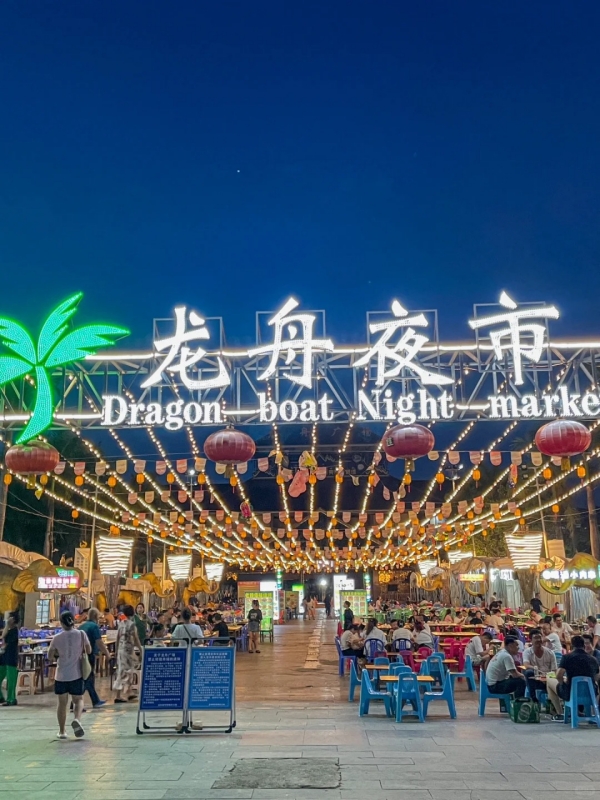
- Longzhou Night Market
-
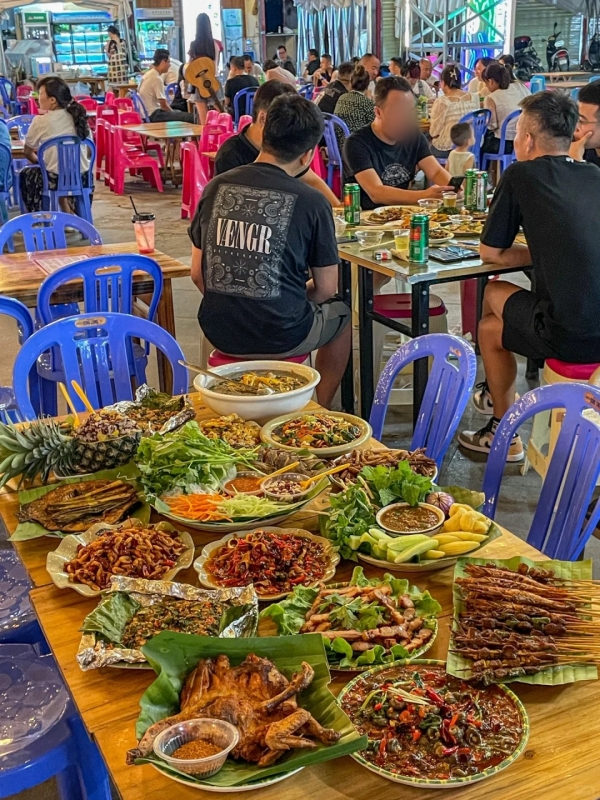
- Longzhou Night Market
-
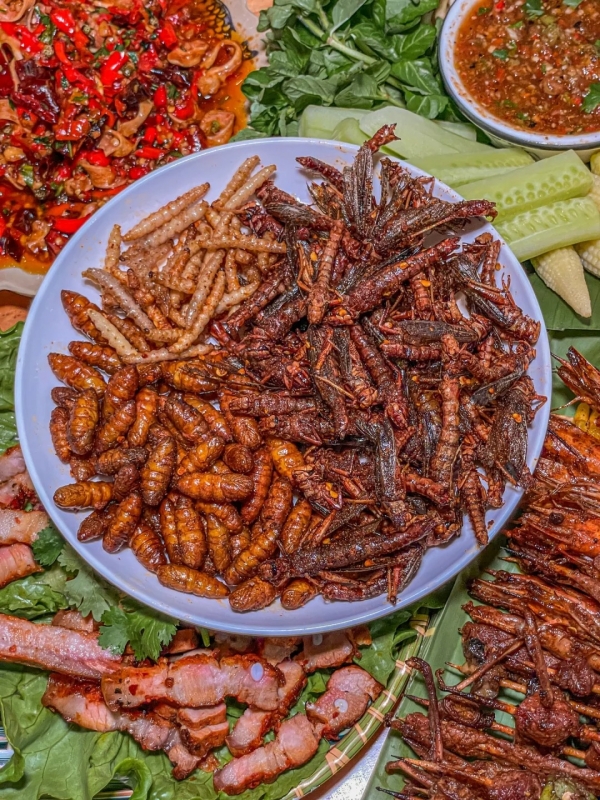
- Longzhou Night Market
The Longzhou Night Market stretches along the riverfront around the Dragon Boat Plaza area, and it’s a good bit smaller and more relaxed than the other ones I’ve visited, bordering on sleepy. Local families come here for a stroll, a little dancing in the plaza, and some casual snacks. If you’re near, good; if you’re not, you’re probably fine skipping it. It’s a pleasant way to round out the day if you happen to be there, an inexpensive feast along the waterfront, but not necessarily worth the destination if you’re looking to visit.
Must-Try Street Foods at Xishuangbanna Night Market
Must-Try Dishes: From Pounded Chicken Feet to Grilled Fish
Yunnan cuisine blends ethnic flavors, using wild mushrooms and herbs in ten signature dishes. However, the Xishuangbanna night market food scene blends Dai traditions with Southeast Asian influences in ways that'll challenge your comfort zone—in a good way. Here are the dishes you really shouldn't miss:
| Dish | Chinese Name | Price | What to Expect |
|---|---|---|---|
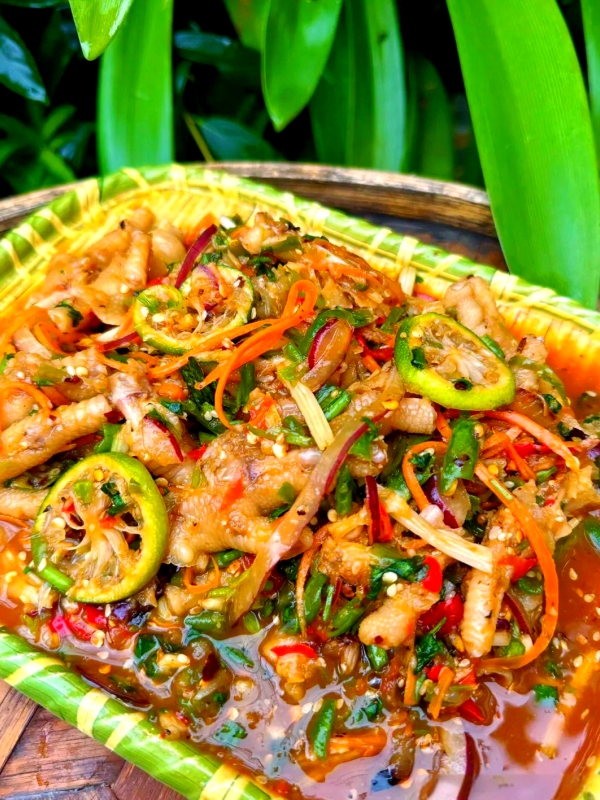
| Pounded Chicken Feet | 舂鸡脚 | 15–20 CNY | Spicy, sour, surprisingly addictive |
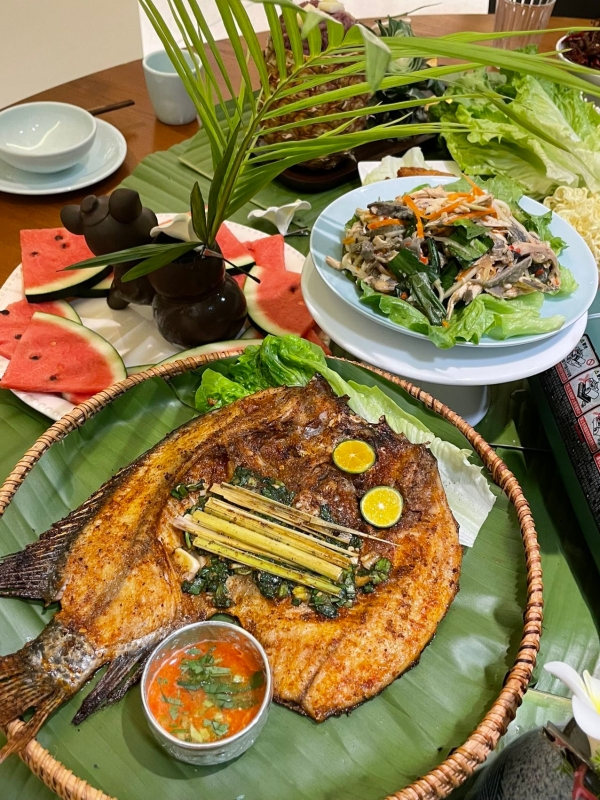
| Lemongrass Grilled Fish | 香茅草烤鱼 | 15–20 CNY | Fragrant, crispy-skinned, aromatic |
| Pineapple Rice | 菠萝饭 | 15–25 CNY | Sweet-savory, served in actual pineapple |
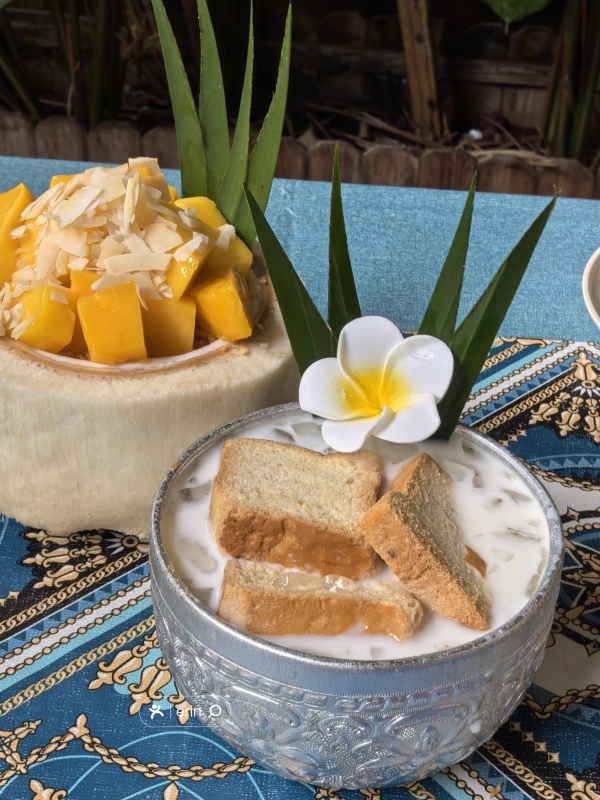
| Falooda | 泡鲁达 | 10–15 CNY | Coconut milk dessert, cooling |
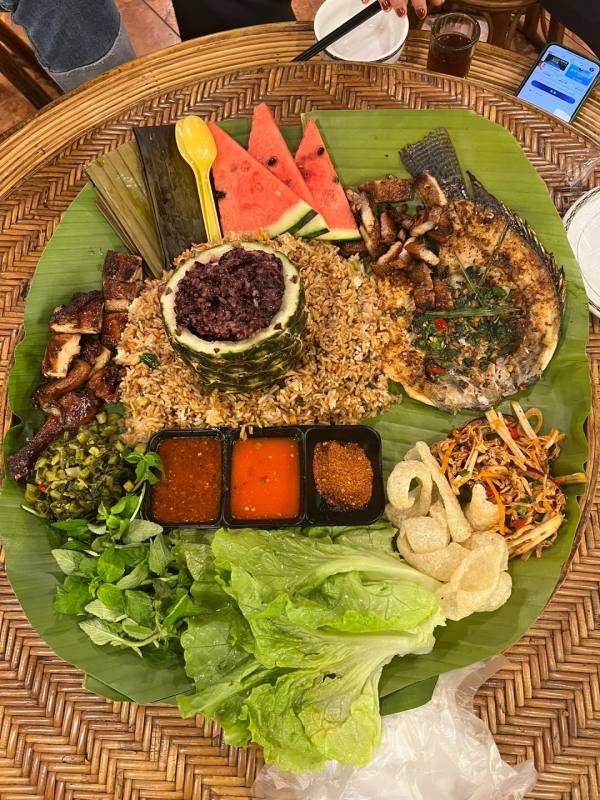
| Fish Lettuce Wrap | 菜包鱼 | 20–30 CNY | DIY assembly, fun to eat |
The pounded chicken feet deserve special mention, even if the idea makes you hesitate. Vendors prepare them fresh using a large mortar and pestle—watching the preparation is honestly part of the fun. The finished dish packs this intense sour-spicy flavor that perfectly captures what Dai cuisine is about. Give it a try. What's the worst that happens?
Laos Iced Coffee – The Signature Drink
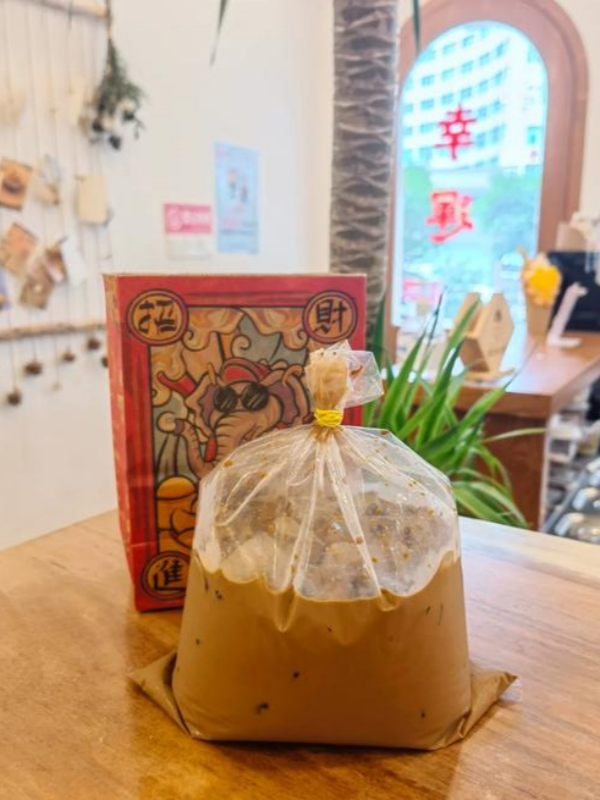
Okay, let’s talk about Laos iced coffee, because if you’re at the Xishuangbanna night market you’ll see it everywhere. In fact, it’s pretty much the face of the place. Vendors sell them in plastic bags with straws which to my western eyes looks a little weird, but to be honest, it really works.
It’s strong and sweet and refreshingly cold. They brew it with condensed milk, producing a creamy element that acts as a counter to the bitter coffee. After wandering around the night market for an hour in the humid air that first sip is…well, relief would be the word. Pure cold relief. They’re about 10 to 15 cny per bag and the longer the queue at the stall the better the coffee (and it’s never a lengthy wait).
Tropical Fruits You Can't Miss
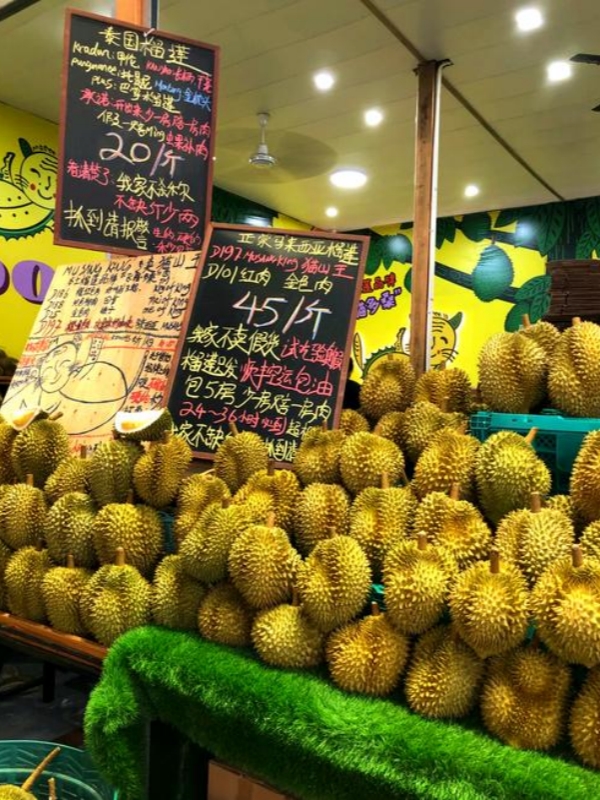
The tropical fruits of Yunnan are astounding. At all of the market stalls you’ll see mangosteen, durian, jack fruit, dragon fruit and more piled high, the colours are mind-blowing and even if you don’t buy, just walking past and looking is a delight.
But here’s a secret tip to help save some cash: the price of most fruit at the night market can be quite high, and local people (the real locals) recommend you head to Mange Fruit Market during the day instead, where Musang King durian can be had for as little as 20 CNY per portion, as opposed to tourist spots in the city. The quality is just as good, or better.
Seasonal picks:
Mangosteen (April–October): Sweet, tangy, refreshing—and surprisingly hard to peel until you get the hang of it.
Jackfruit (year-round): Chewy texture, honey-sweet flavor, smells stronger than it tastes.
Dragon fruit (year-round): Mild, slightly sweet, photogenic as anything.
If you do buy at the night market, feel free to negotiate. Vendors expect it, and it's almost part of the experience.
Foods to Skip (Honest Tourist Trap Warning)
Not everything at the Xishuangbanna night market is worth your money. I wish someone had told me this earlier, so here you go:
"Peacock Feast" Packages: Attractive presentation but average quality; stick to individual food stalls instead.
Off-Season Mushroom Hotpot: Fresh wild mushrooms are only available during the rainy season (May–Oct); flavor is noticeably worse off-season.
Trust your instincts here. Crowded stalls with high turnover usually mean fresh, quality food. Empty stalls sitting quietly? Less so. There's a reason those crowds are there.
What to Buy: Souvenirs and Local Specialties
Intangible Cultural Heritage Crafts
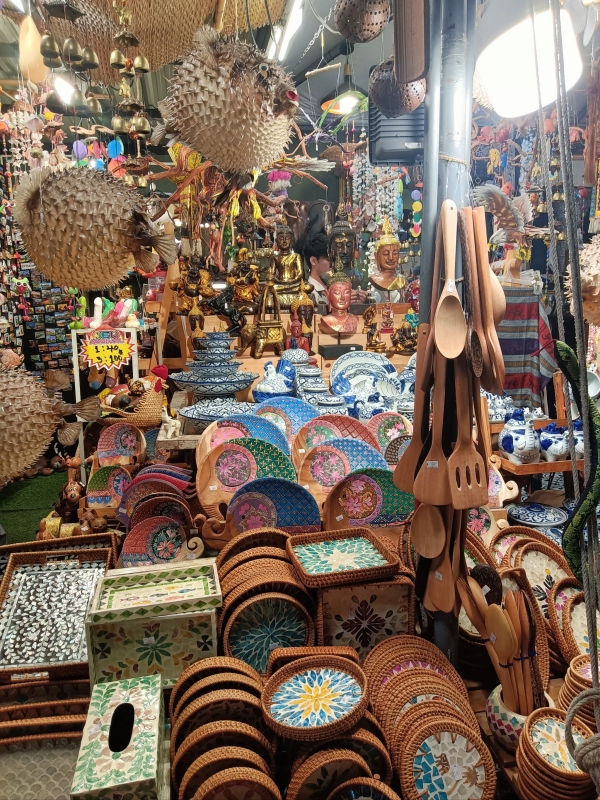
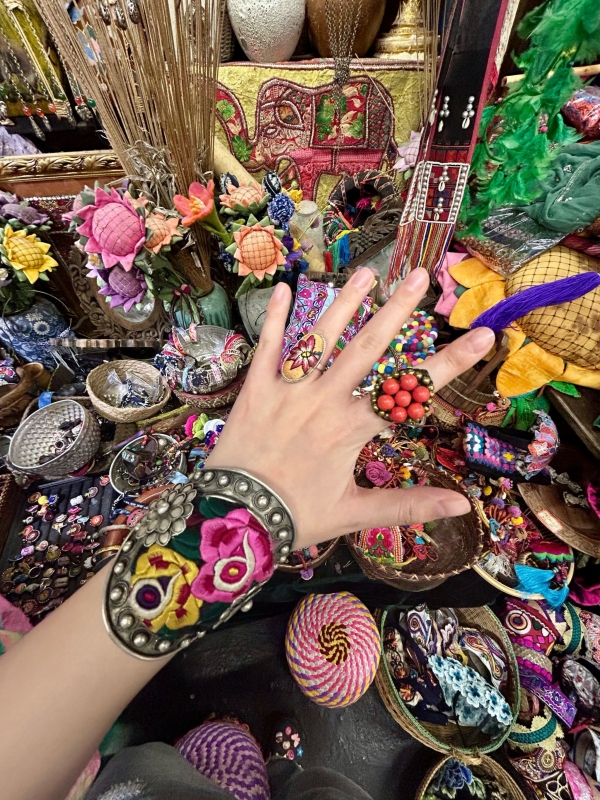
The best trinkets are those which mean something—like our handmade Dai paper lanterns, symbol of tradition not of touristy mass production; or Bodhi leaf carvings, made by delicately etching intricate designs onto dried leaves. They’re lightweight and packable, and yes—unique.
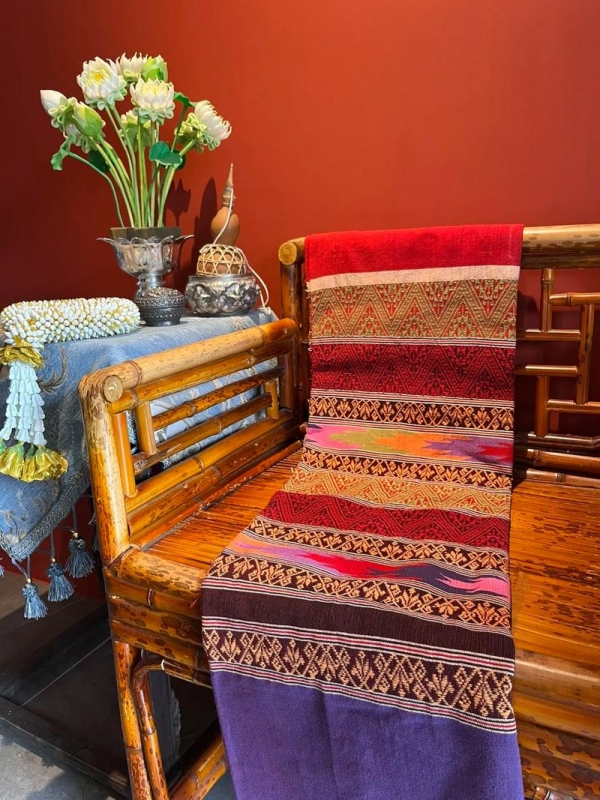
Dai brocade products also make great gifts—think scarves, bags, wall hangings—all with gorgeous prints in vibrant Dai colors that snap beautifully. The textiles are made using techniques included on the intangible cultural heritage list. Prices can vary quite a lot between stalls so check out a few; and don’t forget bargaining.
Dai Ethnic Clothing
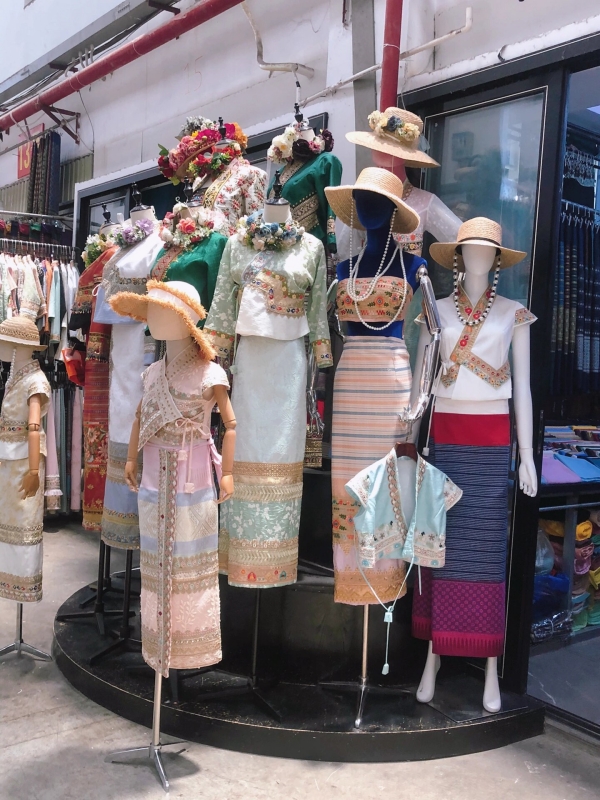
Traditional Dai clothing sets include a fitted top, tube skirt, and shawl. Most stalls offer basic sets for under 50 CNY, a price that initially seems hard to believe until you take a close look at the fabric. Quality definitely correlates with the price so check the stitching and fabric before you decide.
And for a better deal, actually shop at Jiangbian Night Market instead of Starlight Market. The less touristy crowd makes the prices reasonable. Same products but much less tourist markup. And always negotiate! Most stalls start at a price they are willing to go down from.
What NOT to Buy at Night Market
Be especially cautious with jewelry and gemstones. Unless you're genuinely an expert, assessing quality and authenticity is nearly impossible. A lot of pieces marketed as "local specialties" are actually mass-produced elsewhere and shipped in. Stick to clearly handmade items where you can watch artisans working. At least then you know what you're getting.
How to Get to Xishuangbanna Night Market
Xishuangbanna Night Market
Getting to Jinghong City
Most visitors fly into Gasa International Airport. Direct flights connect Jinghong to Kunming, Chengdu, Shanghai, and other major Chinese cities. The flight from Kunming takes about one hour—quick and painless.
The high-speed train from Kunming is another solid option. The journey takes approximately 3.5 hours, and honestly, the views make it worthwhile. You'll pass through some stunning Yunnan mountain scenery. Train tickets run cheaper than flights too, usually around 200 CNY for second class.
Getting to Starlight Night Market
From downtown Jinghong, getting to the Starlight Night Market is straightforward. The K1 bus drops you at Gaozhuang Xishuangjing station—from there it's just a 77-meter walk to the entrance. Can't get much easier than that. Taxis run about 10-20 CNY from central hotels.
A lot of travelers prefer renting electric scooters. Daily rentals cost around 30 CNY, and scooters give you flexibility to explore surrounding areas on your own schedule. If you're staying in Gaozhuang district already, you can simply walk—the market's right there.
Best Time to Arrive
Timing actually matters quite a bit here. The golden hour is around 6:30 PM. Arriving then lets you photograph the Golden Pagoda bathed in sunset light. Then you'll witness that magical moment when thousands of lights flicker on simultaneously across the market. It happens fast, but it's genuinely impressive.
The market hits peak energy between 7:00 PM and 9:30 PM. That's when you'll find the biggest crowds, the most food vendors actively cooking, and the liveliest atmosphere. After 10:00 PM, things start mellowing out—still plenty happening, just more relaxed. Official hours run from 6:00 PM to midnight, with some areas staying open until 12:30 AM.
Practical Tips for Visiting Xishuangbanna Night Market
Best Season to Visit
The dry season from October to June offers the most comfortable conditions. Skies stay clear, rain is rare, and humidity drops to bearable levels. This is peak tourist season though, meaning larger crowds but better weather overall. Checking the weather before visiting Yunnan is the most important thing.
Rainy season runs from May to October. Afternoon showers are common—sometimes dramatic—but they usually pass within an hour. The upside? Fewer tourists and noticeably cooler temperatures after the rain. What to definitely avoid: Chinese New Year and National Day holidays (early October). Crowds become genuinely overwhelming during those periods. We're talking shoulder-to-shoulder for hours.
What to Bring
Mosquito repellent. Seriously. I cannot stress this enough. Xishuangbanna's tropical climate means bugs are active year-round, especially after dark. Apply repellent before entering the market and bring extra for reapplication. Your ankles will thank you.
Wear light, breathable clothing. Even in winter months, temperatures stay warm here. Comfortable walking shoes matter since you'll cover a lot of ground—easily 2-3 kilometers if you explore thoroughly. Bring both cash and mobile payment options. Most vendors accept WeChat Pay and Alipay, but some smaller stalls still prefer cash. Having both keeps you flexible.
Bargaining Tips
Bargaining isn't just acceptable at the Xishuangbanna night market—it's genuinely expected. Start by offering about 50% of the asking price. Most vendors will counter, and you'll typically settle somewhere around 60-70% of what they originally asked.
The key is staying friendly throughout. Smile, compliment their products, and if you can't agree on price, walk away politely. Often—actually, more often than you'd expect—the vendor will call you back with a better offer. Items where bargaining works best: clothing, handicrafts, accessories. Fixed-price chain stores and most food stalls don't negotiate, so don't waste your energy there.
Safety Tips
Good news here: the Xishuangbanna night market is very safe for tourists. The whole area stays well-lit, heavily trafficked, and regularly patrolled. Violent crime targeting visitors is extremely rare—basically unheard of, from what locals say.
Standard precautions still apply. Watch your belongings in crowded areas, keep valuables secure, the usual stuff. Food safety is generally reliable at market stalls, though some dishes pack serious heat. If you're not used to spicy food, sample small portions first. Your stomach will appreciate the caution. Most vendors are honest, but checking prices before ordering prevents any awkward misunderstandings later.
Frequently Asked Questions About Visiting Xishuangbanna Night Market
Q: Is Xishuangbanna safe for tourists?
Yes, Xishuangbanna is considered very safe for tourists, including solo travelers and families. The night market areas are well-lit, crowded, and actively monitored. Serious crime against visitors is genuinely rare—some travelers on forums mention they felt safer here than in some European cities, though that's subjective of course. Petty theft can happen in any crowded place, so keep valuables secure. Many foreign travelers report feeling comfortable exploring until midnight.
Q: What is the most famous night market?
The Starlight Night Market (星光夜市) in Gaozhuang Xishuangjing is the most famous and largest by a significant margin. It consistently ranks #1 on Chinese travel platforms like Ctrip and Dianping. The market's backdrop—the golden Dajinta Temple—has become an iconic image you've probably already seen on social media. While Jiangbian Night Market and Six Nations Water Market also draw visitors, Starlight remains the flagship destination that most travelers prioritize. If you only have one evening, that's where you should go.
Q: How much money should I bring?
For a comfortable evening, budget 150–250 CNY per person. This covers street food (40–80 CNY depending on how hungry you are), drinks (20–30 CNY), and perhaps a costume rental or souvenir (50–100 CNY). Budget travelers can manage with 80–100 CNY by sticking to basic snacks and skipping shopping. If you're planning professional photography or boat rides, add another 100–300 CNY. Remember that bargaining can stretch your budget further on shopping items—don't pay the first price offered.
Q: What time does the night market open?
Stalls begin setting up around 5:00–6:00 PM. By 7:00 PM, most vendors are operational and the lights are on. The market stays lively until midnight, with some areas continuing until 12:30 AM. For the best experience—including sunset photos and peak atmosphere—arrive between 6:30 and 7:00 PM. That transition period when the lights come on is genuinely magical and worth timing your visit around.
Q: Do vendors speak English?
Limited English is common at Starlight Night Market, especially among younger vendors. Most communicate effectively using numbers, gestures, and calculators to show prices—it works better than you'd expect. At smaller markets like Mandou or Jiangbian, expect almost no English. Helpful strategies include: saving food photos on your phone, using translation apps, and learning basic Mandarin numbers (yi, er, san... one, two, three). Vendors are generally patient with foreign visitors and creative communication usually works fine.
Q: How is Xishuangbanna different from Thai night markets?
While Thai influence is visible, Xishuangbanna offers distinct experiences you genuinely won't find in Thailand. The Dai ethnic minority has its own unique cuisine, costumes, and cultural practices—related to but recognizably different from Thai traditions. You'll also find Yunnan specialties like Pu'er tea and Chinese-style preparations alongside Southeast Asian flavors. The market's scale rivals Bangkok's largest bazaars, but the cultural mix is uniquely Yunnan. Perhaps most practically, it's in China—meaning different visa requirements, payment systems, and travel logistics that may suit some itineraries better than crossing into Thailand.
Q: Is food at the night market safe to eat?
Generally, yes. Choose busy stalls with high customer turnover—this indicates fresh ingredients being used quickly. Most cooked foods are perfectly safe for visitors with normal digestive systems. If you have a sensitive stomach, stick to well-cooked dishes initially and avoid raw preparations until you know how your body reacts. Drink bottled water and be cautious with ice from unknown sources. The grilled items and hot soups are usually safest.