Harbin Night Market
For that matter, there’s a moment just around sunset when Harbin changes gears. The bustle of daytime fades and suddenly the city becomes a different place, almost as though the night markets officially come to life with the release of a pressure valve. You’ll hear them before you can see them: meat barking against hot griddles, vendors shouting, the dragged chairs across the ground—and smell them even before that. Charcoal smoke, cumin, chili oil—the aroma arrives from a distance. A night market in Harbin isn’t just where to eat dinner, it is the place where northeast China finds itself, honestly. In my opinion, it’s the best way to see the city.
This is an overview of five night markets, each with its own character and selection, the must eat grilled cold noodles and other dishes, the secret tricks locals use to order, tips for pairing visits with the Ice Festival in winter. Whether you’re here in July when the nights are perfect or crazy enough to eat street food in -20C (yes, people do that), then this should help you figure it all out. Let’s go.
Quick Info of Top 5 Harbin Night Markets
| Night Market | Main Features | Recommended Foods | Average Cost (per person) | Best Visiting Time |
|---|---|---|---|---|
| Shida Night Market | The largest and most diverse night market in Harbin | Roujiamo (Chinese burger), Roasted Pig Trotter, Garlic Lamb Ribs | 30–50 RMB | 18:00–20:00 (Avoid weekend peak hours) |
| Xuefu Sidao Street Night Market | Located near universities, vibrant youth atmosphere | Grilled Fatty Beef, Fried Corn, Takoyaki | 20–40 RMB | 19:00–21:00 |
| Anjing Street Night Market | Local favorite known for marinated snacks | Braised Delicacies, Scallion Pancake, Fried Chicken Sticks | 10–30 RMB | 17:00–19:00 |
| Situ Street Xiangfang Night Market | Historic night market full of local vibes | Grilled Kidney, Roasted Trotter, Teppanyaki Squid | 30–50 RMB | 18:30–20:30 |
| Beiqi Street Night Market | Classic Daowai District spot for late-night eats | Hong Ji Stinky Tofu, Dandong Fried Chicken Frame, Grilled Oysters | 50–100 RMB | 19:00–21:00 |
Top 5 Night Markets in Harbin: A Proper Comparison
Not all markets are created equal—some are massive food wonderlands, others are intimate spots where tourists rarely venture. Here's the breakdown to help you pick your Harbin night market adventure.
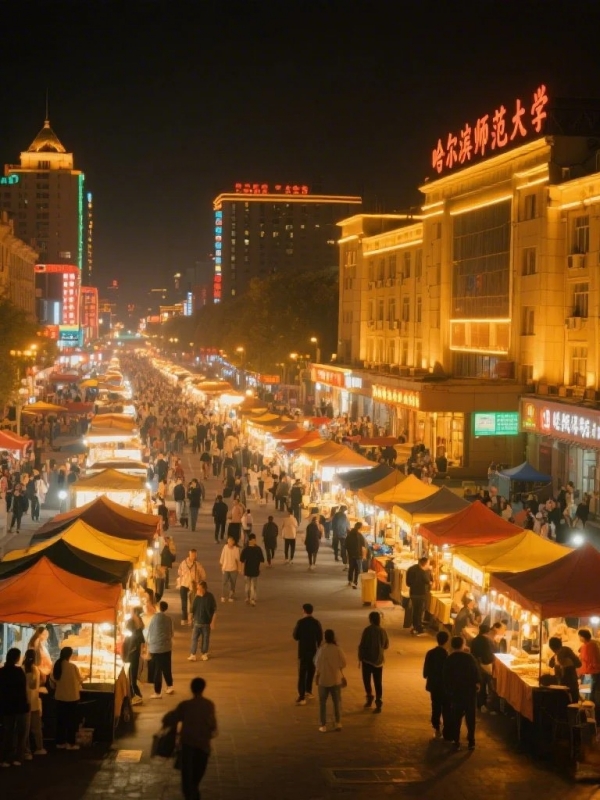
1. Shida Night Market (师大夜市) – The Big One
-

- Shida Night Market in Harbin
-
- Roasted Pig Trotters
-
- Roujiamo
If you’re only going to hit one night market in Harbin, this is probably where you’ll end up. Located on Wenxing Street near Harbin Normal University, Shida is the largest in the city—we’re talking 460+ vendors squeezed into some lanes, and every evening the place packs with students and tourists and the energy is… well, frankly, a bit overwhelming at first. But you adjust.
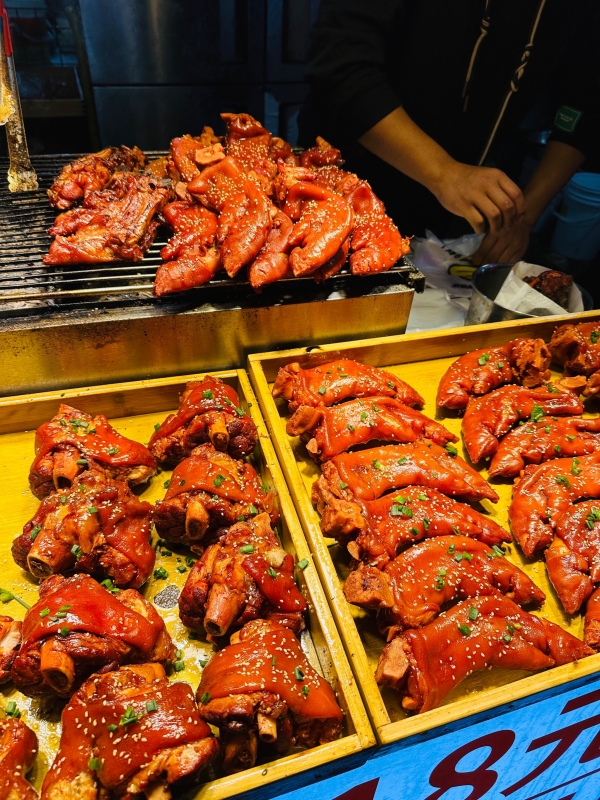
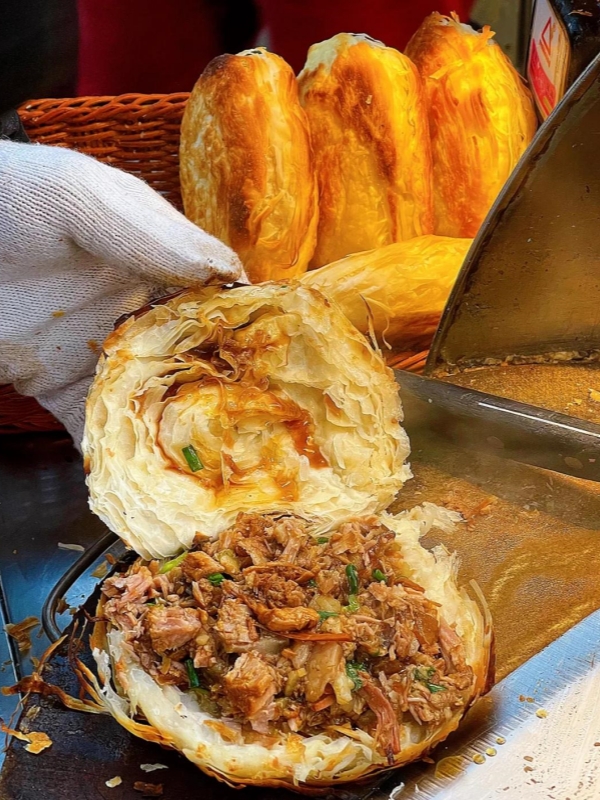
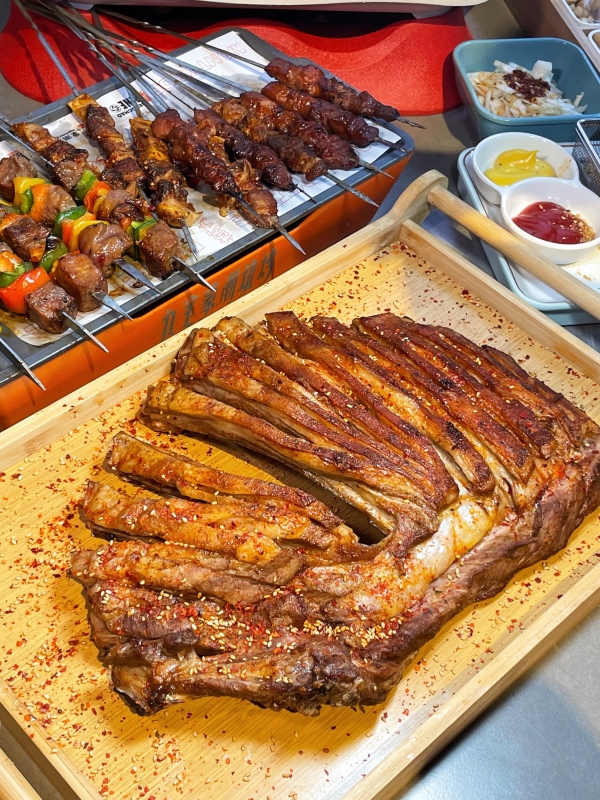
The thing that surprised me most was the ¥5 roujiamo (like a Chinese hamburger, sort of). Essentially baked bread stuffed with rich pork and fresh chilies. Five yuan! The roasted pig trotters queue are another thing—there’s some outrageously crispy skin to be found, and tender meat underneath. The garlic lamb chops are smoky lamb at its finest, and punchy and strong garlic—it’s not subtle, and it’s very good.
Random tip: There's a student performance area somewhere in the middle section. Local university kids play guitar and sing while everyone eats. It adds this weirdly charming atmosphere—you might hear a Mandarin cover of some random pop song while chewing on pig trotters. Harbin, man.
Getting there: Bus to "Hashida Nanxiaoqu" stop. Hours: Around 16:30-23:00. Best time: Weekday evenings, 18:00-20:00. Weekends get intense.
2. Xuefu Sidaojie Night Market (学府四道街) – Student Central
-
- Xuefu Sidaojie Night Market in Harbin
-
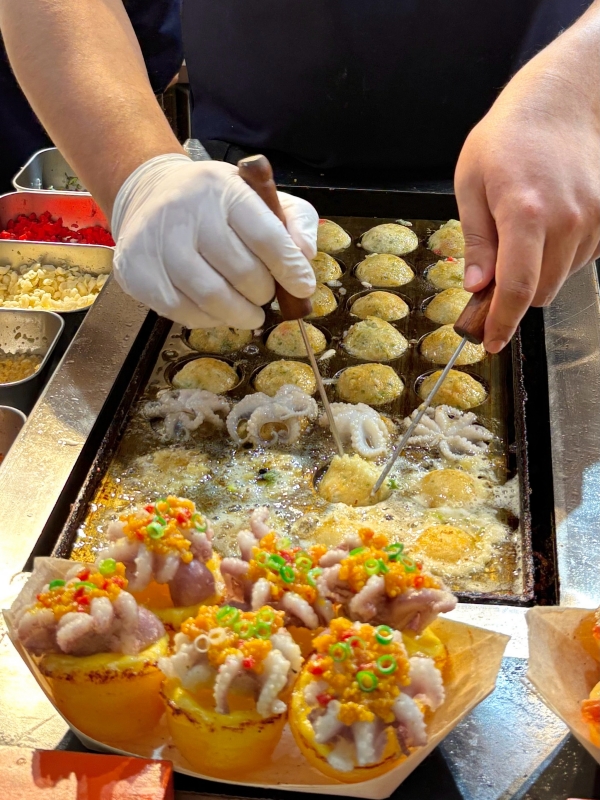
- Takoyaki
-
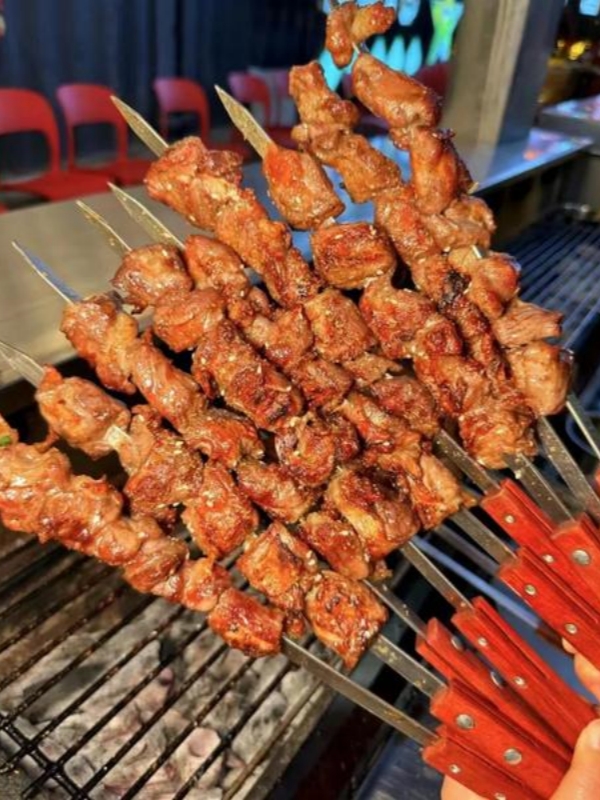
- Grilled Pork Belly Edges (called Kao Youbian)
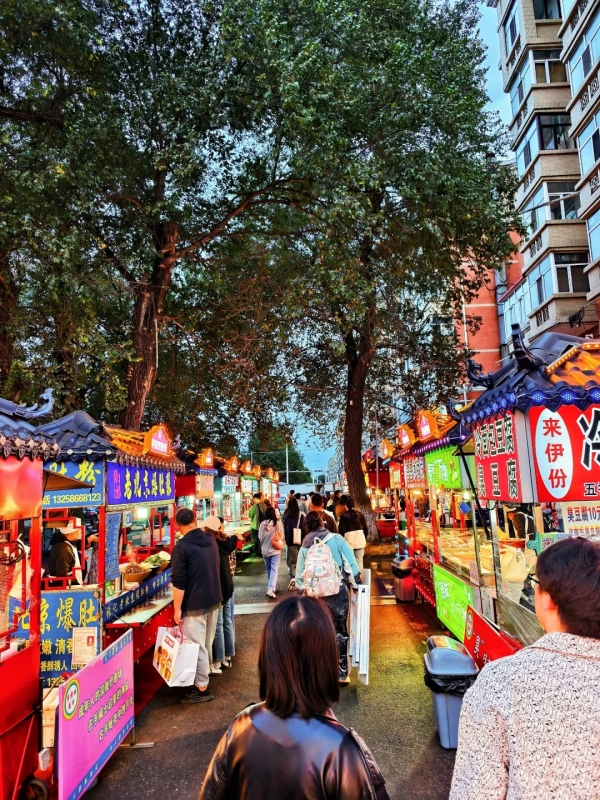
Known ironically as the “Heida (Heilongjiang University) Night Market”, it’s our go-to budget food paradise. It’s a much younger scene - you’re more likely to find college students than tourists (which is usually a good sign). Plan to spend between 20 and40 yuan a head and walk away full.
The fried corn from the “Aishang” stall has gone kind of viral on Chinese social media, of all things. I know, sounds weird. But that first crisp, salty crunch before the sweet kernel gets punctured in your mouth?
Better than popcorn. There are also takoyaki with a whole little baby octopus in each ball (and why not?) - far more generous than what you’d get in Japan. The grilled pork belly edges (although they’re called kao youbianhere) are a thing too. Crispy, fatty, bad for you—so delish.
Getting there: Metro Line 1 to Heilongjiang University Station, Exit 1. Walk about 500 meters along Xuefu Road, turn right onto Sidaojie. Hours: 16:30 until midnight-ish (later in summer).
3. Anjing Street Night Market (安静街夜市) – The Local Secret
-
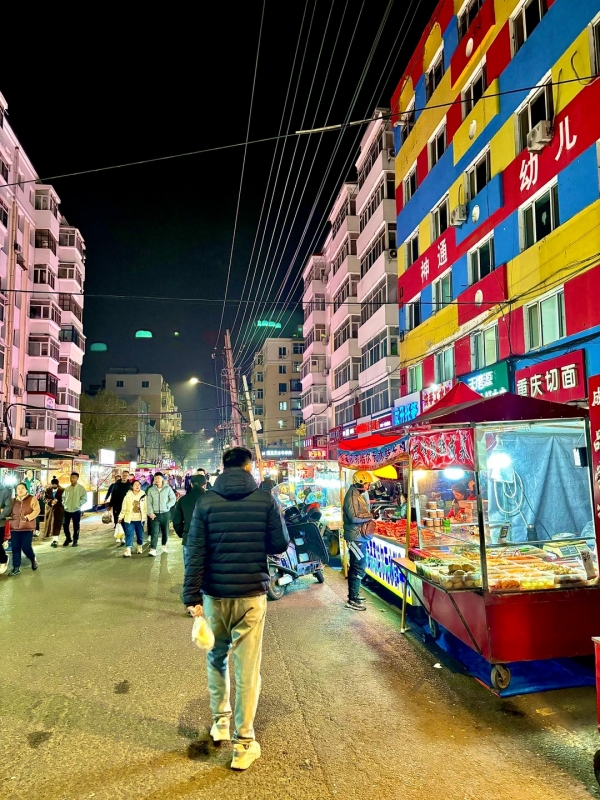
- Anjing Street Night Market in Harbin
-
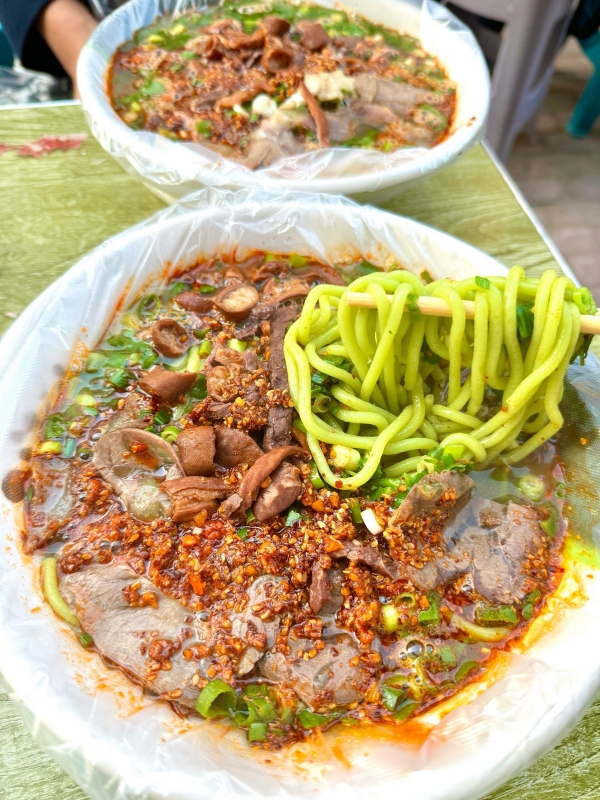
- Beef Hēluò Noodles
-
- Scallion Pancakes
Want to ditch the tourist crowds? Anjing Street is where real Harbin locals do their shopping. It has what the Chinese define as “yanhuoqi” (烟火气) - an expression denoting the warm, messy locals making do with what they have. Less selfie sticks here. More grandmas haggling for a better price on their vegetables.
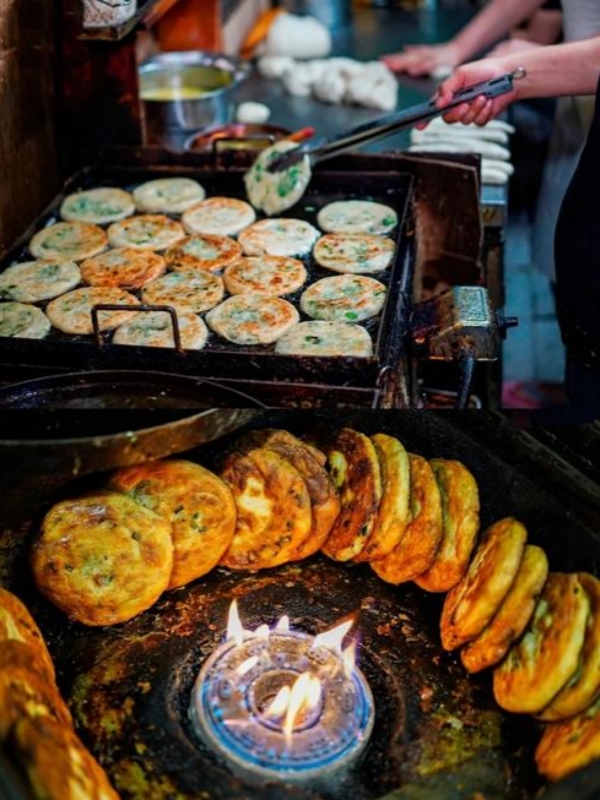
The Beef Hēluò Noodles are for real. Pig elbow skin. Pig heart. Trotters. Sounds scary? Slather in the garlicky dipping sauce and it works! The scallion pancakes come in flavors that I’ve never seen before. Egg. Corn. Crab stick. One vendor claimed she sells hundreds each day (take that info how you will, haha), but the line cued up suggested she wasn’t lying. The handmade chicken strips and the juiciness exploding from them.
Getting there: Metro Line 2 to Zhongyang Street Station, Exit 2. Walk along Anguo Street, then Ande Street—about 1,100 meters total. Sounds far but it goes quick. Hours: 15:00-21:00. Budget: ¥10-30. Seriously.
4. Situ Street Xiangfang Night Market (司徒街香坊夜市) – Old School
-
- Situ Street Xiangfang Night Market in Harbin
-
- Grilled Lamb Chops
-
- Clay Pot Skewers
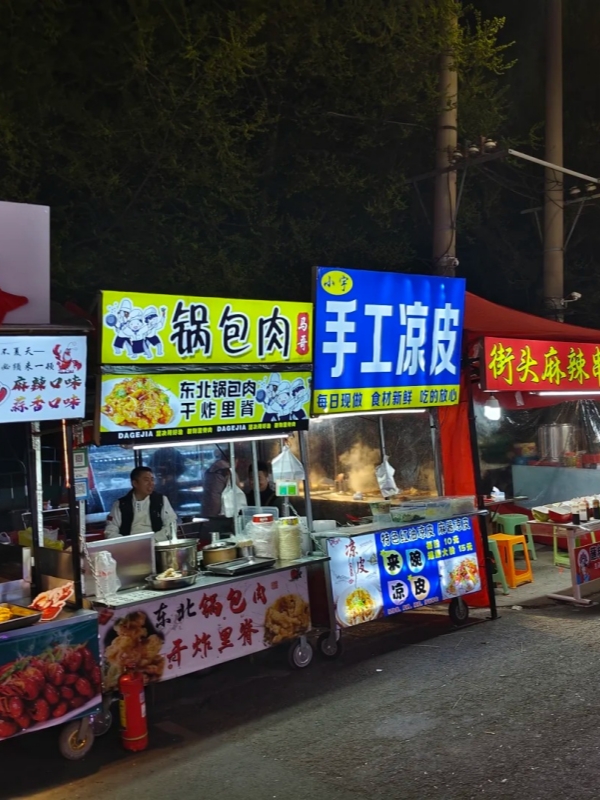
This is Harbin's oldest night market and comes off as so—in the best sense. The 400-meter stretch in Xiangfang District has this nostalgic, sort-of-slightly-grimy feel. People voted it one of four most attractive markets in the city, which sounds like faint praise, but apparently that means something here!
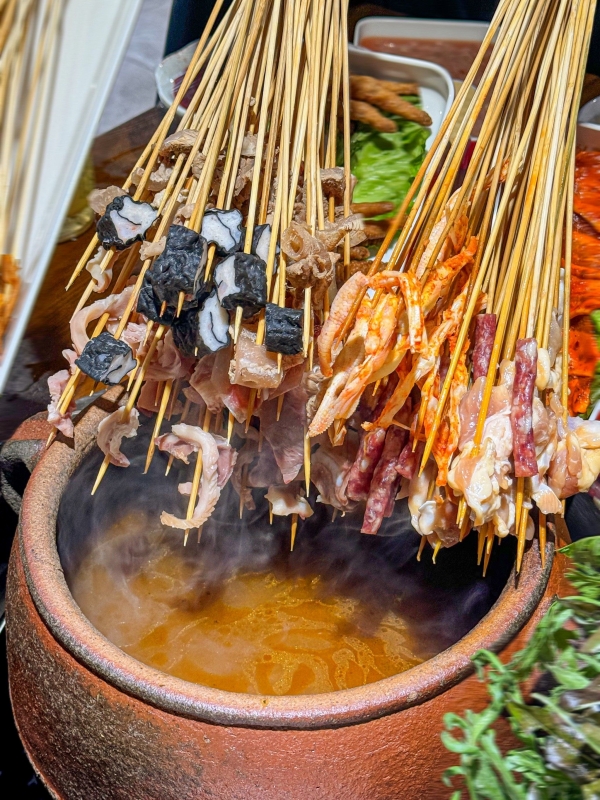
"Yan Shouyi's Big Kidneys" is what you have to order if you're a newbie. I was highly suspicious—don't go thinking kidneys are my thing—but snaffled up these smoky, tender, not-kidneyish kidneys. The Fenglin roasted trotters? They fall off the bones if you so much as breathe on them. For a different experience, pursue the clay pot skewers—meat slow-cooked in ceramic pots. They blend the tastes together in this nice concentration.
Getting there: Bus to "Hengdao Street" stop. Hours: 16:00-21:00. Budget: ¥30-50.
5. Bei Qidao Street Night Market (北七道街夜市) – The Late-Night Spot
-
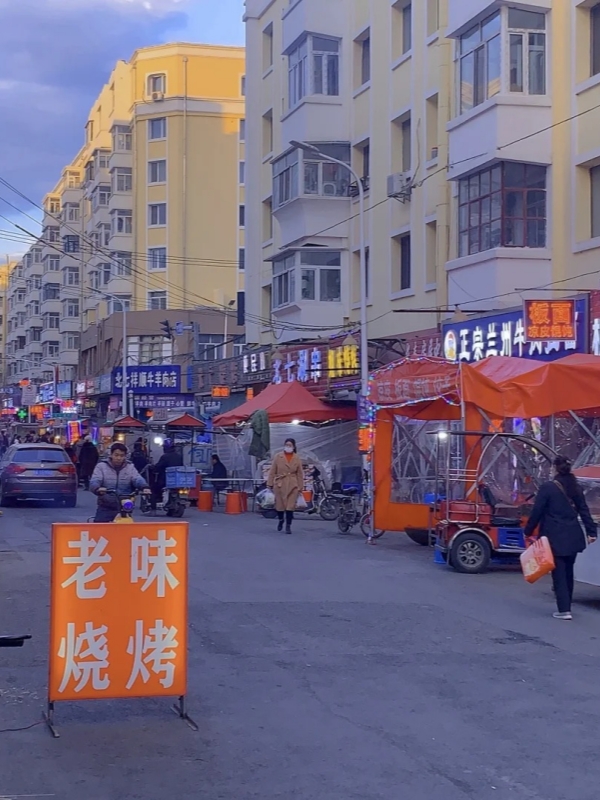
- Bei Qidao Street Night Market in Harbin
-
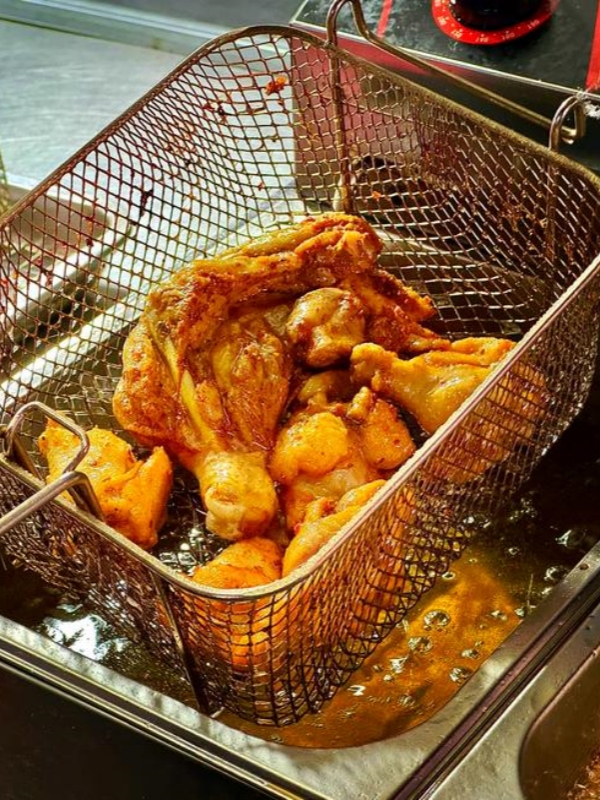
- Dandong-style Fried Chicken Rack
-
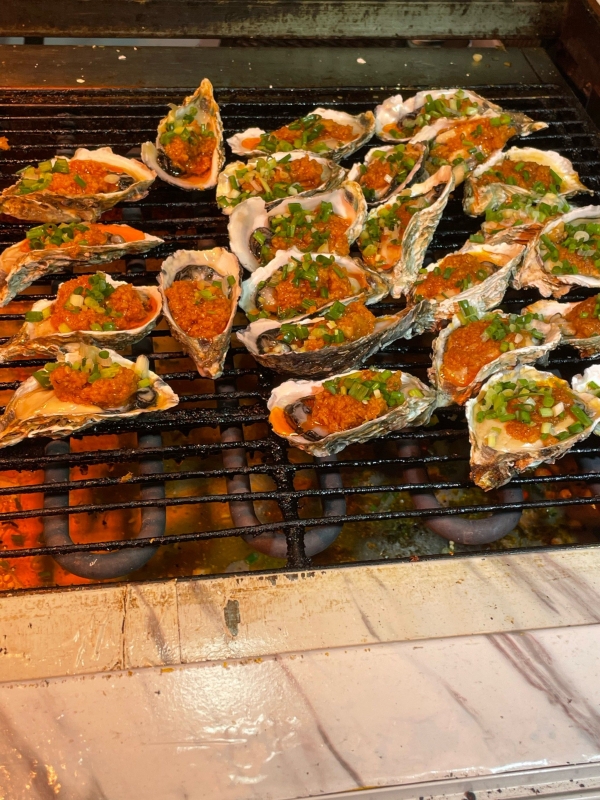
- Grilled Oysters with Garlic Sauce
Harbin's go-to midnight snacking spot, located in Daowai District. If you've been out hitting the bars and you need unconsciousness food at 11pm, this is your move. The vibe skews a lot older and a bit raucous. Good energy though.
Hong Ji's stinky tofu is fam in the city - crispy on the outside, all melty insides inside, with that amazing/or horrific stench that splits people on love to hate ratios. The Dandong-style fried chicken rack gets properly messy. Grilled oysters with garlic sauce aren't bad either. Prices are a bit higher (¥50-100) but you're paying for late hours plus bigger sizes.
Hours: 19:00 until late. Best for: Post-bar eating, seafood fans, night owls.
Must-Try Street Food (The Essential Stuff)
You could spend a week eating your way through Harbin night markets and still miss things. But some dishes are non-negotiable. Here's where to start.
Grilled Cold Noodles (烤冷面) – Yeah, They're Actually Hot
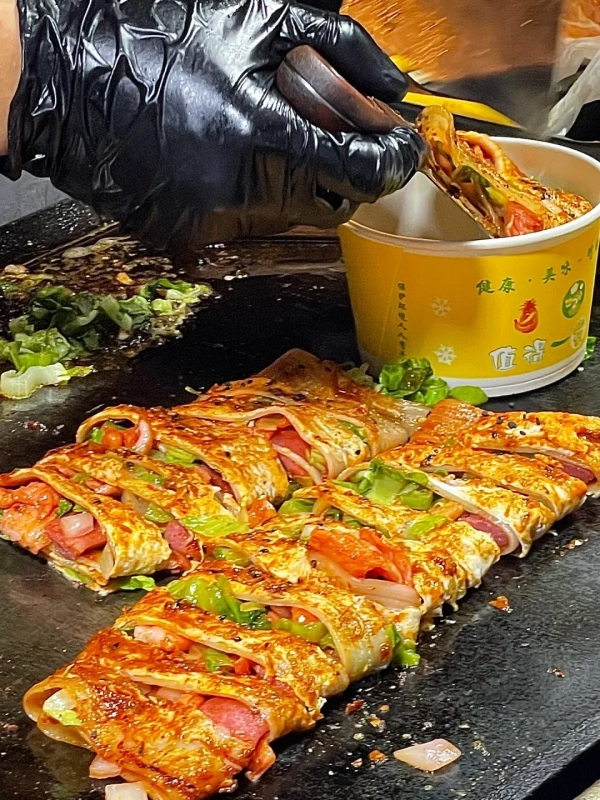
Grilled Cold Noodles
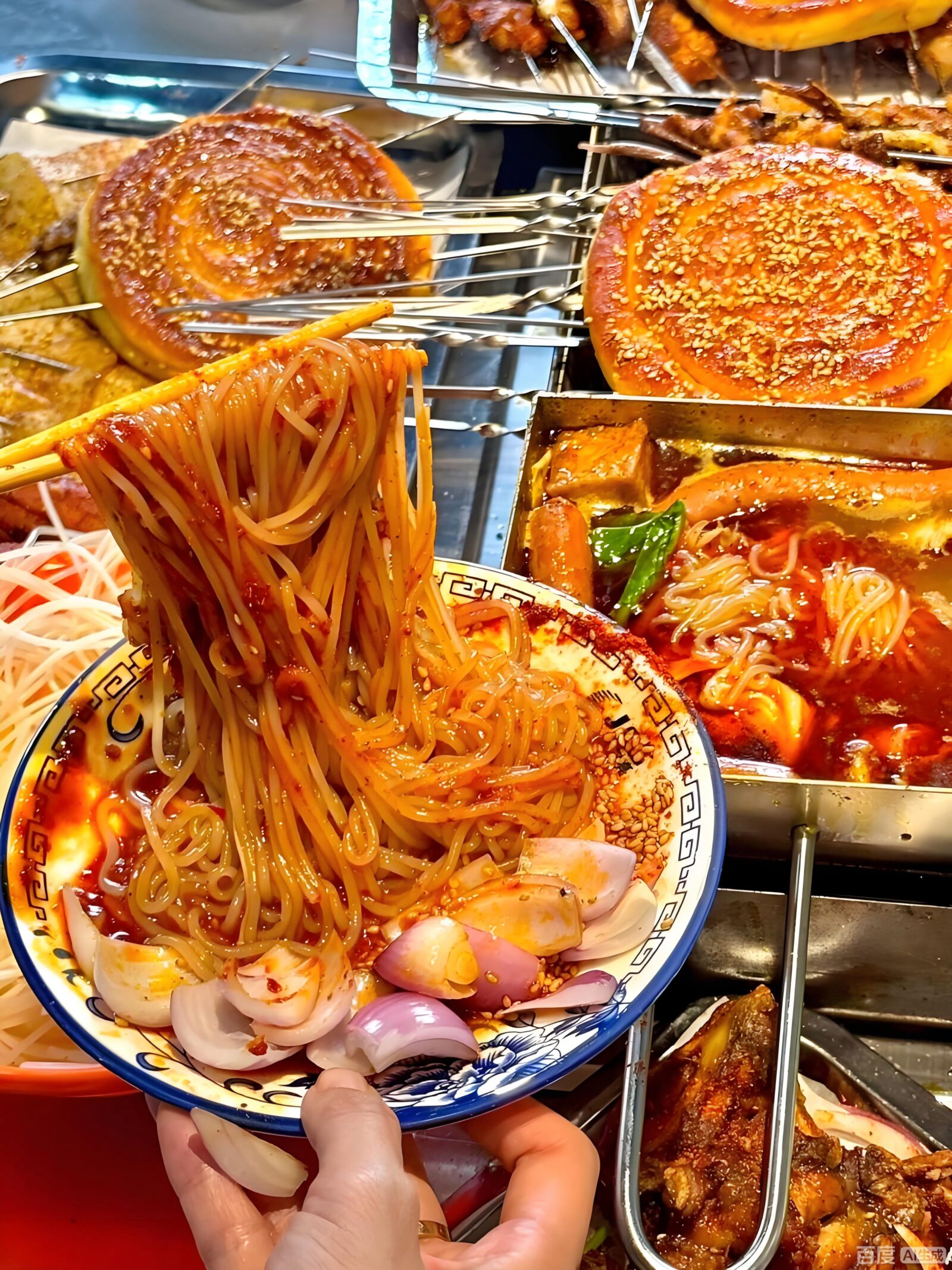
The name baffles everyone. "Cold noodles"... served hot? There is no making sense of it until you witness it in person. A batter of starch noodles slams onto a screaming hot griddle. An egg is cracked over the top, spreads outwards. The vendor—usually without looking—folds the whole thing, douses it with sweet-sour sauce and sprinkles it with cilantro, sliced sausage. Then, with two spatulas, cuts it up into bite-sized morsels. It might take him a minute and a half.
It's honestly a little mesmerizing to watch, and the dish is addicting—chewy clumps of noodles with crisp edges, tangy sauce cutting through the richness. Each stall does it a little differently— heavier on the vinegar here, sweeter there. You may develop a favourite.
Local hack: If you want to order like a local, say "duo cu, shao tang, jia changfen" (多醋少糖加肠粉)—"more vinegar, less sugar, add sausage." The vendor will probably smile. Most tourists don't know this.
BBQ Skewers – The Serious Stuff
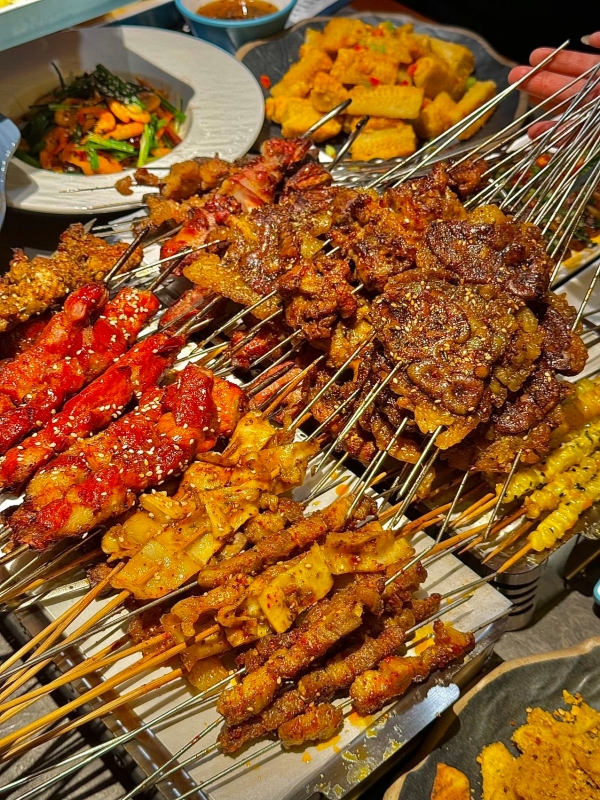
BBQ Skewers
Northeastern China takes its barbecue very seriously. Just head to any Harbin night market: rows upon rows of meat skewers sizzling over burning charcoal—everything from lamb kidneys to pork belly, chicken wings to unidentifiable organ meat. The thing is, everything gets doused in cumin and chili powder. It permeates the entire market with smoke.
The pig trotters are a whole different ball game: hacked apart and flattened, grilled to a point where the skin is absurdly crispy yet the meat retains its gelatinous structure. You’ll need napkins for sure.
Ordering tip: For kidneys, say "fei shou dou yao" (肥瘦都要)—"both fatty and lean." The fat adds flavor that lean-only versions lack. Learned this the hard way after ordering wrong the first time.
Sweet Stuff & Winter Specials
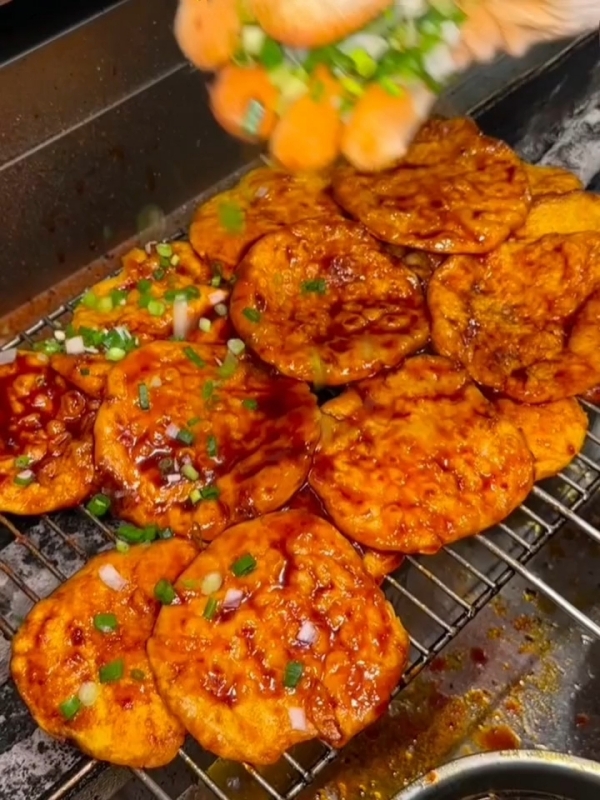
Zhaodong Mini Pancakes
It gets cold in Harbin winters. You’re looking at -20℃ at the low end. Locals fully leaned into the chill, creating frozen pears (dongli). They’re terribly ugly things, black petrified fruit blobs. But peel ‘em back, and you’ve got a slushy pour of intensely sweet flesh. Almost like a natural sorbet? Tanghulu (candied hawthorn on a stick) in the frozen air gets super crunchy.
Year-round munchies: zhaodong mini pancakes. These disk-like morsels are baked over charcoal til they flame, puffing up to the size of a small fist. The vendor smashes ‘em flat, then ladles on sweet soy glaze and liberally sprinkles sesame. Year-round treat, here. Eat ‘em at the street, these round buttermilk, sweetish cakes are too darn tasty to happen by. I used to tell myself I’d stop at three. I NEVER stop at three.
Combining Night Markets with Other Harbin Highlights
Night markets work in any season, but pairing them with Harbin's other attractions makes for genuinely memorable days. Two itineraries that work well:
👉 For more fun options, check out our detailed guide: Vital 12 Things to Do in Harbin: Ice Sculptures, Ski Slopes, Polar Animals – Dive Into Ice City’s Multicultural Charm.
Winter: Ice Festival + Night Market
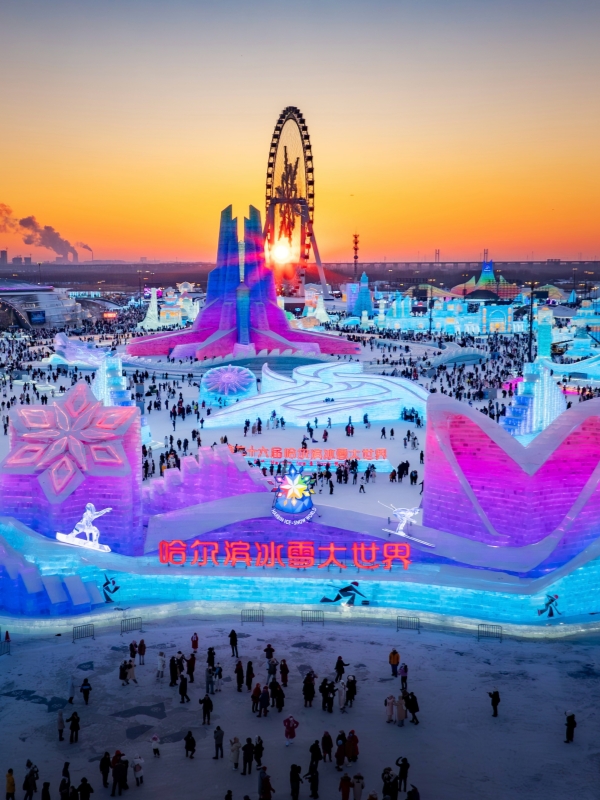
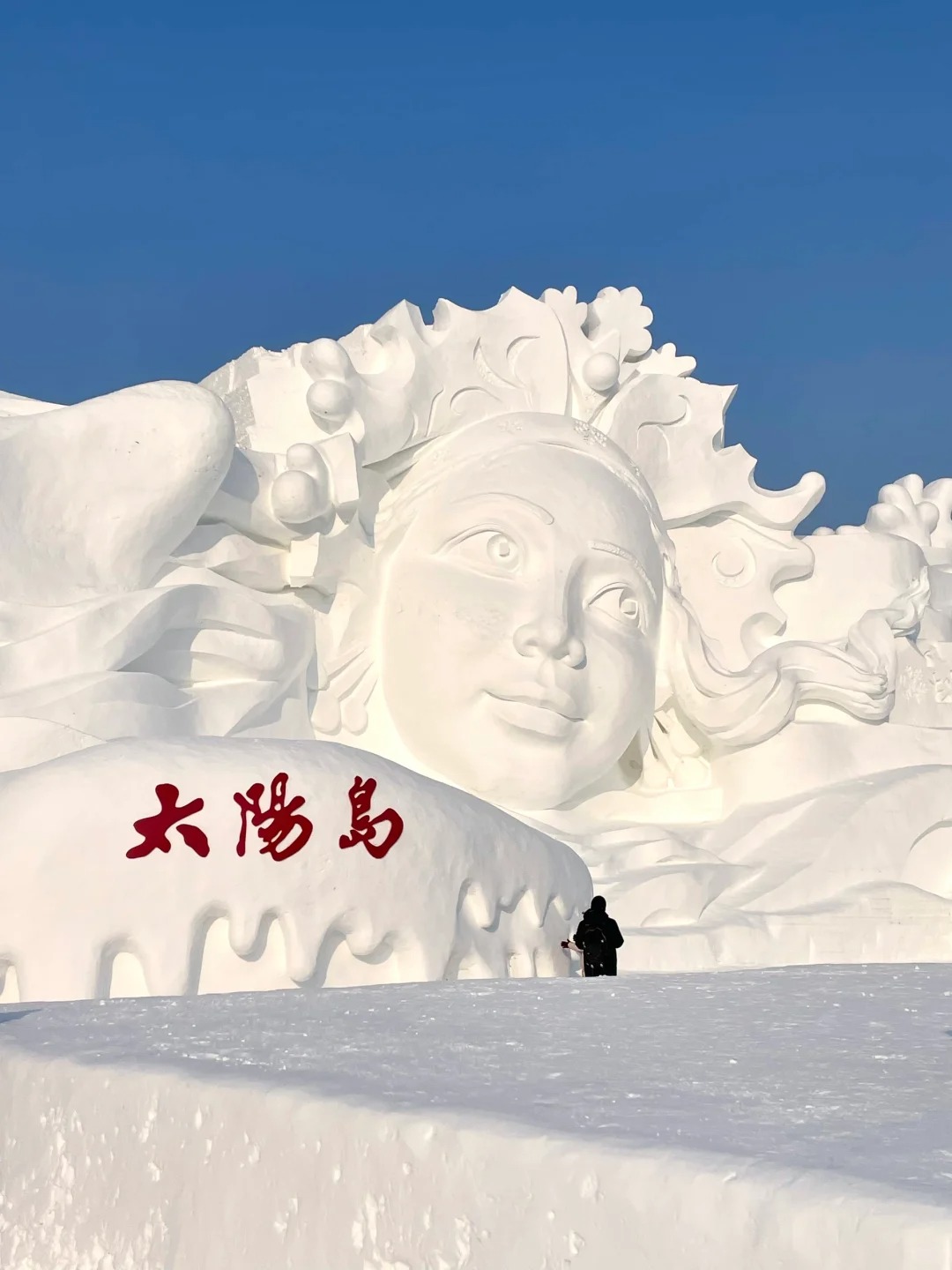
Ice and Snow World
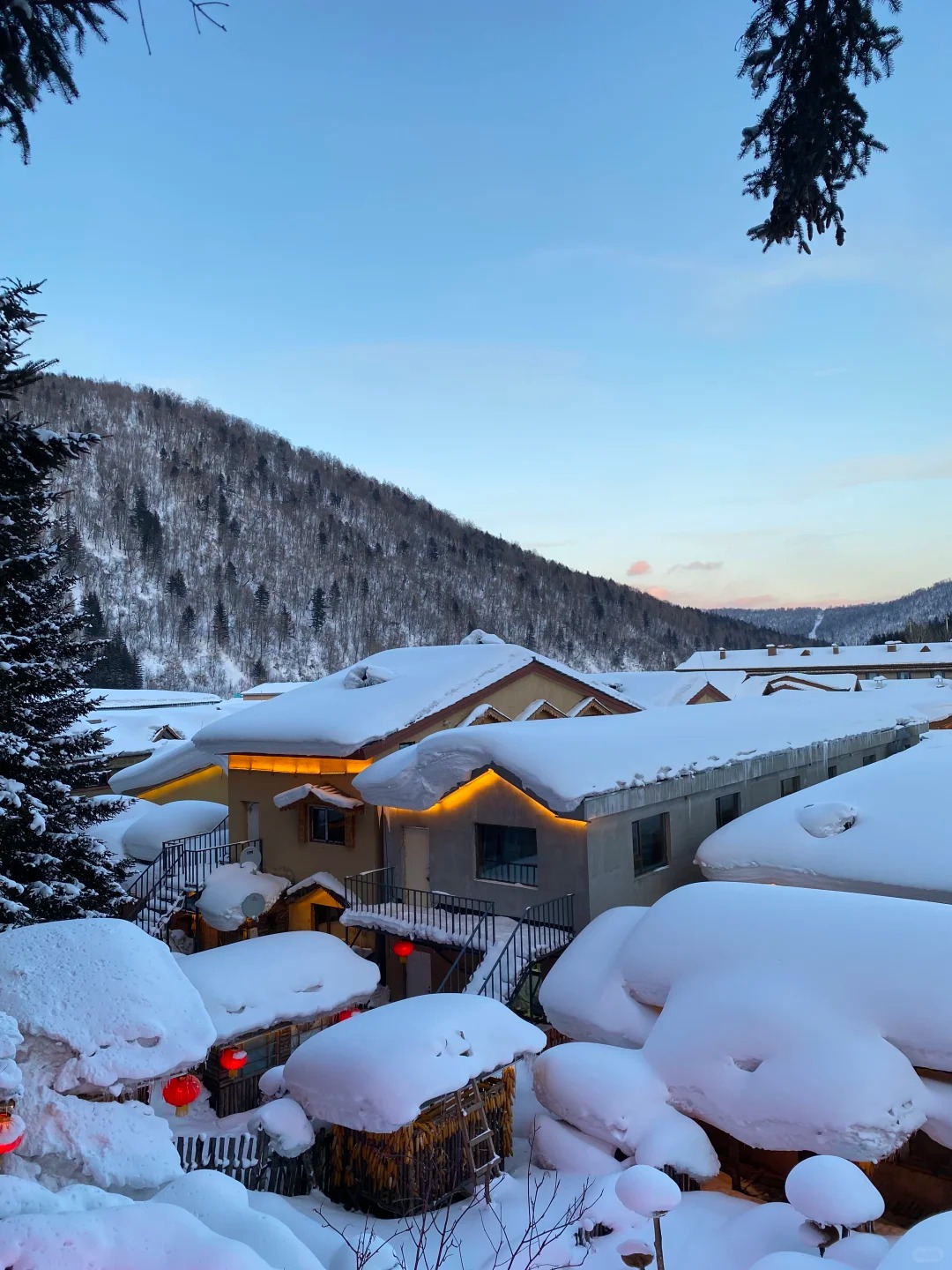
The Harbin Ice and Snow Festival runs December through February—it's the world's largest ice festival, genuinely spectacular. Combining it with a night market visit makes for one of those "only in Harbin" experiences.
How to do it: Enter Ice and Snow World around 15:00. The sculptures look different in daylight vs. when the LEDs turn on—you want to see both. That transition as the sun sets is actually kind of magical. Wander until 20:00-21:00, then grab a Didi to Shida Night Market (25ish minutes). Hot grilled cold noodles after three hours in the freezing cold hits differently. Trust me on this.
Survival note: You'll be outside for hours in -15°C to -25°C temps. Layer aggressively. Hand warmers are essential—locals stick them in gloves and boots. The night market cooking fires provide welcome warmth, but don't underestimate how cold you'll get at the ice festival. Dress like you're going to Antarctica.
Summer: Central Street + Songhua River + Night Market
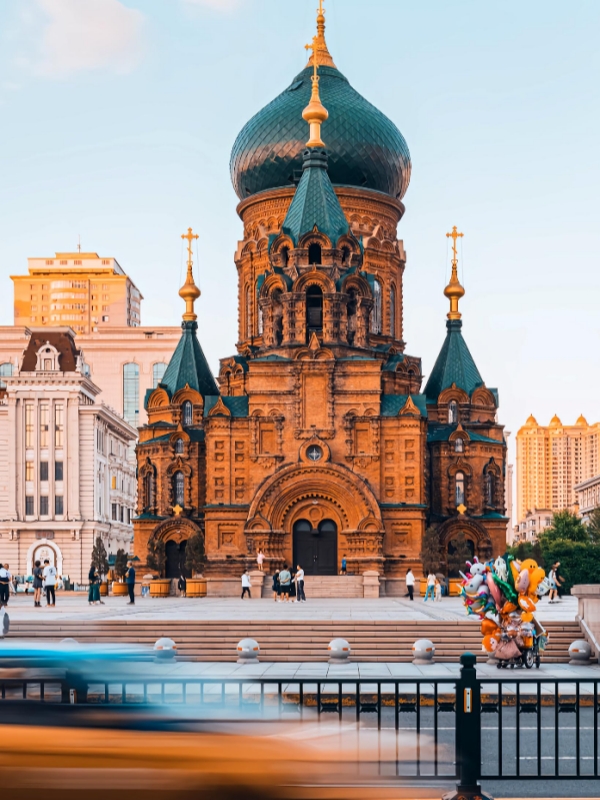
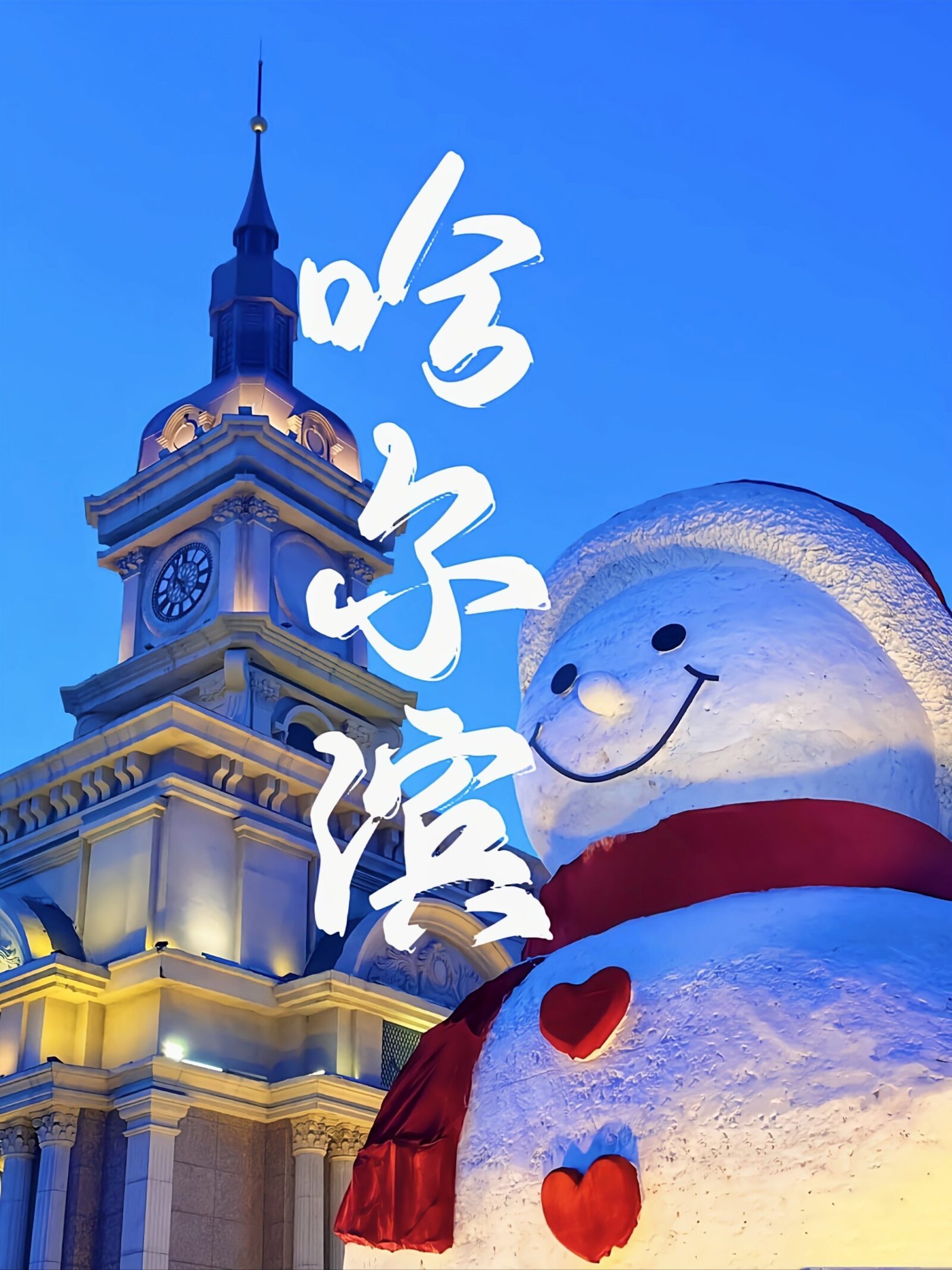
Saint Sophia Cathedral
Summer Harbin is genuinely pleasant—averaging around 22°C. The city comes alive along the Songhua River, and the whole vibe is different from winter.
How to do it: Afternoon on Central Street (Zhongyang Dajie)—it's this famous pedestrian boulevard with Russian colonial architecture. Saint Sophia Cathedral makes for good photos. Around 18:00, walk to the Songhua River. You'll see locals swimming, fishing, doing group dancing. Just watching people watch the sunset is kind of nice? As it gets dark, metro to Anjing Street Night Market (15 minutes from Central Street Station).
This route captures Harbin's weird but wonderful mix of Russian heritage and Chinese culture, ending with the most authentic local thing you can do: eating street food as the city settles into night. Something about it just works.
Practical Stuff for Foreign Visitors About Harbin Night Market
Navigating a Chinese night market as a foreigner takes some prep. Here's what actually matters.
The Payment Situation
So, cash is basically extinct in China now. Something like 90% of night market vendors use WeChat Pay or Alipay exclusively. The good news: as of 2024, both apps let you link international credit cards. The setup process is a bit annoying, but once it's done, you're golden. Download the apps before you arrive and follow the in-app instructions.
That said, I'd still bring ¥50-100 in small bills. Some older vendors—especially at local spots like Anjing Street—prefer cash. ¥10 and ¥20 notes work best. Also, random tip: when you hear vendors with loudspeakers announcing "Alipay received XX yuan," that usually means a popular stall. Follow the sound.
Useful Chinese Phrases (The Ones That Actually Help)
Most vendors speak only Chinese, but you really don't need much. These five phrases cover like 95% of situations:
| Chinese (Pīnyīn) | Hanzi (Characters) | English Translation | Context/Usage Note |
| 1. Zhège duōshao qián? | 这个多少钱? | How much (is this)? | Used to ask for the price of an item or dish. (Pointing helps.) |
| 2. Bú yào là | 不要辣 | No spicy, please. | Crucial when ordering food if you cannot handle chili heat. |
| 3. Wǒ yào zhège | 我要这个 | I want this one. | Used to select an item or dish; must be combined with pointing. |
| 4. Dǎbāo | 打包 | To go / Takeaway. | Used to ask for the leftovers or purchased food to be packaged for carrying out. |
| 5. Hǎo chī! | 好吃! | Delicious! | A great compliment! Vendors genuinely appreciate this praise for the food. |
Honestly though? Point-and-order works fine. Everything's displayed. Just gesture at what looks good. Communication finds a way.
Timing & Getting Around
The sweet spot is 19:00-21:00. Earlier and some vendors are still setting up. Later and the good stuff starts selling out. Weekdays are noticeably calmer—Friday and Saturday at Shida can feel claustrophobic. If crowds stress you out, Tuesday evening is probably ideal.
Harbin's metro is clean and cheap. Most markets are walkable from stations. For anything farther, download Didi (China's Uber)—it works with international cards and shows drivers your destination in Chinese, which solves the language problem. Costs maybe ¥15-25 for most rides across the city.
Frequently Asked Questions About Harbin Night Market
Q: Which month is best to visit Harbin night market?
Depends what you're after, honestly. Summer—June through August—gives you the full outdoor market experience. Temperatures hover around 20-22°C in the evenings, all the stalls operate, people sit outside on plastic stools. It's the classic night market vibe. Winter visitors (December-February) trade that for smaller markets but get to combine the trip with the Ice Festival, which is genuinely spectacular. You're eating in -20°C though, so... be ready for that. I've done both; summer is easier, winter is more memorable.
Q: Is it safe to visit Harbin night markets?
Yeah, very. China has remarkably low violent crime rates, and night markets are crowded, well-lit public spaces. The main practical concerns: pickpockets in the busiest areas (keep valuables in front pockets or zipped bags), and slippery sidewalks in winter. Some travelers on TripAdvisor mention that vendors are helpful even when there's a language barrier—pointing and smiling goes a long way. I've never felt unsafe at any Harbin market, and I've wandered around alone at midnight.
Q: What are the opening hours of Harbin night market?
Most markets open around 16:00-17:00 as vendors set up. Prime eating runs 18:00-22:00. Summer hours extend—the bigger places stay open until midnight or later. Winter is shorter; some vendors pack up by 21:00 because, you know, it's really cold. Anjing Street has the earliest start (around 15:00) since it doubles as a daytime local market. If you want maximum selection, aim for 18:00-19:00.
Q: Which is the biggest night market in Harbin?
Shida (师大夜市) by a lot—460+ vendors along Wenxing Street. If variety is your priority, that's the one. But "biggest" doesn't always mean "best," honestly. Some travelers prefer smaller spots like Anjing Street for the more local, less chaotic feel. Xuefu Sidaojie hits a nice middle ground: plenty of options without feeling overwhelming. I'd say Shida for your first night, then explore the others.
Q: What exactly is grilled cold noodles (烤冷面)?
The name is confusing—they're served hot. It's a northeastern China thing: flat wheat starch noodle sheets go on a hot griddle, egg gets cracked and spread across, then the vendor folds in sweet-sour sauce, cilantro, and usually sausage. Everything gets chopped into bite-sized pieces. Takes about 90 seconds start to finish. The result: crispy-edged noodles with tangy, savory filling. You'll find it at every single market, usually ¥8-12. It's the signature Harbin street food for a reason.
Q: How do I get to Shida Night Market from Central Street?
It's about 7km—too far to walk comfortably. Easiest option: Didi taxi, ¥15-20, takes 15-25 minutes depending on traffic. The metro works too (Line 2 toward Gonglu Daqiao, transfer to Line 1, exit at Hashi Da Nan Xiaoqu) but takes 40+ minutes with transfers. Most people just taxi. If there's a language issue, show your driver "文兴街师大夜市" (Wenxing Street Shida Night Market) on your phone. Works every time.
Q: Are the markets open in winter?
Yes—though it's different. Even at -20°C, vendors set up shop, but fewer outdoor stalls operate. Some move into heated tents or nearby indoor food courts. Anjing Street runs year-round with more permanent covered stalls. The experience is honestly kind of amazing: eating steaming skewers while snow falls around you is very Harbin. Just dress for extreme cold—multiple layers, hand warmers in your gloves, insulated boots. It's doable if you prepare.
Q: Is the food hygienic at Harbin night market?
Standards vary. Best strategy: eat where locals eat. Popular stalls with long lines have high turnover, meaning fresh ingredients. Watch for vendors cooking to order rather than letting pre-made stuff sit. Avoid raw or undercooked items if you have a sensitive stomach. Some travelers report minor stomach adjustment the first day, but serious issues are rare. The freshly grilled stuff—skewers, cold noodles, fried things—tends to be safest. Carrying basic antacids is reasonable but probably unnecessary.
Q: Should I tip at night market in Harbin?
Nope. Tipping isn't part of Chinese culture—at night markets or anywhere else. It might actually confuse vendors if you try. Prices are fixed; no negotiation at food stalls like there might be at souvenir shops. Just pay what's asked, say "xièxiè" (thanks), and eat your food. If you want to show appreciation, an enthusiastic "hǎo chī!" (delicious!) means more to vendors than extra money. They genuinely light up when foreigners say it.