TOTAL Veteran – Guangzhou, with over 2,200 years of recorded history as a national historical and cultural city, brims with guangzhou historical sites telling the tale of its amazing diversity from north to south. These places straddle time periods, and come with a variety of cultural atmospheres – for example ancient religious sites like the Guangxiao Temple (birthplace of Chan Buddhism) and the Huaisheng Mosque (one of China's oldest Islamic sites), colonial-era vestiges such as Shamian Island and Sacred Heart Cathedral, revolutionary landmarks including Whampoa Military Academy and Sun Yat-sen Memorial Hall, imperial treasures such as the Museum of the Nanyue King and Zhenhai Tower. In this guide we break down all these key sites so you can appreciate their history and unique selling points.
And by the way, under our direction in this guide to guangzhou historical sites you will also find some little known beauties. Xiaozhou Village (an ancient fishing village converted into an artist colony of sorts) and Yongqingfang (an old Qing Dynasty quarter that has been spruced up with modern attitude). We also provide all the practical details – opening hours, ticket prices, how to get there, and insider visiting tips to make your trip go without a hitch. For history addicts, culture lovers, and casual travelers alike, the guangzhou historical sites all hit you with a tapestry of Guangzhou's / past and present. Just keep this page rolling – your Guangzhou history adventure is about to begin.
Ancient Temples: Where Buddhism and Islam Shaped Southern China
Six Banyan Temple: Song Dynasty Pagoda, Poet's Legacy, 1,400-Year Buddhist Heritage

The name confuses many visitors. Why call it Six Banyan Temple when no trees remain? The story goes that Su Dongpo, the Song Dynasty poet, visited in 1099. He saw six banyan trees in the courtyard and wrote the words “Liurong” on a plaque. Though those trees vanished long ago, the name survived. That persistence fits Chinese culture—keeping a name because it carries memory, not reality. When you enter today, incense smoke curls around the courtyard, monks chant softly, and the name still holds meaning after 900 years.
The highlight is the Flower Pagoda, soaring 57 meters. Outside you see nine stories, but inside there are seventeen. Architects designed the structure to play with your perception; each level narrows slightly, making the tower appear taller. The climb gets tight near the top, but the view over old Guangzhou rewards the effort. Visit before 8 a.m. to avoid tour groups clogging the stairs. Tickets cost 5 RMB, cheaper than a subway ride. You can buy on Ctrip or at the gate. Early mornings feel serene; later hours turn crowded and noisy.
Guangzhou tells one chapter — China Historical Sites That Tell the Story of a Civilization unfolds the whole book of Chinese civilization.
Quick Facts: Six Banyan Temple at a Glance
🏛️ Type: Ancient Buddhist temple with Song Dynasty pagoda
⏰ Opening Hours: 06:00–17:30
🎫 Ticket: 5 RMB
⏱️ Suggested Visit Time: 1–1.5 hours
📍 Address: Liurong Lu, Yuexiu District, Guangzhou
Guangxiao Temple: Chan Buddhism Birthplace, Nail-Free Architecture, 1,800-Year Legacy

With origins dating back to 233 AD, the Guangxiao Temple is one of South China's older than old temples. It was here that Buddhism moved gradually south through monk Huineng's teaching before he became the Sixth Patriarch of Chan Buddhism. The temple grounds spread gently out under huge age-old trees. A path made of small stones winds between rocks, and the sound of morning prayers mixes with the loud clamor from groups who followed their tourists guide right into garish prayer halls where monks sweep.
A heavenly King presides over worship service for all of his subjects in the land. His image symbolizes this by; it shines amidst drinking water like a warm golden bowl. For thousands of years bronze has been one of China's most important artistic metalworks, and it will remain so for thousands more. Menn built this without nails but by using a mortise-and-tenon joint system which can last hundreds of years without falling apart from rust or fracture. The smell of incense and wood resin mingles with that of time.
Walking slowly along the outside edge of the yard, you will find a bodhi tree. Legend says that this tree marks the place where Huineng attained enlightenment. Behind the hall is an iron pagoda from the Eastern Han Dynasty. Blackened by the sun, it looks ancient and carries stories chiseled into or scratched on its surface--more old-fashion than the printed word, more genuine too. Most people pass it by and only head for the front door. Stay longer; the faint hum of prayers mixing with the sound of sweeping leaves tells you that this is a place where faith lives through rhythm and patience and never by pure flashy displays.
Guangzhou’s beauty goes far beyond its historic sites — read The Top 15 Tourist Attractions: Things to Do in Guangzhou (2025) for a full guide to the city’s must-see spots.
Quick Facts: Guangxiao Temple at a Glance
🏛️ Type: Historic Chan Buddhist monastery complex
⏰ Opening Hours: 06:30–17:00
🎫 Ticket: 10 RMB
⏱️ Suggested Visit Time: 1.5–2 hours
📍 Address: Guangxiao Lu, Yuexiu District, Guangzhou
Huaisheng Mosque: 7th-Century Persian Architecture, China's Oldest Mosque, Silk Road Legacy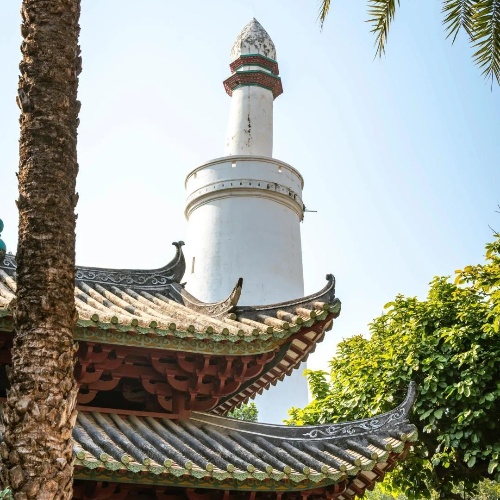
Remains beside Guangzhou ’ s temples, Huaisheng Mosque ( locallly [ sic ] named Zhongxin Tower ) was first begun in 627 AD. Tradition raild that it was built by an Arab merchant, Abu dak`waqs, who arrived by ship here to preach Islam. But nobody knows the exact founding date, every historian, however, agrees that it is very old. The main Zhongxin Tower is 36 metres high. The Chinese refer to the building as their lighthouse. It embodies the Persian ideals of a cylindrical design, smooth walls and very simple decoration. The contrast between this tower and other Chinese pagodase makes it strikingly different. Once I climbed halfway up, only to be stopped by a.yyards–but it‘s now closed off for safety anyway. Even from this point, Guangzhou’s rooftops stretch without end.
Visitors can get in during lulls between prayer calls. It’s still free, though contributions are welcome. They Learned That The one rule is to dress modestly: shoulders and legs covered, a scarf available for women as they pass through the gate. When I French my arrival, roughly it was ten o'clock in the morning. As a young attendant warmly welcomed me, hewith his hand indicated Mecca ‘> Our Muslim informant likewise explained the Arabic calligraphy and mainstained the drying fountain. His exuberance demonstrated the coexistence in this city of traditions,f faith_and modernity. This mosque remains faithful through dynasties because each age respected its role as the bridge between China and the world."
Quick Facts: Huaisheng Mosque at a Glance
🏛️ Type: Ancient Islamic mosque with Persian-style minaret
⏰ Opening Hours: 08:00–16:00 (closed during Friday prayers 12:00–14:00)
🎫 Ticket: Free (donations welcome)
⏱️ Suggested Visit Time: 45 minutes–1 hour
📍 Address: Guangta Lu, Yuexiu District, Guangzhou
Colonial Echoes: European Architecture and Opium War Legacies
Shamian Island: Franco-British Concession, Neoclassical Buildings, Colonial Enclave History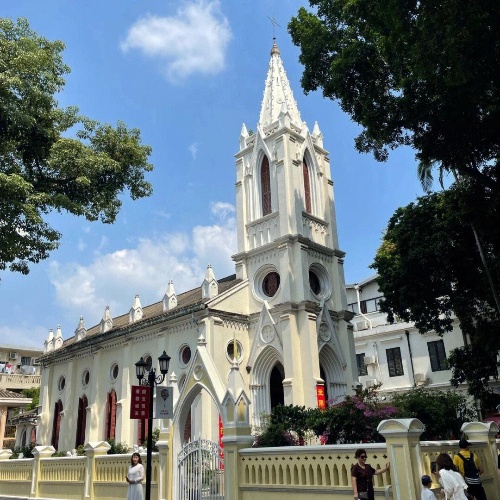
The Shamian Island looks romantic, but it is actually a tiny sandspit on lease to England and France after the Opium Wars. From 1859 to 1943, they built banks, consulates and churches--a bit of Europe in southern China. Today, elegant streets, banyans and neoclassical detail mingle with modern cafes and snap locations. You can stroll around the whole island in half an hour and feel the weight of Guanzhou's history laid down in each arch and plaque. I noticed a sign that identified an old opium warehouse; now it's a cafe selling ¥35 lattes. That is Guanzhou's complex colonial heritage.
What visitors are struck by is how local life fits into its colonial setting. Old people play chess under banyans, vendors sell ¥5 sugarcane juice; children ride past old villas on bicycles. The architecture murmers Europe, but this is Cantonese rhythm. Walk slow and you'll feel both pride and unease--a city living its history rather than displaying it. Shanmian Island isn't a museum; it's a living neighborhood where Guanzhou quietly reclaims its colonial past through daily life.
They say knowing the place makes every trip better — read Where Is Guangzhou: The Gateway to Southern China to get a full picture before exploring its historic gems.
Quick Facts: Shamian Island at a Glance
🏛️ Type: Former colonial concession with European architecture
⏰ Opening Hours: Open 24/7 (public streets)
🎫 Ticket: Free
⏱️ Suggested Visit Time: 1–2 hours
📍 Address: Shamian Dajie, Liwan District, Guangzhou
Sacred Heart Cathedral: All-Granite Gothic Structure, French Architecture, Asia's Largest Catholic Church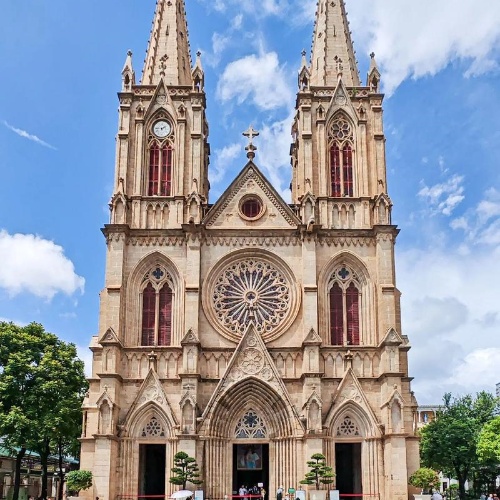
Locals call it “Shishi,” meaning Stone House, and it truly deserves that name. The entire cathedral uses granite without any wood or brick. French architect Guillemin designed it between 1861 and 1888, taking twenty-seven years to complete. When you stand at the entrance, the twin spires stretch 58 meters into the sky. The scale feels almost unreal among guangzhou historical sites, a European dream built in southern China. Light filters through colored glass, illuminating the stone floor like a prism. Every step echoes beneath the vaulted ceiling, carrying sound and reverence together.
Inside, the stained glass scenes tell familiar stories with a local twist. Mary’s eyes slant gently, and disciples resemble Cantonese fishermen. Craftsmen added these features themselves; no one objected. The result mixes Gothic form with southern Chinese character. During my visit, an organist practiced quietly near the altar. Each note lingered like incense, soft and endless. Admission remains free, though I left ¥20 in the donation box. Take Metro Line 2 or 6 to Haizhu Square, then walk ten minutes northwest. Guards restrict large cameras, so use your phone instead. Visit early to enjoy calm light before crowds arrive.
Quick Facts: Sacred Heart Cathedral at a Glance
🏛️ Type: Gothic Revival cathedral (all-granite construction)
⏰ Opening Hours: 08:00–17:30 (Monday–Saturday), Mass times vary Sunday
🎫 Ticket: Free (donations welcome)
⏱️ Suggested Visit Time: 45 minutes–1 hour
📍 Address: Yide Lu, Yuexiu District, Guangzhou
Yongqingfang: Qing Dynasty Alleyways, Adaptive Reuse Project, Old-Meets-New Urban Revival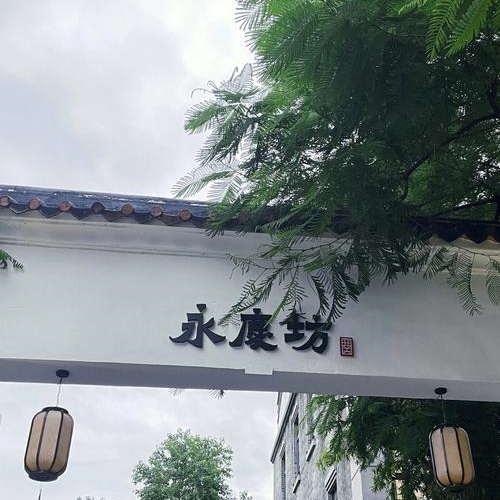
Yongqingfang sits in the Liwan District, breathing new life into a Qing Dynasty alley network. For decades, its old homes decayed quietly, their bricks cracking under humidity. In 2016, the city renovated instead of demolishing, keeping the alleys intact. Designers, coffee shops, and small boutiques moved in. Now it blends nostalgia with modern energy. You see weathered doorframes beside neon-lit cafés. That contrast defines it. Among guangzhou historical sites, Yongqingfang proves history can evolve rather than freeze in time. Walk its narrow paths and you feel past and present meeting halfway.
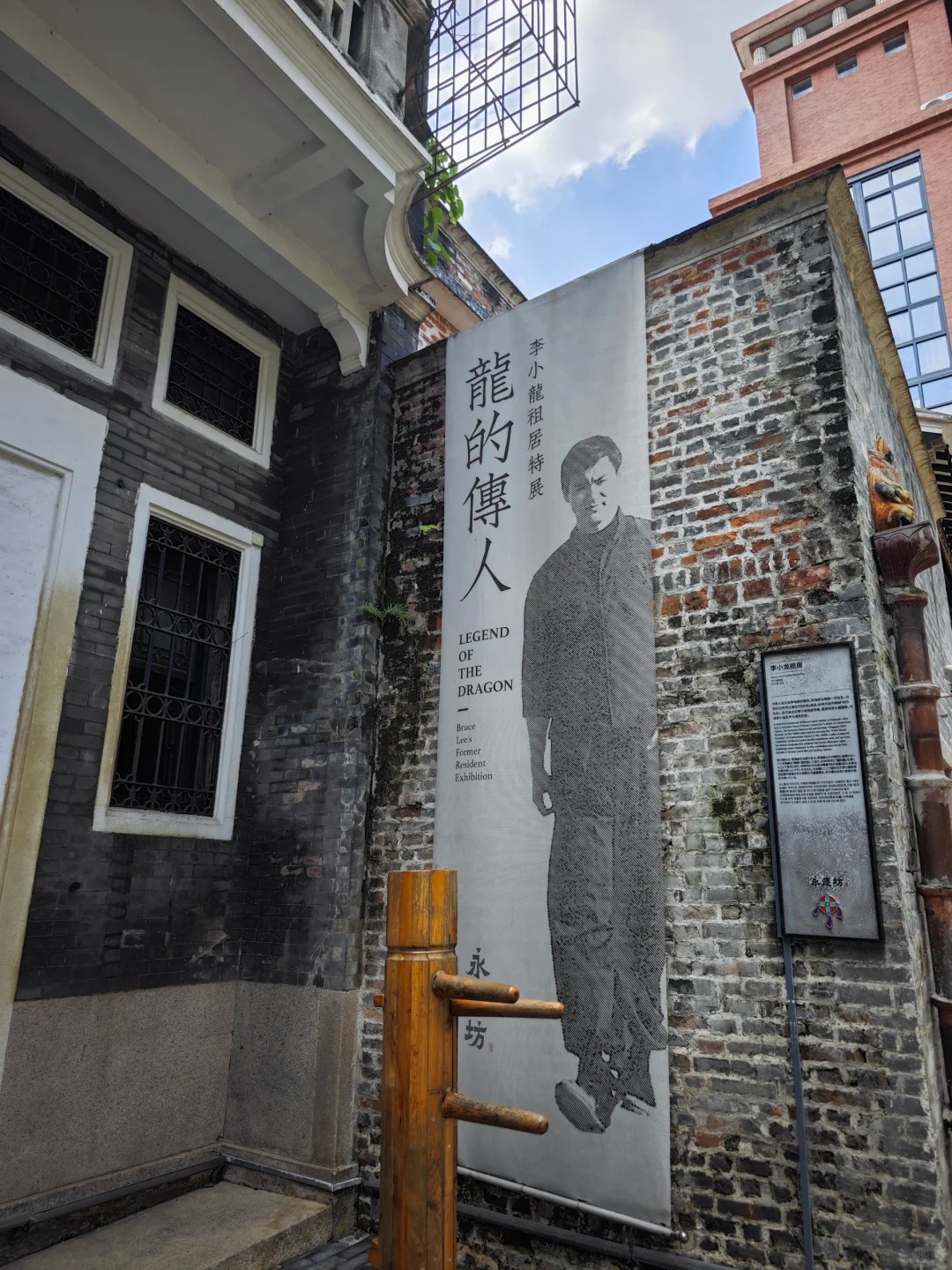
Locals and visitors interact naturally here. Elderly residents watch tourists snap photos beside their old doors, amused but patient. Young people queue for ¥35 mango pomelo sago while children chase pigeons through the lanes. A century-old pharmacy still sells herbs beside a sneaker store. Further inside lies Bruce Lee’s ancestral home, now a small museum displaying photos and memorabilia. Visit around sunset when lanterns glow and crowds thin. It’s free to enter, just public streets with stories. From Changshou Lu Metro Station, it’s an eight-minute walk. Bring ¥100–150 if you plan to eat or shop; the charm sits between authenticity and commerce.
Quick Facts: Yongqingfang at a Glance
🏛️ Type: Renovated Qing Dynasty commercial district
⏰ Opening Hours: Open 24/7 (individual shops vary)
🎫 Ticket: Free (Bruce Lee Museum: 10 RMB)
⏱️ Suggested Visit Time: 1.5–2 hours
📍 Address: Enning Lu, Liwan District, Guangzhou
Revolutionary History: Where Modern China Was Born
Sun Yat-sen Memorial Hall: Republican-Era Architecture, Octagonal Palace Design, Revolution Symbol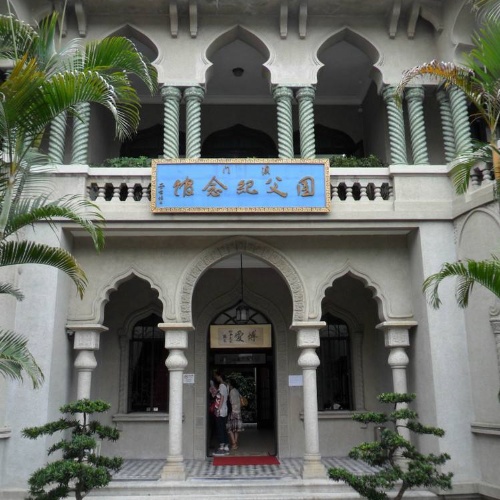
Sun Yat-sen Memorial Hall stands proudly in Yuexiu District, completed in 1931 to honor the revolutionary who ended China’s imperial rule. Locals still call him “Dr. Sun,” even though he was born in nearby Zhongshan. The octagonal structure combines red pillars, blue tiles, and palace-style roofs. It feels imperial, almost paradoxical, because Sun fought against monarchy. Yet that contrast fits Guangzhou’s spirit—modern ideals rooted in traditional design. Walk around the vast courtyard, and you’ll sense both reverence and local pride. The bronze statue of Sun faces the hall, hands clasped as if mid-speech.
Inside, the main auditorium seats 5,000 people. Concerts, ceremonies, and political events still happen here, tying history to the present. When I visited, workers prepared for an orchestra performance while families strolled through the gardens. Locals come daily for tai chi and evening walks beneath banyans. Tickets cost ¥10, free on select holidays. Open from 8:00 AM to 6:00 PM, reachable via Jinian Hall Metro Station on Line 2. One hour feels just right—enough to circle the hall, read plaques, and feel how Guangzhou turns national history into neighborhood memory.
Quick Facts: Sun Yat-sen Memorial Hall at a Glance
🏛️ Type: Republican-era memorial hall and auditorium
⏰ Opening Hours: 08:00–18:00
🎫 Ticket: 10 RMB (free on some holidays)
⏱️ Suggested Visit Time: 1 hour
📍 Address: Dongfeng Zhong Lu, Yuexiu District, Guangzhou
Whampoa Military Academy: Revolutionary Military School, KMT-CPC Training Ground, Island Fortress
Whampoa Military Academy shaped China’s twentieth-century leaders. Established in 1924, it trained officers for both Communist and Nationalist forces who later fought wars that changed history. The original structures burned during World War II, so the current version, rebuilt in 1996, replicates the style and layout of the 1920s. Some visitors complain about the lack of authenticity, yet the atmosphere still feels austere. Narrow dorms, open courtyards, and fading slogans remind you how harsh the training once was. Walking through those corridors connects you with the discipline that defined early modern China.
Inside the museum, the focus stays sharp on ideology and revolution. Photos, manifestos, and relics from Sun Yat-sen’s campaigns line the walls. I paused at a glass case showing his handwritten notes beside worn uniforms and old rifles. These small artifacts turn abstract history into something tangible. Entry remains free, open 9:00 AM–5:00 PM except Mondays. The site sits on Changzhou Island, about 20 km southeast of downtown. No metro reaches it, so take a bus or Didi ride costing about ¥50–70. It’s remote but worth the trip if you care about military heritage and the roots of modern Chinese leadership.
Quick Facts: Whampoa Military Academy at a Glance
🏛️ Type: Revolutionary military training academy (reconstructed)
⏰ Opening Hours: 09:00–17:00 (closed Mondays)
🎫 Ticket: Free
⏱️ Suggested Visit Time: 1.5 hours
📍 Address: Changzhou Island, Huangpu District, Guangzhou
Imperial Legacy: Ancient Kingdoms and Dynastic Treasures
Museum of the Nanyue King: 2,000-Year Tomb, Jade Burial Suits, Pre-Imperial Kingdom Artifacts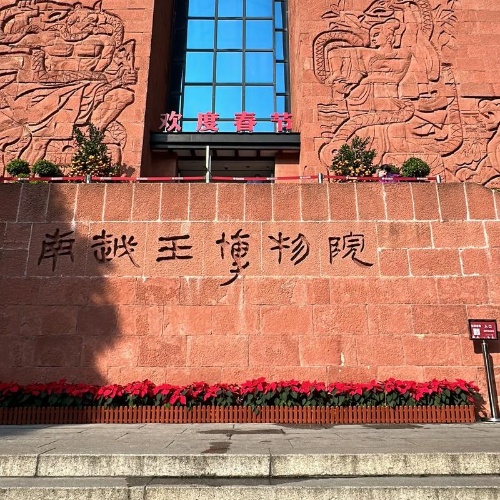
In 1983, workers in Guangzhou uncovered a tomb while digging a hotel foundation. Instead of concrete, they found Zhao Mo’s resting place, the second king of the Nanyue Kingdom (203–111 BC). The chamber contained over a thousand artifacts—jade suits, bronze vessels, gold seals, and traces of human sacrifice. The government stopped construction and preserved everything under a new museum. This discovery reshaped understanding of southern China’s ancient past and now stands among the most remarkable guangzhou historical sites.
The museum keeps the tomb underground and accessible. Visitors walk through bright corridors before stepping into dim chambers carved two millennia ago. The air turns cool, almost still. Glass walls separate you from relics, but their arrangement stays true to excavation notes. The jade burial suit, stitched from 2,000 tiny pieces, draws every eye. Tickets cost ¥30; students pay half. Audio guides add ¥20 but deepen context. Open 9:00 AM–5:30 PM, closed Mondays. Take Metro Line 2 to Yuexiu Park, then walk ten minutes west. Spend two hours here if possible. Without guidance, the artifacts blur; with it, you see a kingdom reborn in silence.
Quick Facts: Museum of the Nanyue King at a Glance
🏛️ Type: Archaeological site and museum (2,000-year-old royal tomb)
⏰ Opening Hours: 09:00–17:30 (closed Mondays)
🎫 Ticket: 30 RMB (audio guide: +20 RMB)
⏱️ Suggested Visit Time: 2–2.5 hours
📍 Address: Jiefang Bei Lu, Yuexiu District, Guangzhou
Zhenhai Tower: Ming Dynasty Watchtower, Five-Story Pagoda, Guangzhou City Museum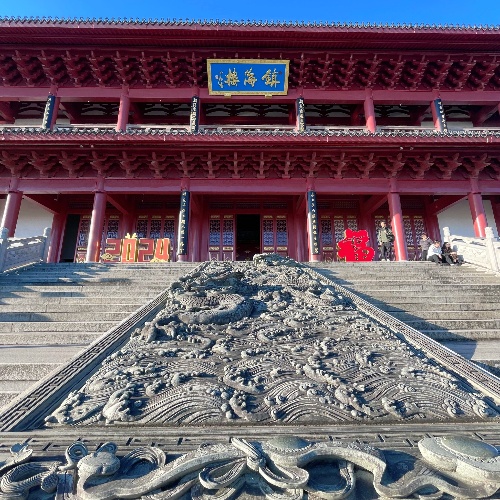
Zhenhai Tower rises above Yuexiu Park, built in 1380 by a Ming Dynasty general to watch over the city. The name means “Tower that Guards the Sea,” though Guangzhou sits inland along the Pearl River. Locals say it was symbolic—protecting trade routes that led to the sea. Over six centuries, it has served many roles: fortress, government office, museum, and even revolutionary base. Its red walls and green eaves stand proudly against the skyline, marking it as one of the most enduring guangzhou historical sites. The climb up the hill feels steep, but each step reveals a stronger sense of history and pride.
Inside, the Guangzhou Museum fills five floors with stories of the city’s evolution. Exhibits include ceramics, paintings, old maps, and miniature models showing Guangzhou through different dynasties. The Qing export porcelain draws particular attention for how it blends Chinese artistry with Western aesthetics. From the top floor, views stretch across the skyline to Canton Tower when the sky clears. Admission costs ¥10, and Yuexiu Park adds ¥5 more. Open 9:00 AM–5:30 PM daily, it’s best visited in the morning before crowds climb the hill. Expect about an hour here—long enough to see the past layered neatly over the present.
Quick Facts: Zhenhai Tower at a Glance
🏛️ Type: Ming Dynasty watchtower (now city museum)
⏰ Opening Hours: 09:00–17:30
🎫 Ticket: 10 RMB (Yuexiu Park: +5 RMB)
⏱️ Suggested Visit Time: 1–1.5 hours
📍 Address: Yuexiu Park, Yuexiu District, Guangzhou
Temple of the Five Immortals: Ming Dynasty Taoist Temple, Guangzhou's Ram Legend, "Immortal Footprint" Rock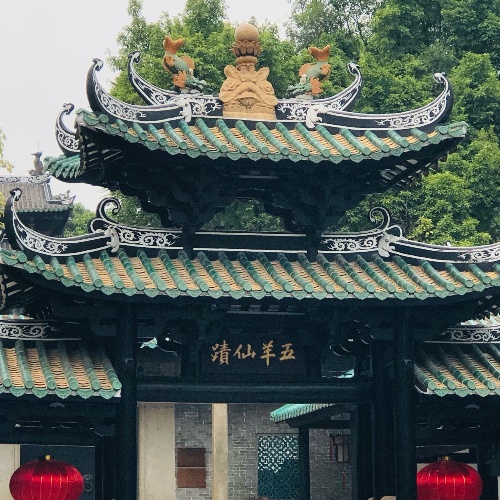
Legend says five immortals rode rams from heaven and scattered rice over Guangzhou to end famine. Grateful citizens built this Ming Dynasty temple to honor them. That myth explains Guangzhou’s nickname, “City of Rams” (Yangcheng), and the statues you see across the city. Whether the story feels true or not, the temple carries that symbolic weight. It anchors local folklore among guangzhou historical sites and offers a glimpse of how myths shape city identity. When you walk inside, incense floats in the air, and the hum of quiet prayers gives the place a timeless rhythm.
The temple feels small but calm, centered on one courtyard lined with red-painted halls. Its highlight is the so-called Immortal’s Footprint—a deep mark on a stone said to record an immortal’s step. It could be erosion, but locals still bow before it and leave fruit or incense. Near it hangs an ancient bronze bell, believed to date back to the Ming era. They say its chime once echoed through the whole city. Few tourists come here, which makes it ideal if you need quiet. Entry costs ¥5. From Ximenkou Metro Station (Line 2 or 5), walk eight minutes south for a peaceful pause between bigger attractions.
Quick Facts: Temple of the Five Immortals at a Glance
🏛️ Type: Ming Dynasty Taoist temple
⏰ Opening Hours: 08:00–17:00
🎫 Ticket: 5 RMB
⏱️ Suggested Visit Time: 30–45 minutes
📍 Address: Huifu Xi Lu, Yuexiu District, Guangzhou
Religious Diversity: Buddhism Beyond the Mainstream
Haichuang Temple: Qing Dynasty Buddhist Complex, Classical Garden Design, Peaceful Lotus Ponds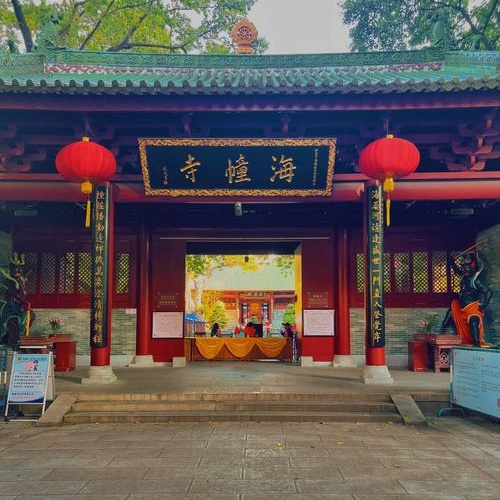
Haichuang Temple offers a quiet retreat within Haizhu District, dating from the early Qing Dynasty. Unlike older temples, its charm lies in garden design. Stone bridges curve over lotus ponds, and corridors twist between pavilions. Walking through feels like stepping into an ink painting. Monks chant softly inside halls where incense swirls upward. The main hall enshrines three Buddha statues that glow in soft daylight. Visitors and worshippers move together respectfully. It’s peaceful without feeling deserted, a balance that few guangzhou historical sites achieve.
Outside, the Flower Pagoda mirrors the one at Six Banyan Temple but stands shorter. Climb the narrow stairs for views of tiled rooftops and banyan trees. Midway, you’ll find a teahouse run by monks who serve chrysanthemum tea for ¥15. I sat there listening to temple bells, the aroma of tea blending with incense. The monk smiled and gestured for me to relax, so I stayed until the courtyard emptied. Entry remains free, donations appreciated. Open 7:00 AM–5:00 PM daily, five minutes east from Haichuang Metro Station (Line 8). It rarely appears in guidebooks, which makes it a genuine spiritual corner amid a fast-moving city.
Quick Facts: Haichuang Temple at a Glance
🏛️ Type: Qing Dynasty Buddhist temple with garden design
⏰ Opening Hours: 07:00–17:00
🎫 Ticket: Free (donations accepted)
⏱️ Suggested Visit Time: 1 hour
📍 Address: Tongfu Zhong Lu, Haizhu District, Guangzhou
Hidden Gems: Off the Beaten Path
Xiaozhou Village: 1,000-Year Fishing Village, Artist Colony, Riverside Bohemian Enclave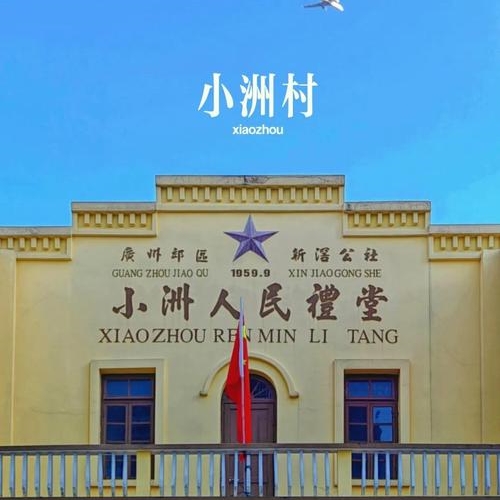
Xiaozhou Village sits in Haizhu District beside the Pearl River, feeling rural yet still inside the city. Narrow lanes twist between brick homes, murals color old walls, and cats stretch across sunlit doorsteps. The settlement has lasted over a millennium, once thriving on fishing and farming. In the early 2000s, artists discovered its quiet charm and low rent. They converted abandoned homes into studios and galleries. The result mixes Cantonese tradition with creative freedom. Among guangzhou historical sites, it stands out for showing how communities adapt without losing their roots.
Small galleries and workshops fill the alleys, each with a personal touch. You might meet a painter offering tea or a sculptor shaping clay by hand. Jazz music drifts from cafés selling pour-over coffee for ¥35, blending artistry with daily life. The vibe feels honest, friendly, and unhurried. Entry remains free. From Dazhong Village Metro Station on Line 3, take bus 252 or 468 to Xiaozhou stop, about twenty minutes away. A Didi costs ¥40–60. Visit on weekdays for quiet streets. Weekends bring locals seeking escape, and the crowds slightly break the calm. Still, even then, its relaxed rhythm never disappears.
Quick Facts: Xiaozhou Village at a Glance
🏛️ Type: Ancient fishing village turned artist colony
⏰ Opening Hours: Open 24/7 (individual galleries vary)
🎫 Ticket: Free
⏱️ Suggested Visit Time: 2–3 hours
📍 Address: Xiaozhou Village, Haizhu District, Guangzhou
Practical Guide: Planning Your Visit to Guangzhou Historical Sites
Best Time to Visit
Guangzhou's climate runs hot and humid most of the year. October through December offers the most comfortable weather for exploring guangzhou historical sites—temperatures hover around 20-25°C (68-77°F), lower humidity, clear skies. January and February can get surprisingly cool by southern Chinese standards, sometimes dropping to 10°C (50°F). If you don't mind heat, March through May works fine. Summer (June-September) brings oppressive humidity, afternoon thunderstorms, and temperatures above 33°C (91°F). I visited in July once. Sweat through my shirt by 10:00 AM. Not recommended.
Consider Chinese holidays carefully. Golden Week (October 1-7) and Chinese New Year (late January/early February) pack every tourist site in the country. Guangzhou historical sites will have two-hour waits just to buy tickets. If you must visit during these periods, book everything online through Ctrip in advance. Otherwise, weekdays in spring or fall give you the best experience—fewer crowds, pleasant weather, lower hotel prices.
How to Get Around
Guangzhou Metro covers most guangzhou historical sites. Buy a physical metro card at any station for ¥20 deposit plus initial credit. Alternatively, link your Alipay or WeChat Pay to scan QR codes directly at gates. Didi works exactly like Uber—download the app, link your payment method, request rides. Most drivers don't speak English, so have your destination written in Chinese characters. Screenshot the address from a map app before ordering the car.
Walking between sites in the same district makes sense sometimes. For example, Shamian Island, Sacred Heart Cathedral, and Yongqingfang all sit within 2-3 km of each other. However, Guangzhou's heat and pollution can make long walks exhausting. I learned this the hard way after trying to walk from Chen Clan Academy to Yuexiu Park. Halfway through, I gave up and grabbed a Didi. Sometimes the ¥15 ride saves more energy than you think.
Budget Planning
Entrance fees for guangzhou historical sites rarely exceed ¥30 per site. Most temples charge ¥5-10 or remain free. Museums run ¥20-30 typically. Your biggest expense will likely be food and transportation. Budget approximately:
- Budget travel: ¥200-300/day (hostel, metro, street food)
- Mid-range travel: ¥500-800/day (3-star hotel, mix of metro/Didi, casual restaurants)
- Comfort travel: ¥1,000+/day (4-star+ hotel, mostly Didi, nicer dining)
These estimates assume you visit 3-4 sites per day and eat three meals. They don't include international flights or shopping. Cash gets less useful in Guangzhou. Most places accept Alipay or WeChat Pay. However, small temples and street vendors sometimes prefer cash. Keep about ¥200-300 in small bills just in case.
Cultural Etiquette Tips
Temples and mosques require modest dress. Cover your shoulders and knees. Remove shoes before entering prayer halls if signs indicate. Don't touch religious statues or artifacts unless explicitly allowed. Incense burning is common at temples—you can participate if you wish, but watch locals first to understand the proper method.
Photography rules vary by site. Most guangzhou historical sites allow photos, but some museums prohibit flash photography. Sacred Heart Cathedral restricts photography during Mass. At Huaisheng Mosque, always ask permission before photographing people praying. When in doubt, look for signs or ask staff. Better to ask than get scolded by a guard.
Frequently Asked Questions About Guangzhou Historical Sites
Q: Can you visit all guangzhou historical sites in one day?
Not really, no. I mean, you could sprint through them with military precision, but you'd miss everything that makes these places special. Chen Clan Academy alone deserves 90 minutes if you want to appreciate the craftsmanship. The Museum of the Nanyue King could eat up half a day if you read everything. I'd suggest picking 3-4 guangzhou historical sites per day maximum. Quality over quantity makes more sense here.
Q: Do Guangzhou temples charge entrance fees?
Most do, but they're cheap—usually ¥5-10 per temple. Six Banyan costs ¥5, Guangxiao charges ¥10, Temple of the Five Immortals is also ¥5. Haichuang Temple stays free (they accept donations). Compare that to tourist temples in other cities that charge ¥40-60, and guangzhou historical sites look pretty reasonable. I spent maybe ¥40 total on temple admissions over three days.
Q: Is Shamian Island worth visiting?
Depends what you're after. If you love colonial architecture and want photos, absolutely yes. The buildings look gorgeous, especially in late afternoon light. If you expect something more "authentic" or "Chinese," you might feel disappointed. Remember, Shamian represents a specific period of forced foreign influence. Some people find that history uncomfortable. I think it's worth seeing because it's part of Guangzhou's complicated past. Plus, it's free to walk around. Worst case, you spend 30 minutes there and move on.
Q: How much time should I spend at the Museum of the Nanyue King?
Budget at least two hours, maybe three if you're really into archaeology. The museum isn't huge, but the artifacts deserve close attention. I watched people rush through in 45 minutes, barely glancing at the jade burial suit. What a waste. The audio guide helps immensely—it explains context you'd otherwise miss. I probably spent 2.5 hours there and could've stayed longer. This ranks among the best guangzhou historical sites for understanding ancient southern Chinese culture.
Q: Can foreigners buy tickets for Guangzhou sites online?
Yes, through Ctrip or other Chinese booking platforms. You'll need to register with your passport number. The apps offer English interfaces (though sometimes clunky). Some smaller guangzhou historical sites don't have online booking, but major attractions like Chen Clan Academy and Nanyue King Museum definitely do. I recommend booking a day ahead during normal times, several days ahead during holidays.
Q: What's the dress code for visiting temples and mosques?
Cover shoulders and knees—that's the basic rule everywhere. At Huaisheng Mosque specifically, women should also cover their hair (they provide scarves if you don't have one). Remove shoes before entering prayer halls. I wore long pants and a collared shirt throughout my temple visits. Nobody said anything. I saw tourists in tank tops and short shorts get stopped at entrances. Some guangzhou historical sites lend sarongs to cover up, others just refuse entry. Don't risk it.
Q: Is the Museum of the Nanyue King suitable for children?
The mummies and burial objects might spook young kids. I noticed several children (maybe 6-8 years old) looking nervous in the tomb chamber. The dim lighting and ancient bones create an eerie atmosphere. However, older children interested in history or archaeology would probably love it. The jade burial suit fascinates most people regardless of age. I'd say 10+ years old is a safe bet. Younger than that, you know your child best.
Q: How do I get to Xiaozhou Village without speaking Chinese?
Download Didi app before you go. Input "小洲村" (Xiaozhou Village) as your destination. The app shows the driver your destination in Chinese automatically. No conversation needed. From downtown Guangzhou, the ride costs around ¥40-60 and takes 30-40 minutes depending on traffic. Alternatively, take Metro Line 3 to Dazhong Village Station, then catch bus 252 to Xiaozhou. Show the bus driver the characters "小洲村" on your phone.
Q: Can you recommend a good area to stay near guangzhou historical sites?
Tianhe District offers the best balance of location and accommodation quality. You'll find international hotels that accept foreign guests there—this matters because not all Chinese hotels can legally host foreigners. From Tianhe, you can reach most guangzhou historical sites via metro in 20-30 minutes. Yuexiu District puts you closer to temples and museums but has fewer hotel options. I stayed near Zhujiang New Town Station. Worked perfectly. Hotels there cost ¥300-800/night depending on your standards.
Q: What should I skip if I'm short on time?
Temple of the Five Immortals, honestly. It's small, not particularly impressive compared to Six Banyan or Guangxiao, and the legend feels more interesting than the actual temple. Also, unless you're deeply into military history, Whampoa Military Academy can be skipped. The distance alone (20+ km from city center) eats up half a day. Use that time for Chen Clan Academy or the Nanyue King Museum instead. Both deliver more value in less time when exploring guangzhou historical sites.